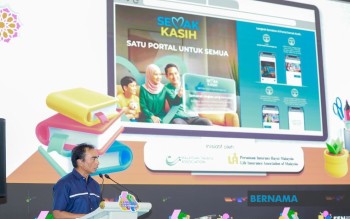
Bank Negara Malaysia has introduced the Semak Kasih portal, a digital initiative designed to reconnect Malaysian families with unclaimed insurance and takaful benefits that may have been overlooked or forgotten following the death of a policyholder. The platform was unveiled at the Terengganu Financial Literacy Carnival in Kuala Terengganu, signalling a coordinated effort by Malaysia's financial regulator to ensure that rightful beneficiaries do not miss out on vital financial protection when they need it most.
According to Bank Negara Deputy Governor Adnan Zaylani Mohamad Zahid, the portal addresses a significant gap in Malaysia's insurance landscape. Estimates from the Life Insurance Association of Malaysia and the Malaysian Takaful Association suggest that approximately 50,000 insurance policies and takaful certificates containing death benefit provisions remain unclaimed by eligible beneficiaries. Many families are unaware that their deceased relatives had taken out coverage specifically intended to protect their welfare during times of hardship.
The Semak Kasih platform operates on a straightforward principle: beneficiaries can use the portal to verify whether a deceased family member held active insurance or takaful coverage and identify which provider holds the policy. Once identified, users can contact the relevant insurance company or takaful operator directly to initiate the claims process. This streamlined approach reduces the administrative burden on families already dealing with loss and grief, while also accelerating the disbursement of funds that can provide critical financial relief.
Insurance and takaful protection serves multiple essential functions in Malaysian households. These products safeguard families against unexpected catastrophes such as serious illness, accidents, fires, and sudden death. In practical terms, benefits from such policies can cover hospitalisation expenses, repair costs following disasters, or provide income replacement for surviving dependents. However, the value of this protection is completely nullified if beneficiaries do not know the coverage exists or cannot locate the policyholder's details.
Adnan Zaylani emphasised that financial protection through insurance and takaful should be viewed as a foundational component of responsible household financial management, particularly as Malaysian families contend with rising living costs and economic volatility. The launch of the Semak Kasih portal reflects recognition by the central bank that existing outreach efforts by insurers—including written correspondence and agent contact—have not been entirely effective in reaching all eligible beneficiaries. A more accessible, technology-driven solution was necessary to bridge this gap.
Beyond the insurance initiative, Bank Negara highlighted broader efforts to strengthen Malaysia's financial resilience ecosystem. The central bank has introduced microfinancing schemes offering up to RM100,000 without requiring guarantors or collateral, specifically targeting micro, small, and medium enterprises struggling with capital constraints. Additionally, the SME Stabilisation Relief Facility allocates RM5 billion in financing support for businesses impacted by geopolitical tensions in the West Asia region, with working capital assistance reaching up to RM750,000 per company. These measures underscore recognition that economic stability depends on supporting entrepreneurship across all business scales.
Financial literacy has emerged as a critical priority for Bank Negara's broader strategy. The iTekad initiative has trained more than 14,000 Malaysians nationwide—including approximately 600 in Terengganu—in financial skills and business development, resulting in measurable improvements in household income and living standards. This demonstrates that targeted education programmes, combined with practical support mechanisms, can generate tangible improvements in financial wellbeing across communities.
However, digitalisation presents a double-edged challenge for Malaysian consumers. While digital financial platforms and e-commerce have dramatically expanded economic opportunities, they have simultaneously created new vulnerabilities. Research cited by Bank Negara reveals that approximately 37 percent of Malaysians engage in impulsive online shopping, while 26 percent carry debt burdens they perceive as unsustainably high. These statistics suggest that access to financial tools alone is insufficient; users must develop the discipline and knowledge to deploy them responsibly.
In response, Bank Negara is expanding financial education initiatives beyond the adult population. The MyDuitStory competition and the newly launched FEN Proaktif 2.0 Programme, developed in partnership with Universiti Malaysia Terengganu, introduce financial management principles to university students before they enter the workforce. The theory underpinning this approach is straightforward: habits and attitudes formed during formative years tend to persist throughout adulthood. Teaching disciplined saving and spending behaviour early creates a foundation for sounder financial decision-making across a lifetime.
Adnan Zaylani pressed the importance of consistent saving discipline, noting that modest regular contributions to savings accumulate into substantial sums over extended periods due to compound growth effects. For young Malaysians in particular, beginning a savings routine in their twenties or thirties can generate life-changing wealth by retirement age. This message resonates against the backdrop of demographic trends showing Malaysian life expectancy rising; longer retirements necessitate more rigorous advance financial planning.
The Semak Kasih portal, financial education programmes, and support schemes collectively reflect a philosophical shift toward proactive consumer protection rather than reactive problem-solving. Rather than waiting for families to experience financial crises after discovering unclaimed benefits or accumulating unsustainable debt, Bank Negara is investing in prevention through awareness, access, and education. The central bank's closing message to Malaysians—to save prudently, protect themselves through appropriate insurance, and continuously develop financial knowledge—encapsulates this preventative philosophy in accessible language.

