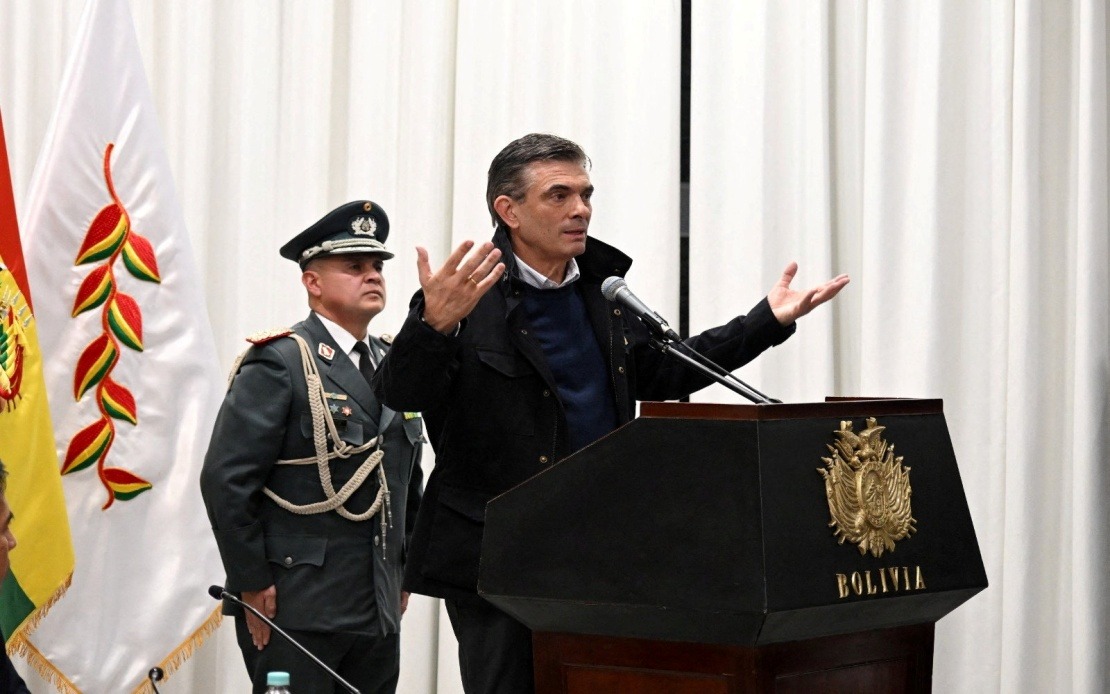
Bolivian President Rodrigo Paz has declared a state of emergency in response to an escalating political and economic crisis driven by sustained anti-government protests and widespread road blockades that have paralysed the country for nearly two months. The declaration, announced through a televised address on Saturday, represents a dramatic escalation in efforts to restore order after weeks of mounting pressure from labour unions and farming communities demanding the president's resignation.
The root of the crisis lies in a perfect storm of economic grievances. Rising living costs and mounting economic pressures have fuelled anger among Bolivia's working and agricultural sectors, who view Paz as unable or unwilling to address their deteriorating financial circumstances. The blockades, orchestrated primarily by workers' unions and farmer organisations, have evolved from targeted demonstrations into a coordinated campaign that now threatens the nation's basic functioning and social stability.
The fifty-day duration of these blockades underscores the depth of discontent and the organised determination of protest movements. What began as expressions of frustration has hardened into a test of governmental authority and civil resistance. The sheer length of the disruption indicates that grievances run far deeper than temporary economic fluctuations, suggesting structural problems that demand substantive policy responses rather than security measures alone.
The humanitarian toll of the blockades has become increasingly severe. Food shortages have begun affecting household access to basic nutrition, while fuel scarcity threatens transportation networks and emergency services. Medical supply disruptions pose particular dangers in a healthcare system already strained by economic constraints. These cascading shortages create secondary crises that extend beyond the original protest grievances, threatening vulnerable populations including children, elderly citizens, and those dependent on regular medical treatment.
In his televised remarks, Paz articulated the government's position with stark language, emphasising that citizens have become hostages to disruption of essential services. His statement that Bolivians cannot continue facing blockades that prevent work, education, medical care, and food access crystallises the tension between legitimate protest rights and the need for functional public services. This framing also signals the government's intention to justify military intervention as a necessity rather than a choice.
The declaration of a state of exception carries profound constitutional and social implications. Such emergency measures typically grant expanded powers to executive and military authorities, permitting actions that would normally violate civil liberties and democratic norms. While intended as a temporary measure to restore order, states of emergency can establish precedents for concentrated governmental power and potentially be extended beyond initial timeframes. For Malaysia and other Southeast Asian nations watching developments in South America, the Bolivian case illustrates ongoing tensions between democratic governance and security imperatives in developing economies.
Military deployment authorised through the emergency declaration will bring heavily armed forces into domestic civilian spaces to break blockades and restore road access. This represents a significant shift from police-led responses and introduces heightened risks of confrontation between security forces and protesters. The presence of military units could escalate tensions rather than diffuse them, particularly if deployed without sufficient training in crowd management and proportionate force application. Historical precedents from Latin America demonstrate that military intervention in protest situations can transform economic and political disputes into violent confrontations.
The blockade strategy itself reflects the limited institutional channels available to protest movements in Bolivia. Rather than purely electoral or legislative avenues, organised labour and farming communities have chosen economic disruption as their most visible and coercive tool. This tactic imposes direct costs on the general population while attempting to pressure government decision-making. The resulting civilian suffering creates a dilemma: the protests highlight genuine grievances worthy of attention, yet their methods generate collateral damage affecting those not responsible for the policies being protested.
Bolivia's economic context matters significantly for understanding why such sustained unrest has emerged. As a resource-dependent economy vulnerable to commodity price fluctuations and subject to structural poverty despite natural wealth, Bolivia has experienced recurring cycles of inequality and social tension. The current crisis reflects not merely temporary policy failures but deeper questions about wealth distribution, economic opportunity, and whether growth benefits reach working populations and rural communities. Similar pressures simmer across much of Latin America and the developing world, including parts of Southeast Asia.
The international dimensions deserve consideration. Bolivia's experience demonstrates how internal crises in one nation can ripple across regions through media coverage, diplomatic channels, and precedent-setting examples. For neighbouring countries and regional observers, the government's recourse to emergency powers and military deployment sets expectations about how severe protest movements will be handled. This can influence protest strategies and governmental responses elsewhere throughout the hemisphere.
The fundamental challenge facing Paz involves choosing between confrontation and negotiation as pathways forward. Emergency declarations and military deployments may temporarily suppress blockades but address none of the underlying economic and political grievances. Without substantive engagement with labour and farming organisations regarding living costs, economic opportunity, and policy direction, the emergency measures may simply delay rather than resolve the crisis. The sustainability of any solution depends on whether the government uses the restored order as an opportunity for dialogue or merely as a platform for reasserting unilateral authority.
%22%2F%3E%3C%2Fpattern%3E%3C%2Fdefs%3E%3Crect%20width%3D%22100%25%22%20height%3D%22100%25%22%20fill%3D%22url(%23ph43s4kg)%22%2F%3E%3Crect%20width%3D%22100%25%22%20height%3D%22100%25%22%20fill%3D%22url(%23ph43s4kp)%22%2F%3E%3Ctext%20x%3D%2250%25%22%20y%3D%2250%25%22%20text-anchor%3D%22middle%22%20dominant-baseline%3D%22central%22%20fill%3D%22rgba(255%2C255%2C255%2C0.95)%22%20font-family%3D%22Georgia%2C%20'Times%20New%20Roman'%2C%20serif%22%20font-weight%3D%22700%22%20font-size%3D%22136%22%20letter-spacing%3D%22-0.02em%22%3ERonaldinho%3C%2Ftext%3E%3C%2Fsvg%3E)