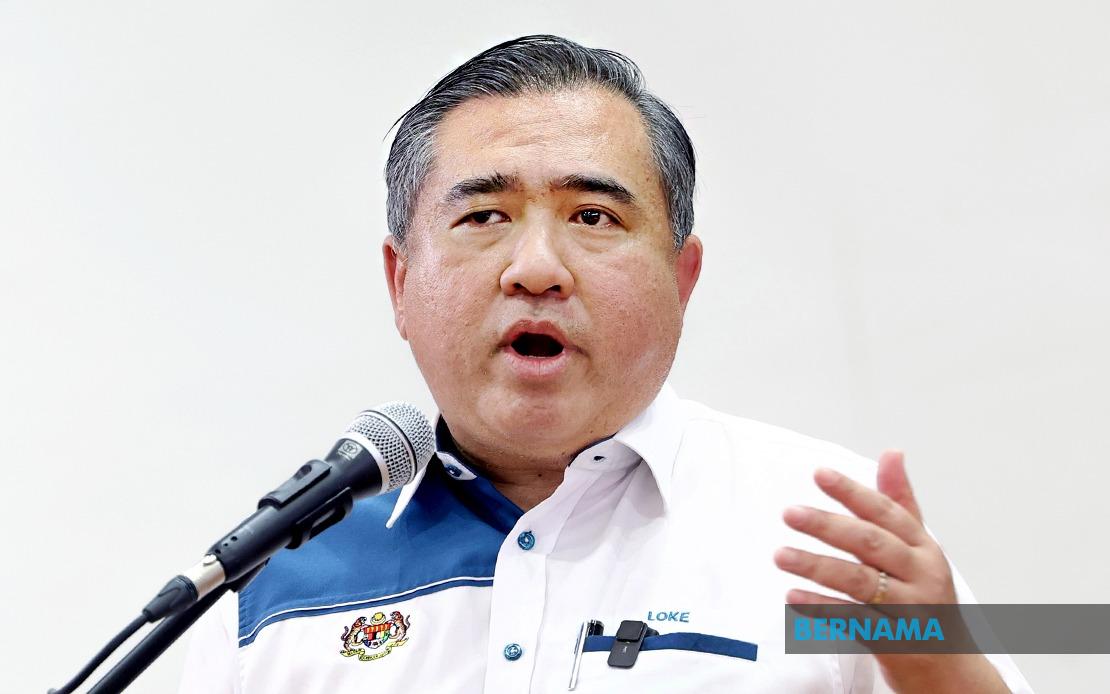
Transport Minister Anthony Loke has clarified that the deployment of diesel trains on Johor's Southern Shuttle service represents only a temporary arrangement while the rail sector awaits the arrival of new Electric Multiple Unit (EMU) trains. Speaking on Facebook, Loke explained the pragmatic decision to deploy existing diesel rolling stock rather than leave commuters without service for the next two to three years during the manufacturing and delivery phase of the new electric trains. This move underscores the government's commitment to keeping rail services operational in the interim period, balancing immediate public need against longer-term infrastructure modernisation plans.
The government has committed substantial funding to support the expansion of rail-based public transport in the region, with the Ministry of Transport allocating between RM11 million and RM15 million in annual subsidies. These subsidies are designed to make rail travel more accessible and affordable for Johor residents, encouraging greater adoption of train services as a sustainable transport option. The financial commitment reflects broader policy priorities to shift commuters away from private vehicles and reduce congestion on key routes connecting major urban centres in the southern corridor.
The decision to operate diesel services now rather than delay was framed by Loke as a matter of practical necessity. Rather than ask commuters to endure a prolonged wait for electrified services, the Ministry opted for a phased approach that delivers immediate benefits. The logic is straightforward: residents can begin using the Southern Shuttle service immediately, enjoying its connectivity and speed advantages, while behind the scenes, the procurement and assembly of 10 new EMU train sets progresses toward completion. This strategy reflects a recognition that perfect cannot be the enemy of good when it comes to public transportation infrastructure.
Once the Gemas-Johor Bahru electrified double-tracking project reaches completion, the operational picture will shift dramatically. The diesel trains will be phased out and replaced by Electric Train Service (ETS) operations across the corridor, aligning the Southern Shuttle with Malaysia's broader electrification agenda for rail networks. This planned transition addresses a key criticism levelled at the current service: that operating older diesel equipment is environmentally questionable and out of step with modern standards. The ETS replacement will deliver cleaner, more efficient operations alongside the performance benefits already being realised.
The Southern Shuttle connects three key Johor destinations—Kulai, JB Sentral, and Pasir Gudang—offering significant time savings for commuters across the conurbation. The journey from Kulai to JB Sentral takes approximately 40 minutes, while the Kempas Baru-Pasir Gudang leg requires between 40 and 45 minutes. These transit times represent a substantial improvement over road-based alternatives, particularly during peak hours when traffic congestion can extend travel times considerably. For business commuters and daily workers, this speed differential translates to meaningful time recovery and improved productivity.
A notable aspect of the Southern Shuttle's recent launch is the opening of the Kempas Baru-Pasir Gudang route to passenger services, marking the first time this corridor has been available to the travelling public. Previously reserved exclusively for freight operations, this corridor now serves dual commercial purposes, optimising utilisation of existing rail infrastructure. The conversion reflects efficient resource allocation, allowing the rail network to serve multiple functions and generating additional revenue streams while meeting passenger demand.
Comfort and convenience improvements distinguish the Southern Shuttle from competing transport modes. The service offers passengers cleaner, climate-controlled environments compared to congested roads, along with the ability to utilise travel time productively—reading, working, or relaxing—rather than focusing on driving. For longer journeys and regular commutes, these quality-of-life factors accumulate, making rail an increasingly attractive option for Johor residents seeking alternatives to vehicle ownership and road travel.
Criticism of the current diesel-operated service has centred on fare levels, with observers noting that Southern Shuttle fares are approximately three times higher than comparable services in Kuala Lumpur and Seremban. This pricing differential has drawn scrutiny from commuter advocates questioning the cost-to-benefit ratio. Loke's explanation that the current arrangement is temporary may provide some reassurance that fare structures might be revisited once modern EMU trains are operational and operational costs decrease. The subsidy allocation also suggests the government recognises affordability concerns and is prepared to support pricing through direct financial support to the operator.
For Malaysian rail sector observers, the Southern Shuttle deployment illustrates the complex negotiations between immediate service delivery and longer-term infrastructure vision. The southern corridor, connecting Johor's major urban and industrial centres, represents strategically important transport infrastructure. Delays in EMU train delivery would have severely constrained regional connectivity and economic productivity. By creatively deploying existing assets, the Ministry has purchased time for the manufacturing process while maintaining service continuity, a pragmatic approach that acknowledges real-world supply chain and procurement realities.
The broader implications extend beyond Johor's immediate transport network. Malaysia's electrification agenda for rail infrastructure faces similar timing challenges nationwide, with procurement timelines for new rolling stock frequently extending several years. The Southern Shuttle model—using interim diesel services while awaiting modern electric trains—may offer a template for other regional corridors facing similar gaps. This approach allows governments to maintain service momentum and commuter expectations during the transition to modernised networks.
Looking forward, the Southern Shuttle represents a bellwether for Malaysia's rail modernisation programme. Success in delivering the new EMU train sets within the projected timeframe will vindicate the interim diesel strategy and strengthen public confidence in subsequent rail development plans. Conversely, delays in new train arrivals could erode support for the service and raise questions about procurement management. The service thus carries significance beyond its immediate passenger base, functioning as a visible indicator of the government's capacity to execute complex infrastructure transitions.