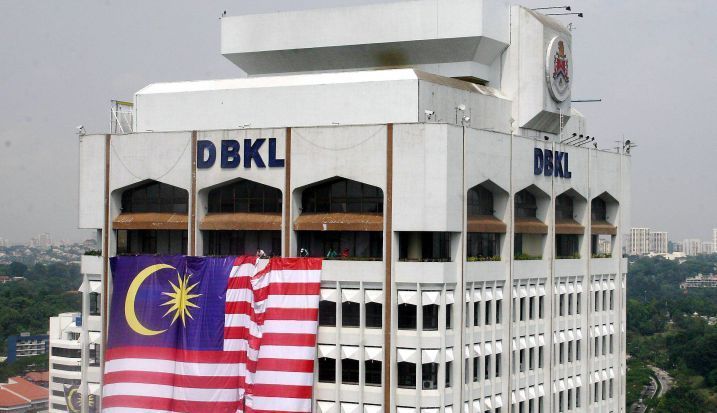
The Malaysian Cabinet has signalled that meaningful reform of Kuala Lumpur City Hall (DBKL) will proceed through administrative action rather than legislative overhaul, at least in the immediate term. Minister in the Prime Minister's Department (Federal Territories) Hannah Yeoh announced that the federal government will focus on strengthening internal governance and accountability structures within DBKL before considering any amendments to the Federal Capital Act 1960, the foundational legislation governing the capital city's administration. This decision follows a comprehensive four-month feasibility study conducted jointly by the Federal Territories Department and the International Islamic University Malaysia, which examined the viability and implications of altering the legal framework that has governed Kuala Lumpur since independence.
The research, which ran from December last year through March, undertook a thorough assessment of DBKL's operational architecture, encompassing administrative structure, decision-making protocols, service delivery mechanisms, enforcement capabilities, and institutional accountability. Significantly, the study process included direct consultation with Kuala Lumpur's parliamentary representatives and DBKL's senior management, ensuring that proposals reflected both political oversight concerns and administrative realities on the ground. This inclusive approach reflects growing recognition among policymakers that governance challenges in Malaysia's largest city require solutions rooted in practical understanding of how the institution actually functions rather than theoretical frameworks alone.
The Cabinet's decision to prioritise administrative reform over legislative change represents a subtle but important pivot in how federal authorities view DBKL's governance difficulties. Rather than accepting claims that the Federal Capital Act 1960 itself is the primary obstacle to better administration, the government has accepted the study's finding that most of DBKL's operational problems stem not from legal deficiencies but from the absence of clearly defined internal procedures, operational guidelines, and structured decision-making protocols. This diagnosis carries significant implications for how quickly meaningful improvements might materialise—administrative reforms can theoretically be implemented more rapidly than legislative amendments, which require parliamentary debate and approval.
Two competing proposals for restructuring DBKL's governance had previously circulated within government. The Policy Advisory Committee to the Prime Minister had proposed establishing a Supreme Council to alter the legal status of the mayoral office, while a coalition of Kuala Lumpur MPs had separately advocated for creating a City Council composed of the seven parliamentary representatives serving the capital, functioning in an advisory capacity to the mayor. However, the IIUM study explicitly cautioned against the council model, arguing that introducing an additional layer to DBKL's decision-making apparatus would create overlapping jurisdictions, diffuse accountability, and ultimately render it unclear which official or body bore responsibility for particular decisions or failures. This finding directly contradicted the parliamentary members' proposal, yet the study framed its opposition in pragmatic terms rather than dismissing the underlying concern about parliamentary engagement.
Instead of creating new structures, the study recommended substantially strengthening DBKL's existing Advisory Board through the introduction of a formal governance framework. This framework would establish transparent criteria and quotas governing the appointment of professional experts and non-governmental organisation representatives to the Board, ensuring diversity of perspective and expertise. Critically, the framework would also codify meeting procedures, establish protocols for proposal presentation and deliberation, clarify reporting requirements, and define the working relationship among the Board, the mayor, the Federal Territories minister, and DBKL management. Such formalisation represents a significant departure from current practice, where much of the Advisory Board's functioning apparently lacks explicit procedural guidelines.
The study identified a creative middle path regarding parliamentary involvement in DBKL oversight, one that acknowledges the legitimate democratic interest of elected representatives without fundamentally altering the city's administrative structure. Rather than granting Kuala Lumpur MPs formal administrative authority or direct appointment powers—which would blur the distinction between political representation and municipal management—the framework proposes regular consultation meetings, monitoring committees, formal budget review sessions, and established channels through which MPs can raise constituent concerns and development priorities directly with DBKL management and the Federal Territories minister. Significantly, the study emphasised that any such engagement should operate within clearly defined parameters regarding scope, frequency, and reporting obligations, preventing parliamentary involvement from becoming either performative or unstructured.
Understanding the constitutional and historical context helps explain why the Cabinet and the study both moved cautiously regarding legislative change. Under Section 5(1) of the Federal Capital Act 1960, commonly known as Act 190, Kuala Lumpur is administered by the mayor as a "corporation sole"—a legal arrangement whereby executive authority resides in the office of the mayor rather than in a council with voting or executive powers. This distinctive structure, inherited from colonial-era arrangements for imperial capitals, has been maintained through Malaysia's post-independence period. The study warned that introducing councillors with formal powers could effectively transform Kuala Lumpur into a conventional local authority governed under the Local Government Act 1976, fundamentally altering the city's unique constitutional status.
The implications of such a transformation extend beyond administrative convenience or parliamentary preference. Kuala Lumpur's position as both the nation's capital and a Federal Territory generates special considerations that shape appropriate governance arrangements. When the capital was transferred to federal control in 1974, that transition carried constitutional and political weight that continues to inform how the city should be administered. Amending the Federal Capital Act 1960 would require careful consideration of these underlying constitutional relationships and historical agreements, making it a matter requiring deliberative legislative processes rather than hasty action. The study essentially argued that such fundamental questions deserve more comprehensive examination than can occur through ad hoc administrative decisions.
The recommended pathway forward prioritises implementation through administrative measures—internal directives, operational guidelines, procedural manuals, and improved coordination mechanisms—that can be initiated and refined without requiring parliamentary legislation. This approach allows for iterative improvement and adjustment based on practical experience, an advantage over legislation, which, once enacted, cannot easily be modified. The Federal Territories Department and DBKL are now tasked with developing a comprehensive transformation plan that addresses decision-making structures, internal checks and balances, and overall management practices. The Cabinet will receive periodic progress updates, creating a mechanism for oversight without requiring legislative intervention.
For Malaysian observers and particularly Kuala Lumpur residents, this decision signals a pragmatic approach to governance improvement that acknowledges both the importance of democratic accountability and the value of institutional stability. The focus on clarifying internal procedures and formalising the role of professional expertise through the Advisory Board should theoretically reduce ambiguity about decision-making authority and responsibility. The structured mechanisms for parliamentary consultation, without formal administrative power, attempt to preserve electoral accountability while respecting the distinction between legislative oversight and executive administration. Whether these reforms prove sufficient to address the governance challenges that prompted the feasibility study will become apparent as implementation proceeds over coming months.
The emphasis on administrative reform before legislative change also reflects broader lessons from governance improvements elsewhere in the region and globally. Many municipalities have discovered that legal framework amendments alone rarely solve operational difficulties if internal procedures, professional capacity, and accountability mechanisms remain poorly defined. By addressing these foundational elements first, DBKL may eventually be in a stronger position to determine whether legislative changes remain necessary. This sequenced approach, while potentially frustrating to those advocating for immediate structural reform, represents a measured response grounded in evidence about what actually drives institutional performance in complex urban administrations.

