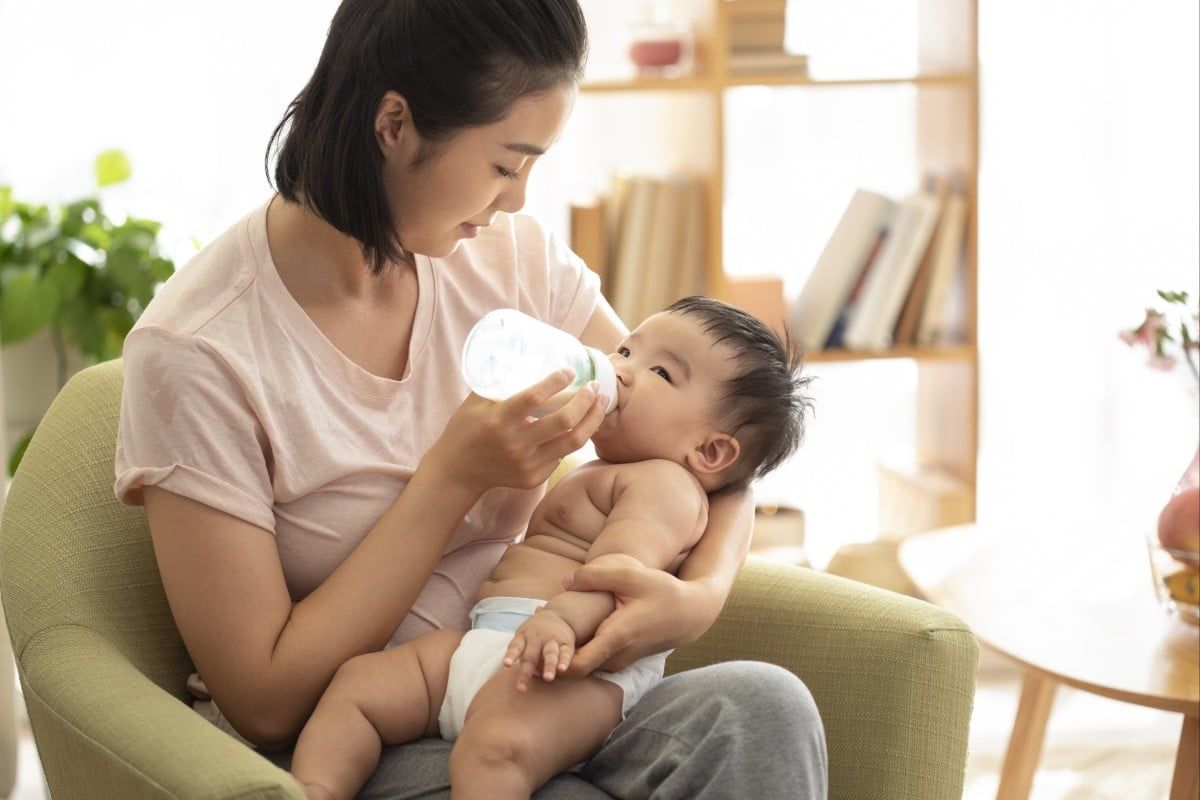
A three-month-old boy in Guangdong province required intensive care treatment after his parents inadvertently poisoned him by mixing infant formula with vegetable juice instead of plain water. The child's condition deteriorated rapidly, with his skin and lips turning purple and his breathing becoming laboured, prompting emergency admission to Zhongshan Women and Children's Hospital in southern China. Medical teams diagnosed acute nitrite toxicity, a potentially fatal condition that underscores how well-intentioned but misguided parenting decisions can have severe health consequences for vulnerable infants.
The tragedy unfolded when the boy's parents observed troubling symptoms shortly after feeding him the suspect formula. Driven by the conviction that vegetable juice contained superior nutritional value compared to ordinary water, they had begun replacing tap water with homemade vegetable broth in the infant's milk powder. This seemingly innocent substitution triggered a cascade of physiological complications that required two days of intensive medical intervention before the child could be safely discharged in mid-June.
Medical professionals at the treating hospital explained the biochemical mechanism underlying the poisoning. When vegetables undergo prolonged boiling—a common preparation method in Chinese households—the resulting liquid accumulates substantial concentrations of nitrites, naturally occurring compounds that pose extreme danger to developing infants. The three-month-old body, still in the earliest stages of organ development, cannot physiologically process these chemicals in the manner that mature digestive and renal systems can manage.
The infant's immune system and organ function proved particularly vulnerable because children at this developmental stage lack the enzymatic capability to neutralise high nitrate loads. Once nitrites enter the bloodstream, they chemically interfere with haemoglobin's fundamental oxygen-carrying mechanism, effectively starving tissues of oxygen at the cellular level. This explains why the baby's skin, mouth, and fingernails progressively darkened to purple—a visible indication of severe oxygen deprivation throughout his body.
The case has prompted urgent warnings from paediatricians across China about the critical importance of adhering to established infant feeding protocols. Cao Qi, a specialist at Nanning No 1 People's Hospital in Guangxi Zhuang autonomous region, issued a stark reminder on social media platforms that even minor delays in recognising nitrite poisoning symptoms and seeking emergency care can prove catastrophic. He emphasised that parents must resist both trendy feeding philosophies and personal intuitions when making decisions about infant nutrition, as natural foodstuffs are not automatically appropriate for babies whose physiological systems remain incomplete.
Medical authorities have issued explicit guidance stating that infant formula should be reconstituted exclusively with appropriately cooled boiled water. Hospital guidelines specifically prohibit substituting water with vegetable broths, rice decoctions, fruit juices, or other soup preparations, all of which can introduce harmful compounds or pathogens into an infant's diet. This standardised approach exists because decades of medical research have demonstrated that water remains the only safe diluent for powdered formula during the critical early months of life.
This incident reflects a broader pattern of concerning feeding practices documented across China, where social media increasingly circulates accounts of families employing unconventional and potentially dangerous methods to nourish young children. The previous year witnessed another tragic case in Henan province when a 52-day-old infant developed botulism, a severe neurological disease caused by bacterial toxins, after his grandmother introduced honey into his water supply. That case and others reveal how cultural beliefs about natural remedies and nutritional enhancement can dangerously conflict with paediatric safety standards.
For Malaysian and Southeast Asian families, this incident carries particular relevance given regional similarities in traditional food preparation methods and cultural preferences for natural ingredients. Many families across the region hold comparable beliefs about the superior nutritional benefits of home-prepared broths and natural juices compared to processed water, creating parallel risks for infants in these communities. The case serves as a cautionary reminder that infant feeding requires strict adherence to established medical protocols, regardless of cultural traditions or personal convictions about nutrition.
The incident also highlights gaps in health education and accessible paediatric guidance within some communities, where parents may lack reliable sources of evidence-based information about safe infant care practices. Healthcare systems must prioritise proactive education campaigns targeting expectant parents and new mothers, ensuring that correct feeding protocols become culturally normalised rather than appearing restrictive or dismissive of traditional knowledge. Such educational initiatives prove especially critical in regions where infant mortality remains a concern and where misinformation spreads rapidly through social media networks.
Expertise from hospital staff emphasises that natural foods, while beneficial for older children and adults, operate under fundamentally different safety parameters when introduced to very young infants. The immature digestive tract cannot process or eliminate certain compounds that pose no threat to mature systems, while developing kidneys cannot adequately filter potentially toxic substances. This biological reality transcends cultural preferences and applies universally to all infants during their first months of life.