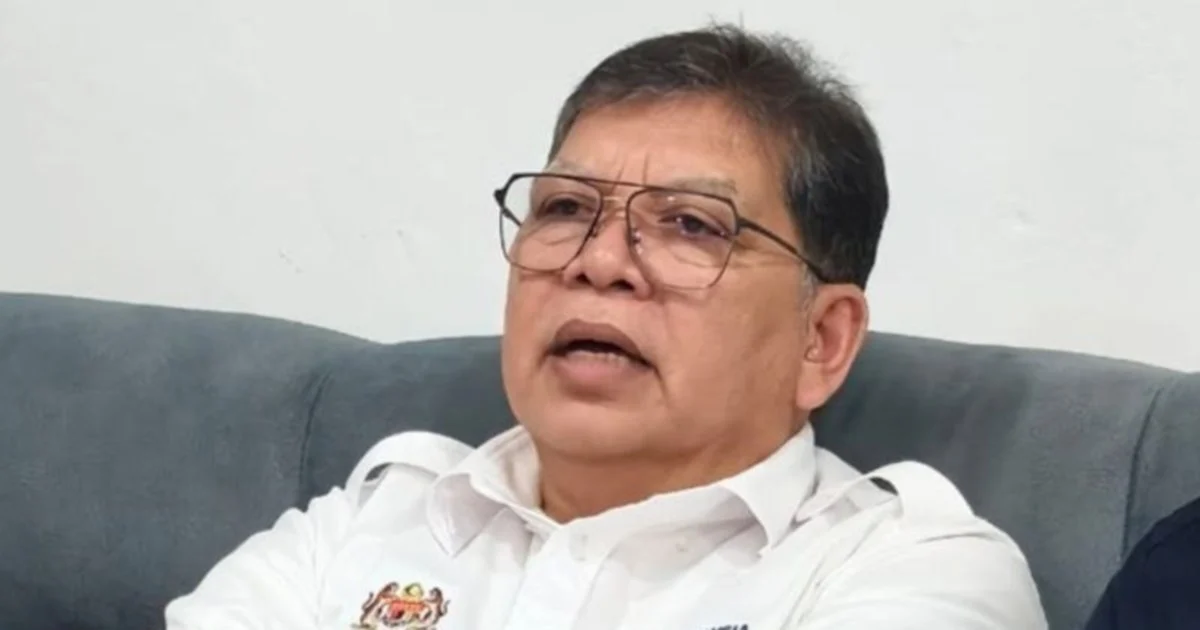
Dewan Rakyat Speaker Tan Sri Johari Abdul has formally received notification from Perikatan Nasional's chief whip Datuk Seri Takiyuddin Hassan confirming the reappointment of Datuk Seri Hamzah Zainudin to the position of opposition leader. The procedural notice signals the coalition's intention to maintain consistent leadership within the opposition ranks in Parliament.
The reappointment of Hamzah Zainudin represents a consolidation of Perikatan Nasional's parliamentary strategy during this legislative session. As opposition leader, he serves as the formal representative of PN in all parliamentary proceedings and acts as the primary interlocutor between the coalition and the government on legislative matters. The role carries significant ceremonial and functional responsibilities, including the authority to pose questions to the government bench, coordinate opposition business on the floor, and represent his coalition's interests during parliamentary debates.
Takiyuddin Hassan's formal communication to Speaker Johari Abdul follows standard parliamentary protocol whereby any changes to opposition leadership positions must be officially documented with the Dewan Rakyat. This administrative procedure ensures transparency and maintains the institutional records of Parliament, allowing the Speaker's office to update its records and coordinate the parliamentary schedule accordingly. Such notifications typically occur at the beginning of parliamentary sessions or when changes in opposition hierarchy necessitate formal acknowledgement.
Hamzah Zainudin's retention in this position reflects Perikatan Nasional's strategic decisions regarding its parliamentary representation. Since PN functions as the main opposition bloc at present, the opposition leader's appointment represents a critical juncture in how the coalition projects its political influence and coordinates its messaging within Parliament. The continuity in his tenure suggests internal alignment within PN's leadership structure and its chief whip's office.
The opposition leader's responsibilities encompass considerably more than ceremonial functions. Hamzah Zainudin will continue to articulate his coalition's policy positions on major government initiatives, coordinate voting patterns among PN members on key legislative matters, and ensure party discipline across parliamentary committees. His reappointment signals that PN intends to maintain its current approach to parliamentary opposition during the ongoing session.
For Malaysian readers and observers of parliamentary politics, this development underscores the procedural sophistication of the Dewan Rakyat's operations. The Speaker's receipt of formal notice from the chief whip demonstrates how Malaysian Parliament maintains institutional frameworks that function regardless of which parties hold government or opposition status. These mechanisms ensure continuity and predictability in parliamentary procedures, allowing elected members to focus on legislative work within established operational guidelines.
The positioning of opposition leadership becomes particularly significant in Malaysia's current political landscape, where coalition arrangements and parliamentary arithmetic remain fluid. Perikatan Nasional's decision to retain Hamzah Zainudin suggests the coalition believes he continues to effectively represent its interests and coordinate its parliamentary efforts. His role involves negotiating with government backbenchers on procedural matters, scheduling opposition business on parliamentary days, and advocating for PN's legislative priorities.
From a regional perspective, Malaysia's opposition leadership structures merit attention as they reflect how Southeast Asian legislatures balance majoritarian government with meaningful opposition roles. Unlike parliamentary systems where opposition leaders hold significantly curtailed powers, the Malaysian Speaker's formal recognition of the opposition leader ensures a defined space for parliamentary opposition, even when the government commands substantial majorities. This institutional design contributes to the Dewan Rakyat's functioning as a forum for legislative debate and scrutiny.
Hamzah Zainudin's reappointment carries implications for PN's broader political trajectory as the country heads toward future electoral contests. The opposition leader position serves as a platform for policy articulation and public communication, allowing PN to maintain political relevance between general elections. By consolidating leadership continuity, PN demonstrates internal stability and strategic coherence in its parliamentary operations, potentially strengthening its political positioning among opposition-minded voters.
The formal notification process also reflects broader trends in Malaysian parliamentary practice, where institutional roles have become increasingly codified and transparent over recent years. The Speaker's documentation of opposition leadership changes creates institutional memory and ensures that parliamentary procedures remain consistently applied. This procedural maturity contributes to Malaysia's legislative stability and institutional credibility, regardless of which political configurations occupy government or opposition benches.
Moving forward, Hamzah Zainudin's continued tenure as opposition leader suggests Perikatan Nasional will pursue a coordinated parliamentary strategy focused on legislative scrutiny, policy advocacy, and constituent representation. The opposition leader's presence in Parliament provides a vehicle for PN to maintain political engagement during periods between electoral contests, ensuring the coalition remains visible and relevant in parliamentary proceedings and media coverage.