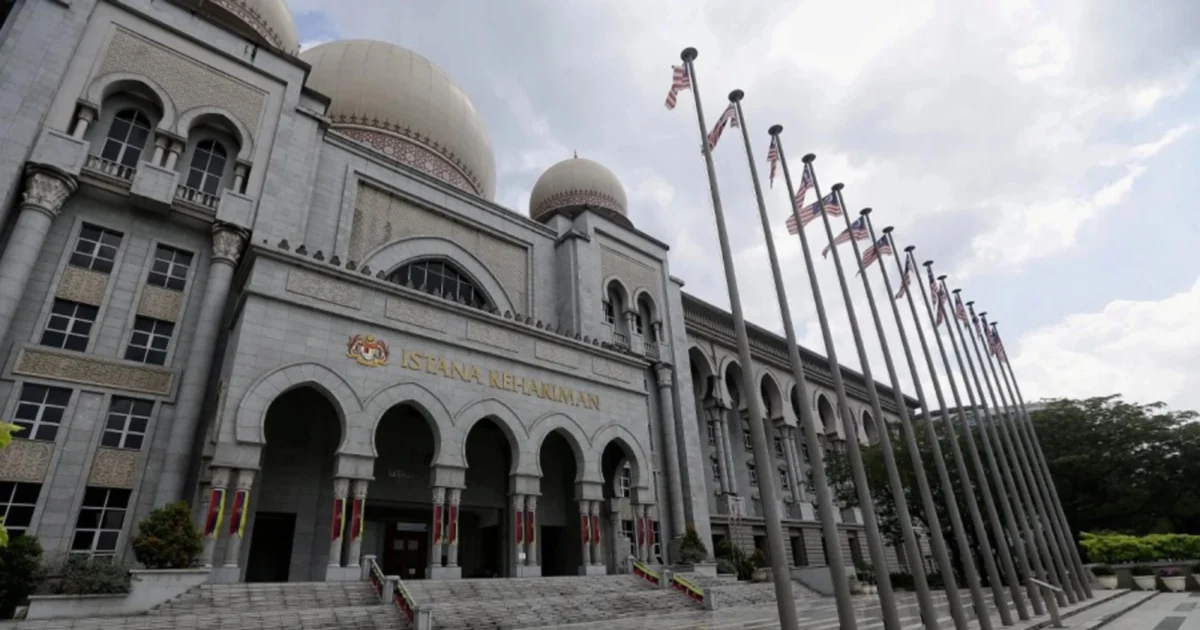
Parliament's resumption brings a landmark constitutional amendment back into focus: the proposal to disentangle the roles of Malaysia's attorney-general and public prosecutor. This separation represents one of the most consequential governance reforms under consideration in the current legislative session, with implications extending far beyond the judiciary into the broader architecture of Malaysia's legal and political institutions.
The push to split these historically combined offices reflects growing international and domestic recognition that concentrating prosecutorial and legal advisory functions in a single official creates potential conflicts of interest and compromises judicial independence. Many Commonwealth democracies and neighbouring jurisdictions have moved toward this separation, establishing independent public prosecution services distinct from the government's chief legal officer. The timing of this bill's return suggests gathering momentum behind constitutional restructuring that addresses longstanding concerns about the separation of powers in Malaysia's system.
Under current arrangements, the attorney-general serves simultaneously as the nation's chief legal advisor to government and as the head of the prosecution apparatus. This dual mandate creates inherent tensions: the A-G must balance the government's interests against the public interest in impartial justice. Critics argue this arrangement allows political considerations to influence prosecutorial decisions, while defenders contend that integration ensures coherent legal strategy across government functions. The proposed amendment aims to resolve this tension by establishing a standalone public prosecutor office with independent prosecutorial authority.
For Malaysian readers and observers of Southeast Asian governance, the significance extends beyond technical legal reform. The separation of powers has become increasingly vital as regional democracies grapple with maintaining institutional credibility amid polarised political environments. A truly independent prosecutor, answerable to Parliament rather than the executive, would theoretically reduce perceptions of politicised prosecutions and strengthen public confidence in the criminal justice system. This matters particularly in cases involving high-profile figures, where prosecutorial decisions inevitably attract intense scrutiny and allegations of selective enforcement.
The bill's reappearance also reflects evolving attitudes toward institutional reform within Malaysia's political establishment. That both government and opposition members appear to view this amendment as sufficiently important to advance suggests genuine cross-party recognition of the need for structural change. Such consensus-building on constitutional matters remains rare, indicating that supporters across the political spectrum genuinely view prosecutor independence as essential to democratic governance.
Implementing this separation would require careful institutional design. Questions remain about how the independent prosecutor would be appointed, whether through parliamentary nomination, judicial recommendation, or a hybrid process. The new office would need adequate funding and protected status to function without executive interference. Equally important are questions about transition: would the current A-G continue in that role while a new prosecutor is established, or would the positions be separated immediately? These implementation details will likely consume significant parliamentary attention as the amendment advances.
For practitioners, businesses, and civil society organisations that interface regularly with Malaysia's legal system, the proposed changes offer potential benefits. An independent prosecutor might bring greater consistency to charging decisions and reduce concerns about political interference in commercial or white-collar cases. Foreign investors, particularly those from jurisdictions with established prosecutorial independence, often regard such separation as a governance indicator affecting their confidence in Malaysia's legal environment.
International observers and regional analysts view Malaysia's progress on this reform as a barometer for institutional development in Southeast Asia. If Malaysia successfully implements prosecutorial independence, it could encourage similar reforms in neighbouring countries wrestling with analogous governance challenges. Conversely, if the amendment stalls or faces unexpected obstacles, it might signal limits to constitutional reform in the region even when broad consensus exists.
The practical experience of other Commonwealth nations offers instructive precedent. Singapore, Australia, and Canada have developed independent prosecutors or public attorneys who maintain professional autonomy while remaining answerable to Parliament or judicial oversight bodies. These models demonstrate that separation is operationally feasible and compatible with effective governance, though each jurisdiction has adapted the principle to its constitutional framework.
As the Dewan Rakyat engages with this bill, stakeholders including legal professional bodies, anti-corruption organisations, and business associations will likely offer evidence and testimony about how prosecutor independence serves their respective interests. Such input can strengthen the legislative process by surfacing practical considerations that pure constitutional theory might overlook.
The ultimate success of this reform will be measured not merely by whether the amendment passes, but by how effectively the resulting independent prosecutor operates and whether public confidence in prosecutorial decisions genuinely improves. If implemented thoughtfully, the separation of attorney-general and public prosecutor roles could represent a defining moment in Malaysia's institutional evolution, setting a precedent that influences governance discussions throughout Southeast Asia for years to come.
%22%2F%3E%3C%2Fpattern%3E%3C%2Fdefs%3E%3Crect%20width%3D%22100%25%22%20height%3D%22100%25%22%20fill%3D%22url(%23ph3cmotg)%22%2F%3E%3Crect%20width%3D%22100%25%22%20height%3D%22100%25%22%20fill%3D%22url(%23ph3cmotp)%22%2F%3E%3Ctext%20x%3D%2250%25%22%20y%3D%2250%25%22%20text-anchor%3D%22middle%22%20dominant-baseline%3D%22central%22%20fill%3D%22rgba(255%2C255%2C255%2C0.95)%22%20font-family%3D%22Georgia%2C%20'Times%20New%20Roman'%2C%20serif%22%20font-weight%3D%22700%22%20font-size%3D%22151%22%20letter-spacing%3D%22-0.02em%22%3EMalaysian%3C%2Ftext%3E%3C%2Fsvg%3E)