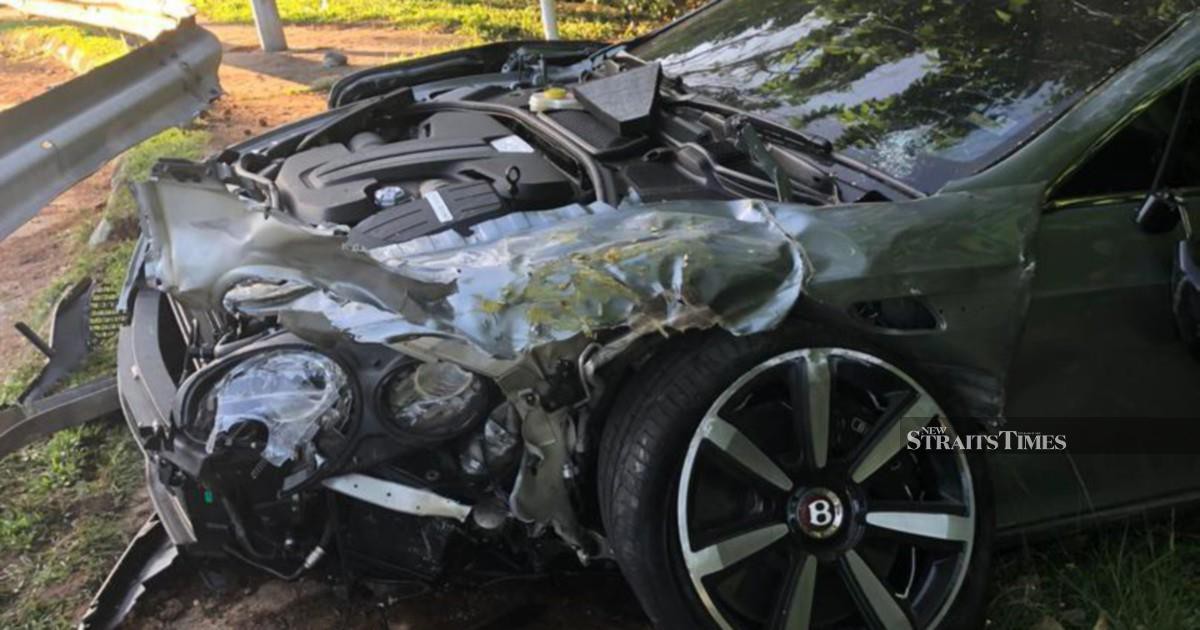
Malaysia's Court of Appeal in Putrajaya has upheld a High Court decision compelling an insurance company to compensate a businessman RM900,000 in indemnity following damage to his Bentley Continental GTS V6 MDS in an accident that occurred six years prior. The appellate court's confirmation of the lower court's ruling brings to a close a lengthy legal dispute over insurance liability and the valuation of damages to the high-end vehicle.
The case represents a significant judgment in Malaysian insurance law, particularly regarding how courts assess compensation for damage to luxury automobiles and the obligations of insurers to honour valid claims. The RM900,000 figure reflects the substantial repair costs and loss of value associated with damage to a prestige vehicle of this calibre. Bentley Continental models occupy the upper echelon of the automotive market, and restoration of such vehicles following accidents typically involves specialist expertise and imported components, driving costs considerably higher than ordinary motor repairs.
The protracted nature of the dispute—spanning six years from accident to appellate confirmation—underscores the complexity that can arise in insurance claims involving high-value assets. During this extended period, the businessman would have been unable to fully utilise his vehicle whilst awaiting resolution, compounding his financial loss beyond the direct repair costs. The Court of Appeal's decision validates the High Court's assessment that the insurance company bore responsibility for meeting the claim in full.
This judgment carries implications for Malaysia's insurance sector and how underwriters approach claims involving luxury and premium vehicles. Insurance companies must ensure that their policy coverage and valuation methodologies adequately account for the true replacement and repair costs of high-end automobiles. The ruling reinforces that insurers cannot arbitrarily limit payouts on such claims without robust justification grounded in policy terms and the principle of indemnity, which requires returning the insured party to their pre-loss financial position.
From a consumer perspective, the Court of Appeal's confirmation provides reassurance that Malaysian courts will enforce insurance obligations fairly and comprehensively. Businesses and high-net-worth individuals who invest in premium vehicles can rely on the legal system to uphold legitimate claims when accidents occur and insurers attempt to minimise their liability. The decision also sets a precedent discouraging bad-faith practices in claims management and dispute resolution.
The case also reflects broader issues within Malaysia's motor insurance framework. While most vehicle owners carry third-party or comprehensive policies, disputes over claim valuation and settlement remain commonplace. Insurance companies occasionally contest the extent of damage assessments or invoke policy exclusions, leading to litigation. This particular dispute's journey through both the High Court and Court of Appeal demonstrates that even with clear culpability and documented losses, claimants must persist through the judicial system to obtain rightful compensation.
The six-year timeline also highlights inefficiencies in Malaysia's civil justice system, where even straightforward insurance disputes can consume substantial time and resources. For the businessman involved, the extended litigation period would have incurred legal fees and opportunity costs beyond the vehicle's value. Expediting resolution mechanisms for insurance claims—perhaps through specialised tribunals or mandatory mediation—could benefit both insurers and claimants by reducing administrative burden and generating faster outcomes.
The Court of Appeal's decision reaffirms that indemnity—the fundamental principle underpinning insurance contracts—must be honoured by insurers when valid claims are presented. Under indemnity, the insured party should be restored to their financial position as if the loss had not occurred. The RM900,000 payout, therefore, represents the court's determination that this amount accurately reflects the cost necessary to return the businessman's Bentley to pre-accident condition or equivalent value.
For Malaysia's insurance industry, this judgment reinforces the need for transparent claims assessment processes and accurate valuation of damaged vehicles, particularly luxury models where repair costs can escalate dramatically. Insurers who fail to engage qualified assessors or who attempt to impose artificial caps on claims for prestigious vehicles risk sustained litigation and reputational damage. The ruling serves as a cautionary reminder that courts will scrutinise claims handling practices and will not tolerate inadequate or unreasonable settlement offers.
The case also carries significance for businesses and professionals who rely on vehicles—whether for personal use or business purposes—as productive assets. A six-year loss of access to a specialist vehicle represents genuine financial harm extending beyond repair costs, and Malaysian courts have now confirmed they will recognise and compensate such impacts appropriately. This encourages vehicle owners to document accidents thoroughly and pursue claims rigorously when insurers balk at reasonable demands.
Moving forward, the appellate decision provides clarity to both the insurance sector and vehicle owners regarding the appropriate handling of high-value motor claims. Insurance companies should review their claims processes to ensure they employ sufficient expertise in valuing damage to premium vehicles and avoid protracted disputes that ultimately damage consumer confidence. Vehicle owners, meanwhile, can pursue legitimate claims with greater confidence that Malaysia's courts will enforce contractual obligations and award fair compensation when evidence supports their position.

