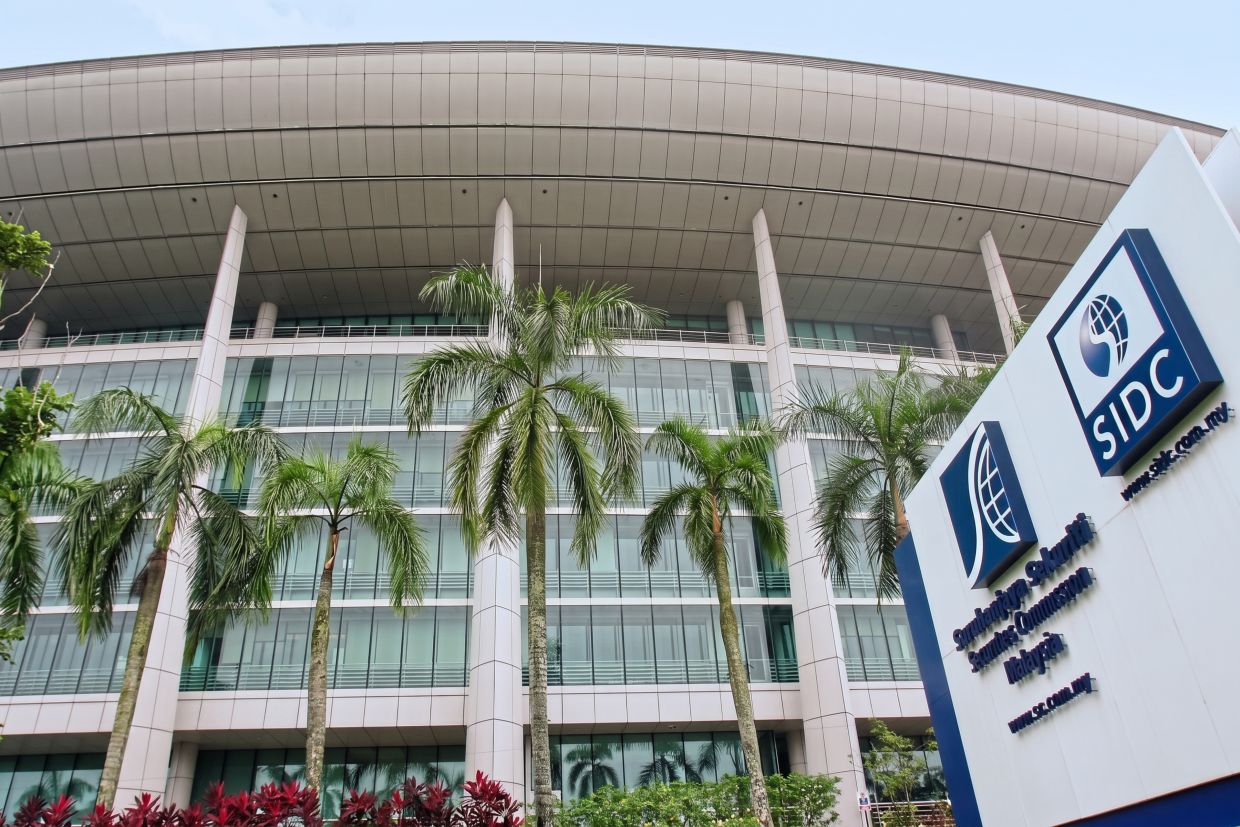
Malaysia's appellate judiciary has delivered a resounding endorsement of market integrity by unanimously affirming findings of insider trading misconduct against two corporate figures in a landmark case that stretches back nearly a decade. The Court of Appeal's decision leaves no room for ambiguity: former WCT Bhd deputy managing director Goh Chin Liong and Ara Holdings Sdn Bhd director Leong Ah Chai remain guilty of breaching securities laws, with the Securities Commission Malaysia (SC) entitled to recover the full RM5.83 million in damages originally awarded by the High Court in 2022.
The appellate court's dismissal of both defendants' appeals came without qualification, with judges finding no legal grounds for intervention. Each appellant has been ordered to bear RM100,000 in costs, a substantial financial penalty layered atop earlier rulings requiring Goh and Leong to individually pay RM2.5 million in disgorgement—compensation reflecting the profits or losses they avoided through their unlawful conduct—plus RM300,000 each in civil penalties and RM75,000 each to cover the SC's legal expenses. This cumulative financial burden underscores judicial determination to punish market manipulation through meaningful monetary sanctions.
The underlying facts reveal a textbook insider trading scheme that exploited information asymmetries within a major Malaysian corporation. In early 2009, Goh, utilising his position within WCT's management hierarchy, disclosed material non-public information to Leong regarding the imminent cancellation of a substantial construction contract. This project was no ordinary deal: it involved the proposed construction of a racecourse facility in Dubai, United Arab Emirates, overseen through a joint venture between WCT and Arabtec Construction LLC. The contract's termination represented commercially significant news that would materially impact WCT's financial position and share valuation.
Within days of receiving this privileged intelligence, Leong executed a coordinated disposal of 1.64 million WCT shares held within Ara Holdings' trading account across a four-day window from January 2 to 5, 2009. The timing was far from coincidental. By offloading substantial shareholdings before the market absorbed news of the Dubai contract's cancellation, Leong effectively protected himself from equity losses that would have followed the announcement—the classic hallmark of insider trading. The share sales represented a direct financial benefit derived from information that remained confidential to the broader investing public.
The SC's original civil action, initiated in 2015, invoked sections 188(2) and 188(3) of the Capital Markets and Services Act 2007, provisions that establish liability for communicating or trading on material non-public information. The regulatory authority pursued civil rather than criminal remedies, a choice that streamlined proceedings but still demanded proof of the defendants' knowledge and intent. At the original trial, the High Court judge accepted the SC's evidentiary presentation entirely, finding Goh's communication to Leong and the subsequent share dispositions constituted clear breaches of securities law.
What makes the appellate affirmation particularly significant for Malaysian market regulation is its clarity on enforcement. The Court of Appeal found no appealable error—no misapplication of law, no evidentiary misstep, no procedural irregularity—that would justify overturning the trial judgment. This finality carries implications beyond the immediate parties. When appellate courts consistently uphold insider trading convictions without modification, they establish predictable enforcement frameworks that deter potential violators and reassure retail investors that regulatory safeguards actually function.
The judgment also illuminates the SC's evolving enforcement toolkit. In May 2026, the regulatory body succeeded separately in convincing the High Court to reinstate garnishee orders—legal mechanisms allowing the SC to intercept assets or funds owing to the defendants as a recovery mechanism. This dual-track approach—combining substantive liability findings with post-judgment collection strategies—reflects sophisticated regulatory practice aimed at ensuring monetary awards translate into actual recovery rather than remaining symbolic victories.
For Malaysian investors, the decision carries reassuring implications. Insider trading corrodes market confidence by creating informational hierarchies where corporate insiders enjoy systematic advantages over external shareholders. When privileged individuals exploit non-public information to avoid losses or crystallize gains, ordinary investors effectively subsidise insider profits through the degraded liquidity and pricing signals that characterise compromised markets. The SC's pursuit of enforcement action, sustained across seventeen years through trial and appeal, demonstrates institutional commitment to policing these violations regardless of elapsed time or legal complexity.
The broader Southeast Asian context renders this judgment particularly instructive. Regional capital markets operate within developing regulatory frameworks where enforcement capacity remains uneven across jurisdictions. Malaysia's demonstration of appellate consistency in insider trading matters—combined with the SC's persistence in post-judgment recovery efforts—signals to international investors that local market supervision reaches functional levels. This confidence-building dimension matters significantly for regional fund flows and market development.
Looking ahead, the SC has signalled its intention to pursue recovery mechanisms against both defendants, transforming the appellate judgment from declaratory statement into executable financial obligation. The regulatory authority's public commentary emphasises that insider trading remains categorised as serious misconduct precisely because it corrodes the foundational premise of fair dealing underlying all securities markets. When insiders systematically extract advantages unavailable to external investors, market liquidity contracts and volatility increases as rational investors discount the informational disadvantages they face.
The finality of the appellate decision also clarifies legal liability for communication as well as trading. Goh's disclosure to Leong created the precondition for Leong's unlawful share sales, establishing that insider trading liability extends throughout the information chain, not merely to the person executing trades. This principle matters considerably for corporate governance, as it establishes that management personnel cannot insulate themselves from liability by delegating execution of share transactions to associates or trading accounts outside their direct name.
As Malaysian securities regulation continues maturing, this judgment reinforces that courts remain willing to sustain enforcement actions through appellate tiers and to impose meaningful financial consequences. The decision should reorient corporate insiders' risk calculations: the probability of detection may be imperfect, but the consequences of conviction are substantial and will be enforced through asset recovery mechanisms that extend beyond the initial judgment.

