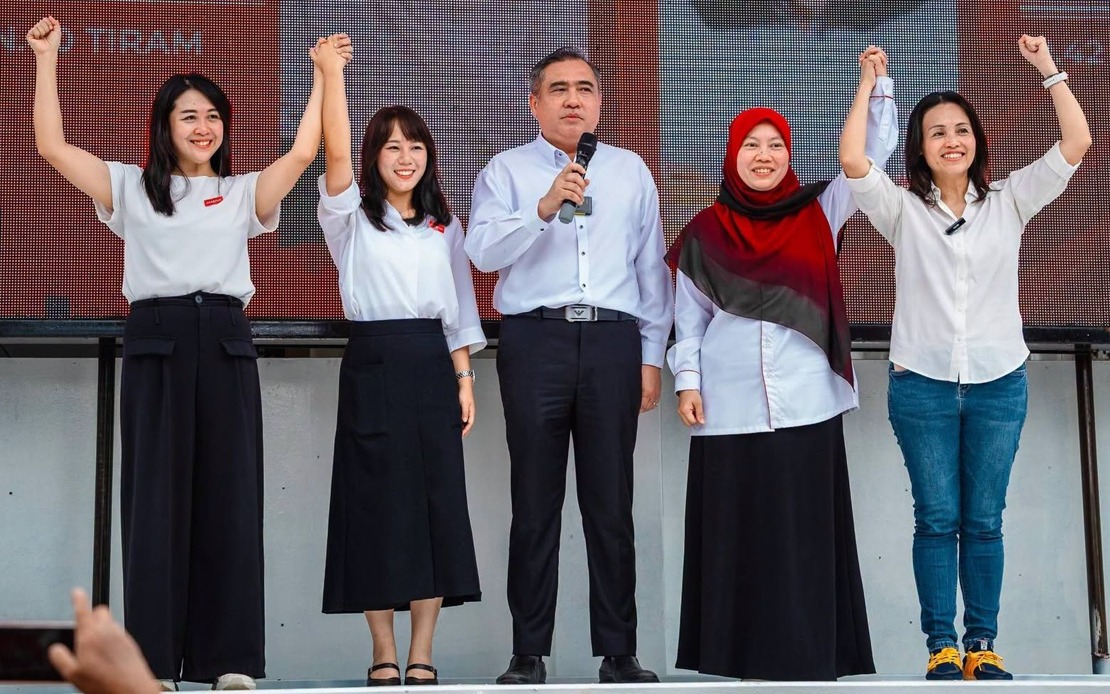
The Democratic Action Party has unveiled its slate of four candidates for the Johor state election scheduled for July 11, signalling an ambitious expansion of the coalition's footprint in the southern state. The announcement, made by party secretary-general Anthony Loke Siew Fook at a ceremony in Johor Bahru on June 20, reflects Pakatan Harapan's determination to consolidate control across key parliamentary constituencies in a state that has proven strategically important to national coalition politics.
Among those named was Nor Zulaila Abd Ghani, a 38-year-old private secretary to the Deputy Finance Minister, who will contest the Tiram state seat in what represents a significant tactical shift for DAP. Tiram, characterised as a mixed seat with a Malay-majority demographic composition, has not previously been targeted by the party with a candidate. Loke expressed confidence that Nor Zulaila's candidacy would resonate with voters, underscoring the coalition's willingness to contest in constituencies where it has historically been less competitive. The move reflects a maturing strategy in which opposition-aligned parties are gradually expanding their ethnic appeal beyond traditional strongholds.
The party also fielded Lee Wern Yiing, a 30-year-old who currently leads DAP's Socialist Youth wing in Johor. Lee will contest the Johor Jaya seat, bringing youthful energy to the campaign. Alongside these new candidates, DAP is mounting a defence of existing ground through incumbents. Wong Bor Yang, aged 40 and the sitting assemblyman for Senai, will seek re-election to his seat, while Mohamad Shafwan Ani, a 33-year-old special assistant to the Kulai Member of Parliament, will contest Bukit Permai.
Loke's strategic commentary during the announcement reveals the coalition's coordinated approach to the Johor elections. Pakatan Harapan has adopted a unified strategy centring on the Kulai parliamentary constituency, which encompasses three state assembly divisions. By fielding candidates across all three seats—with DAP now contesting Bukit Permai, PKR defending Bukit Batu, and DAP holding Senai through Wong—the coalition aims to exercise comprehensive control over this parliamentary territory. This approach demonstrates how state elections have become increasingly organised around parliamentary-constituency-level planning, with coalition partners dividing seats to avoid internal competition and maximise overall seat capture.
The Bukit Permai candidacy merits particular attention given Loke's emphasis on Mohamad Shafwan's lengthy involvement in the constituency. A nine-year track record of ground-level activism provides the candidate with name recognition and established networks that will prove invaluable in direct electoral competition. This choice reflects a deliberate recruitment strategy prioritising candidates with demonstrated community embededness over parachuted outsiders, a lesson learned from previous electoral disappointments across Malaysia.
The electoral calendar outlined by the Election Commission structures the campaign period tightly. Nomination day has been set for June 27, providing candidates with roughly one week to formally register their candidacies following this announcement. Early voting is scheduled for July 7, four days before the main polling day, allowing essential workers, security personnel, and other eligible categories to cast ballots in advance. This compressed timeframe means campaigning will be intense, with candidates having approximately two weeks from nomination to secure voter support.
For Malaysian political observers, the Johor state election carries implications extending beyond state-level politics. The southern state represents a crucial testing ground for Pakatan Harapan's appeal in a state where it has faced significant structural challenges. Johor's electorate includes substantial Bumiputera and conservative constituencies where the coalition has struggled to gain traction compared to its performance in urbanised areas or opposition strongholds elsewhere. The decision to contest Tiram with a candidate of Nor Zulaila's profile suggests the coalition is making calculated efforts to appeal to Malay-Muslim voters through diverse candidate backgrounds and policy positioning.
The announcement also reflects internal coalition dynamics, with the visibility accorded to DAP secretary-general Loke—who also serves as Transport Minister in the federal cabinet—underscoring the national significance attached to this state election. The presence of Johor DAP chairman Teo Nie Ching and deputy Wong Shu Qi ensured party organisational depth and local credibility underpinned the candidate rollout, demonstrating how state elections operate as multilayered political processes involving federal, state, and local party figures in carefully choreographed public appearances.
Looking ahead, the composition of DAP's candidate slate suggests a party balancing generational renewal with stability. The inclusion of a young DAPSY chief, a relatively new candidate in Tiram, and established figures like Wong provides portfolio diversity. Whether this mix translates into expanded electoral reach or merely consolidates existing support will become clear on July 11, but the strategic ambition reflected in these nominations indicates Pakatan Harapan views Johor as a state where coalition politics can still be substantially reshaped through organised campaigning and strategic candidate deployment.

%22%2F%3E%3C%2Fpattern%3E%3C%2Fdefs%3E%3Crect%20width%3D%22100%25%22%20height%3D%22100%25%22%20fill%3D%22url(%23ph58b6pg)%22%2F%3E%3Crect%20width%3D%22100%25%22%20height%3D%22100%25%22%20fill%3D%22url(%23ph58b6pp)%22%2F%3E%3Ctext%20x%3D%2250%25%22%20y%3D%2250%25%22%20text-anchor%3D%22middle%22%20dominant-baseline%3D%22central%22%20fill%3D%22rgba(255%2C255%2C255%2C0.95)%22%20font-family%3D%22Georgia%2C%20'Times%20New%20Roman'%2C%20serif%22%20font-weight%3D%22700%22%20font-size%3D%22320%22%20letter-spacing%3D%22-0.02em%22%3EMMC%3C%2Ftext%3E%3C%2Fsvg%3E)