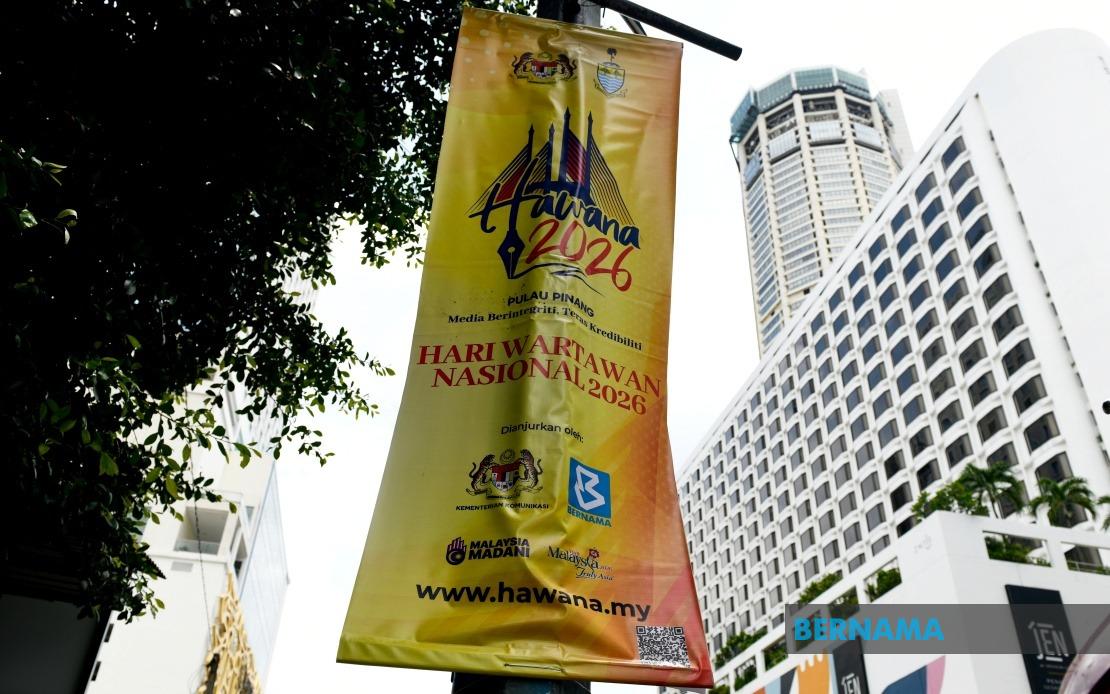
Communications Minister Datuk Fahmi Fadzil arrived in Penang this week for a two-day engagement that culminates in the National Journalists' Day (HAWANA) 2026 grand finale, underscoring the government's commitment to strengthening the media sector and recognising journalism's role in nation-building. The visit, which began mid-June, reflects the significance placed on the annual observance and the broader conversation around media credibility in an increasingly complex information landscape.
Fahmi's itinerary demonstrates the breadth of activities organised around HAWANA 2026, beginning with the Malaysia Media Retreat Programme 2.0 in Seberang Jaya. This gathering brings together senior editorial figures and executives from both domestic and international news organisations, creating a space for strategic dialogue on the industry's future direction. The retreat serves not merely as a networking occasion but as a platform to acknowledge the media's instrumental contribution to Malaysia's development trajectory, particularly in an era where accurate information dissemination proves critical to public discourse.
The evening engagement with Penang Yang Dipertua Negeri Tun Ramli Ngah Talib highlights the state-level importance attributed to the celebrations. A formal dinner following the afternoon session signals that HAWANA recognition extends beyond federal structures, incorporating state governments in honouring media practitioners' work. This inclusive approach strengthens the narrative that journalism is a collective endeavour receiving support across Malaysia's governance layers.
A distinctive feature of this year's HAWANA celebrations is the RIUH Pi carnival, which opens the festivities at PICCA Convention Centre's Butterworth Arena. Rather than confining celebrations to industry insiders, organisers have deliberately broadened participation to encompass creative practitioners, entrepreneurs and the general public. The three-day carnival format, offering free admission, reflects an intentional effort to democratise access and engage wider society in conversations about media's evolving role.
The carnival's programming reveals sophisticated curation aimed at merging artistic expression with practical skill-building. Workshops in cyanotype printmaking, albumen printing and stone-carving workshops introduce traditional creative techniques to contemporary audiences, suggesting that HAWANA 2026 seeks to position journalism within a broader creative ecosystem. This thematic connection recognises that media practitioners increasingly intersect with creative industries, whether through visual storytelling, multimedia production or digital content creation.
With more than two dozen local creative product brands, 20 food vendors and 16 live performances scheduled, the carnival achieves the dual purpose of entertainment and economic activity stimulation. Featured artists including Sakura Band, Kaka Azraff, Budak Nakal Hujung Simpang and Chelsea Ng bring contemporary Malaysian music to audiences, creating a vibrant atmosphere that moves HAWANA celebrations beyond ceremonial formality into community engagement territory.
The second day's programming maintains momentum with the Jiwa@Sembang Santai special edition at Seberang Jaya Public Market Food Court, deliberately situating ministerial engagement in a grassroots setting rather than formal venues. This choice demonstrates intentional effort to reach ordinary Malaysians in everyday spaces, positioning media dialogue as accessible rather than exclusive. The morning discussion format encourages informal exchange between government representatives and citizens about communications policy.
A dedicated media dialogue with Fahmi follows, creating structured space for journalists to directly engage with the ministry responsible for communications oversight. Such forums prove valuable for clarifying policy direction, addressing sector concerns and establishing direct communication channels between government and practitioners. These interactions contribute to the transparency and mutual understanding essential for healthy media-government relations.
The HAWANA 2026 grand finale represents the climax of week-long celebrations, with Prime Minister Datuk Seri Anwar Ibrahim's participation elevating the event's prominence within national affairs. Themed "Media Integrity Strengthens Credibility," the grand finale addresses contemporary journalism's central challenge: maintaining public trust amidst information proliferation and digital disruption. Bringing together approximately 1,000 media professionals domestically and internationally creates a rare assemblage of industry talent focused on substantive discussions about journalism's trajectory.
The choice of theme carries particular significance for Southeast Asian contexts, where press freedom indices consistently register concerns across the region. Malaysia's explicit emphasis on media integrity signals government acknowledgment that credibility challenges demand serious institutional attention. The presence of international participants suggests organisers view this conversation as relevant beyond Malaysia's borders, recognising that digital information flows transcend national boundaries.
Organisation by the Ministry of Communications with Bernama (the Malaysian National News Agency) as implementing agency reflects institutional commitment to HAWANA's success. As Malaysia's national news agency, Bernama's lead role underscores the government's investment in coordinating the profession's recognition. This structure ensures consistency in messaging and resource allocation while leveraging Bernama's extensive networks across the journalism ecosystem.
HAWANA itself represents Malaysia's premier recognition mechanism for media professionals, celebrating contributions and dedication that frequently operate outside public view. The annual observance acknowledges that journalism requires sustained commitment despite increasing challenges to business sustainability. By formally recognising practitioners' professionalism, HAWANA reinforces societal valuation of reliable information dissemination as essential to democratic functioning and social cohesion.
The timing of these celebrations reflects broader regional conversations about media's role in addressing disinformation and maintaining public discourse quality. As Southeast Asian nations grapple with digital transformation's implications, Malaysia's decision to extensively celebrate and examine journalism through HAWANA demonstrates forward-thinking acknowledgment that information integrity matters fundamentally to national resilience and regional stability.