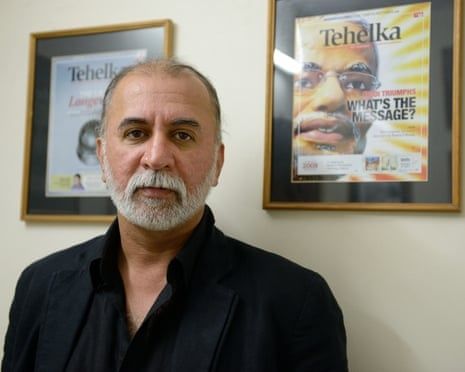
A senior Indian court has handed down a significant guilty verdict against Tarun Tejpal, the 63-year-old founder and former editor of Tehelka magazine, overturning his earlier acquittal in a high-profile sexual assault case that has dominated Indian media discourse for over a decade. The Bombay High Court's conviction on Thursday came after the Goa government challenged the 2021 acquittal decision, culminating in a legal reversal that underscores the complexity and prolonged nature of India's approach to prosecuting sexual violence cases. Tejpal now faces sentencing, though he maintains his innocence and has signalled his intention to pursue an appeal through higher judicial channels.
The allegations against Tejpal originate from an incident in November 2013, when he allegedly assaulted a female journalist in the elevator of a luxury hotel in Goa during a media event. The woman, who was his junior colleague at the magazine, came forward to report the assault, setting off a chain of legal proceedings that would span more than a decade. Tejpal's arrest in late 2013 initially saw him detained for approximately seven months before India's Supreme Court intervened, granting him bail and allowing him temporary freedom pending trial outcomes.
The reversal by the Bombay High Court represents a turning point in how Indian courts have begun re-evaluating sexual assault convictions and acquittals. The lower trial court in Goa had dismissed charges including rape, sexual harassment, and wrongful restraint in 2021, seemingly providing Tejpal with legal relief. However, the Goa government's decision to challenge this acquittal proved instrumental in reopening the case for judicial scrutiny, ultimately leading to a different conclusion about the evidence and testimony presented before the court.
Sunita Sawant, the lead investigator with Goa Police, characterised the verdict as a watershed moment for workplace safety and women's empowerment in India's professional sectors. Her remarks to journalists emphasised that the conviction validates the complainant's courage in pursuing justice and signals to other women that the judicial system can ultimately vindicate their claims of sexual misconduct, regardless of the initial setbacks. This messaging carries particular weight in India, where workplace sexual harassment has emerged as a persistent challenge across media, technology, and corporate environments.
The timing and circumstances of this case intersected with one of India's most transformative moments regarding sexual violence legislation. The conviction comes roughly a year after the fatal gang rape of a young woman on a New Delhi bus in December 2012 sparked massive public protests and international condemnation. That tragedy catalysed significant amendments to India's rape laws and established greater awareness around sexual assault as a systemic issue requiring legislative and cultural reform. Tejpal's case, emerging in the immediate aftermath of this national reckoning, carried symbolic weight as a test of whether the criminal justice system could hold powerful men accountable.
Tehelka magazine itself has borne the reputational consequences of its founder's actions. As an investigative publication that had built considerable credibility championing women's rights and social justice causes, the allegations against Tejpal created a profound irony and damaged the institution's authority. The magazine's positioning as a champion of accountability for wrongdoing made the internal allegations against its leadership particularly damaging to its standing. Despite continuing operations under new editorial leadership, Tehelka has struggled to recover the influence and trust it commanded before 2013, suggesting that institutional credibility, once compromised, proves difficult to restore.
The broader implications of this conviction extend across South Asian media and corporate environments. For Southeast Asian readers and professionals, the case demonstrates both the challenges and emerging possibilities in pursuing justice for sexual harassment in hierarchical newsroom cultures. Indian media outlets, often mirroring organisational structures found throughout the region, have begun implementing more robust internal complaint mechanisms and oversight structures in response to high-profile cases like this one. The conviction may accelerate similar accountability measures across regional publications.
Tejpal's stated intention to appeal the conviction to higher courts suggests the legal battle remains unresolved. Indian courts frequently overturn verdicts in complex cases involving sexual assault, where questions about consent, credibility of witnesses, and corroborating evidence generate legitimate disagreement among jurists. The possibility of further reversals highlights the unpredictability that complainants in sexual assault cases often encounter navigating India's judicial system, where trial outcomes can shift dramatically based on appellate court interpretations of the same evidence.
For Malaysian observers, the Tejpal case offers instructive parallels regarding how power differentials in media organisations can facilitate sexual misconduct. Malaysia's own media landscape has witnessed occasional harassment allegations, though these have typically been resolved through quieter institutional channels rather than courtroom convictions. The Indian case demonstrates the value of transparent legal proceedings and government intervention in challenging initial acquittals, contrasting with approaches in some regional contexts where such matters remain confidential.
The sentencing phase now enters focus, with questions about what punishment the court will impose on Tejpal. Indian rape law provides for mandatory minimum sentences in certain circumstances, and the Bombay High Court's decision to convict suggests the bench believed the evidence exceeded the threshold for guilt beyond reasonable doubt. The severity of the sentence will signal the court's assessment of the crime's gravity and may influence how lower courts handle similar cases going forward.

