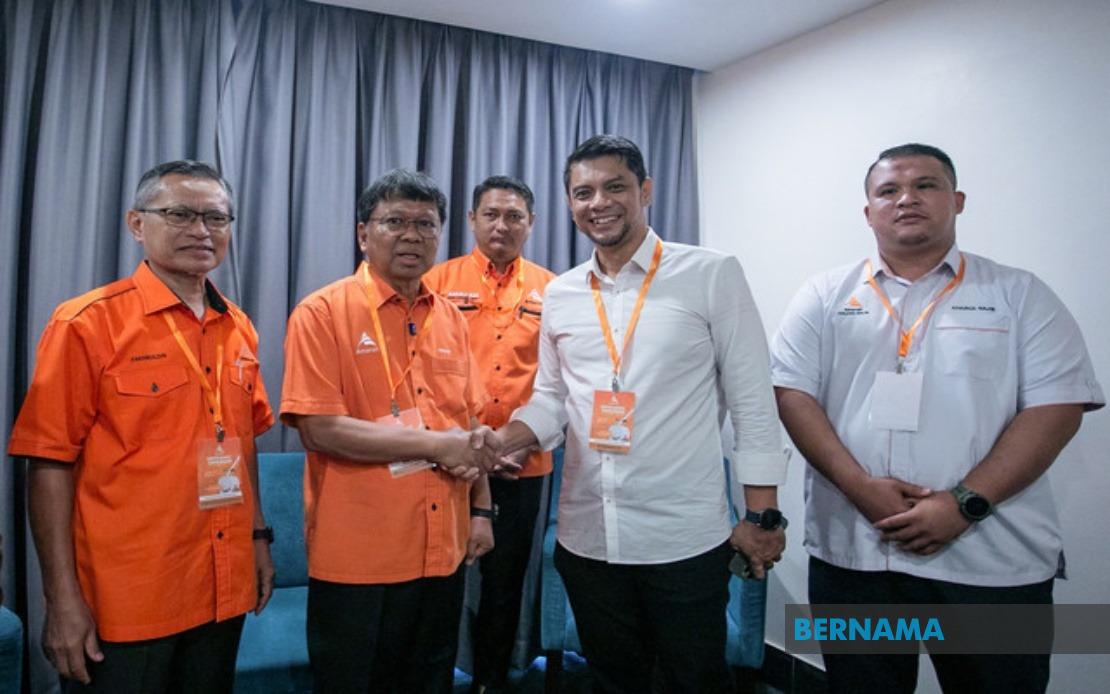
Hasnul Zulkarnain Abd Munaim, who previously represented Titi Serong in the Perak state assembly, has formally rejoined Parti Amanah Negara following a six-year absence from the party. The readmission, approved during Amanah's National Management Meeting and National Leadership Meeting held on June 18, marks a significant moment in Perak's fractious political landscape, where party realignments have been commonplace over the past four years.
According to Datuk Asmuni Awi, the chairman of Perak's Amanah division, Hasnul Zulkarnain had previously signalled his desire to return but circumstances had not aligned to permit formal discussion. The party leadership has now determined that the political environment is suitable to reconsider applications from former members seeking readmission, a stance increasingly adopted by other political parties across Malaysia as they consolidate their positions ahead of the next electoral cycle.
Hasnul Zulkarnain, who also served as the state chapter's Amanah Youth chief, has expressed gratitude to the party hierarchy for accepting his return. In his remarks, he characterised the decision as a demonstration of the leadership's confidence in his continued ability to serve the party's cause and contribute meaningfully to its political agenda. His homecoming underscores a pattern observed within Amanah of attempting to rebuild its organisational strength by reintegrating members who departed during politically turbulent periods.
The significance of this development lies partly in the broader political context of Perak state politics. In March 2020, at a moment when Perikatan Nasional's formation was reshaping the state's political configuration, Hasnul Zulkarnain made his initial departure from Amanah. He was not alone in this exodus, as two other state assemblymen—Yong Choo Kiong from Tronoh and A. Sivasubramaniam from Buntong, both previously aligned with DAP—similarly announced their transitions to independent status during the same period. This coordinated shift reflected the seismic political realignment that gripped Perak following the collapse of the Pakatan Harapan government at the federal level.
Following his initial departure, Hasnul Zulkarnain did not remain an independent for an extended period. By July 2020, merely months after quitting Amanah, he formally joined Parti Pribumi Bersatu Malaysia (Bersatu), the Mahathir-linked party that was central to Perikatan Nasional's formation. This relatively swift move to Bersatu suggested his political positioning had undergone substantial recalibration during that tumultuous period. However, his tenure with Bersatu appears not to have been permanent, setting the stage for his eventual return to Amanah.
Amanah's decision to readmit Hasnul Zulkarnain reflects the party's recognition that significant numbers of former members who departed during the 2020 political upheaval continue to harbour ideological alignment with Amanah's political values and reform agenda. Rather than viewing these departures as permanent losses, the party leadership evidently perceives an opportunity to recapture this constituency by demonstrating openness to reconciliation. This approach mirrors strategies deployed by other Malaysian political parties, which have increasingly adopted lenient re-entry policies for lapsed members as they prepare for upcoming electoral contests.
For Perak politics specifically, the readmission carries implications for Amanah's organisational capacity in a state where the party has faced considerable challenges in recent years. The state remains a critical battleground for opposition forces, with control oscillating between Perikatan Nasional and Pakatan Harapan coalitions. By strengthening its internal membership base and reclaiming figures with prior political experience, Amanah positions itself more competitively for state-level contests. Hasnul Zulkarnain's return brings not merely a symbolic gesture but practical value in terms of accumulated political networks and constituency connections accumulated during his earlier legislative tenure.
Asmuni's remarks regarding the party's calibrated approach to readmitting former members suggest a deliberate shift in Amanah's membership strategy. Rather than maintaining rigid exclusions, the party has concluded that political circumstances now justify a more pragmatic stance toward individuals who previously exited. This flexibility reflects both electoral calculations and an acknowledgment that Malaysia's volatile political environment of recent years has created legitimate grounds for party changes. The door reopening to members like Hasnul Zulkarnain signals that Amanah views itself as stable enough to absorb returning members without compromising its core identity.
The timing of this readmission, announced in June 2024, arrives amid broader discussions within Malaysian opposition coalitions regarding member consolidation and electoral positioning ahead of the next cycle of state elections. Perak is particularly significant given its history of narrow political margins and coalition instability. By strategically reintegrating experienced former members, Amanah contributes to its coalition's overall strength while simultaneously demonstrating organisational maturity through reconciliation rather than perpetual internal division. Hasnul Zulkarnain's case exemplifies how political parties are increasingly treating the revolving-door nature of Malaysian politics as an opportunity for reconciliation rather than permanent estrangement.