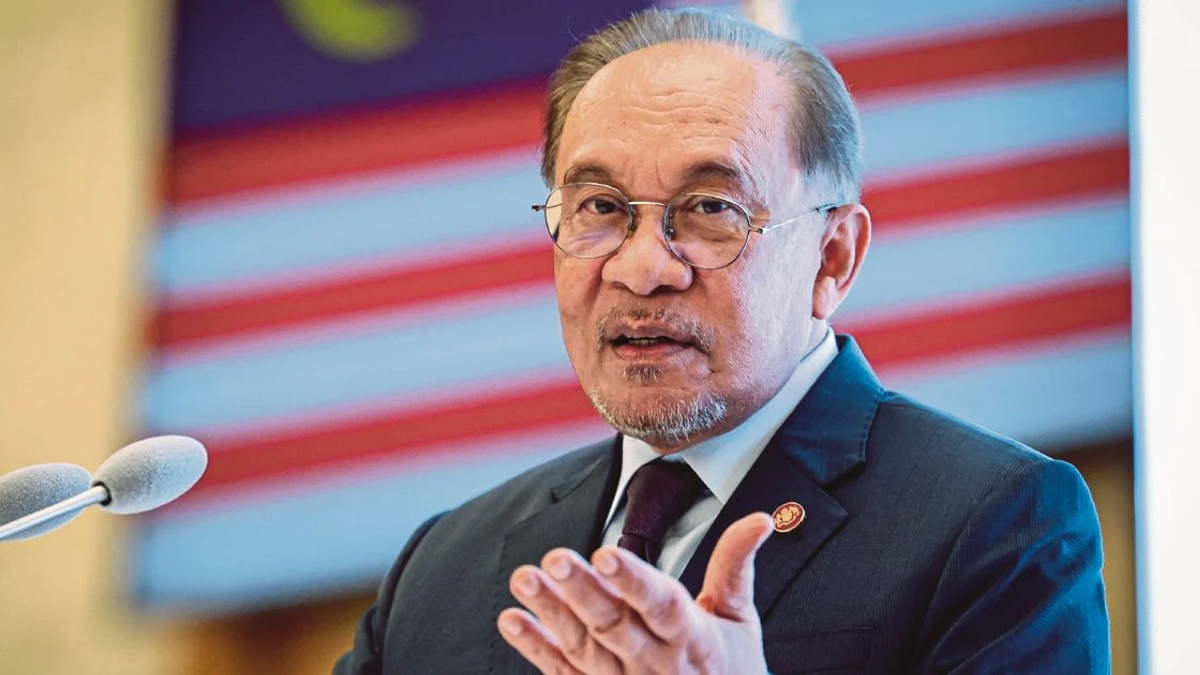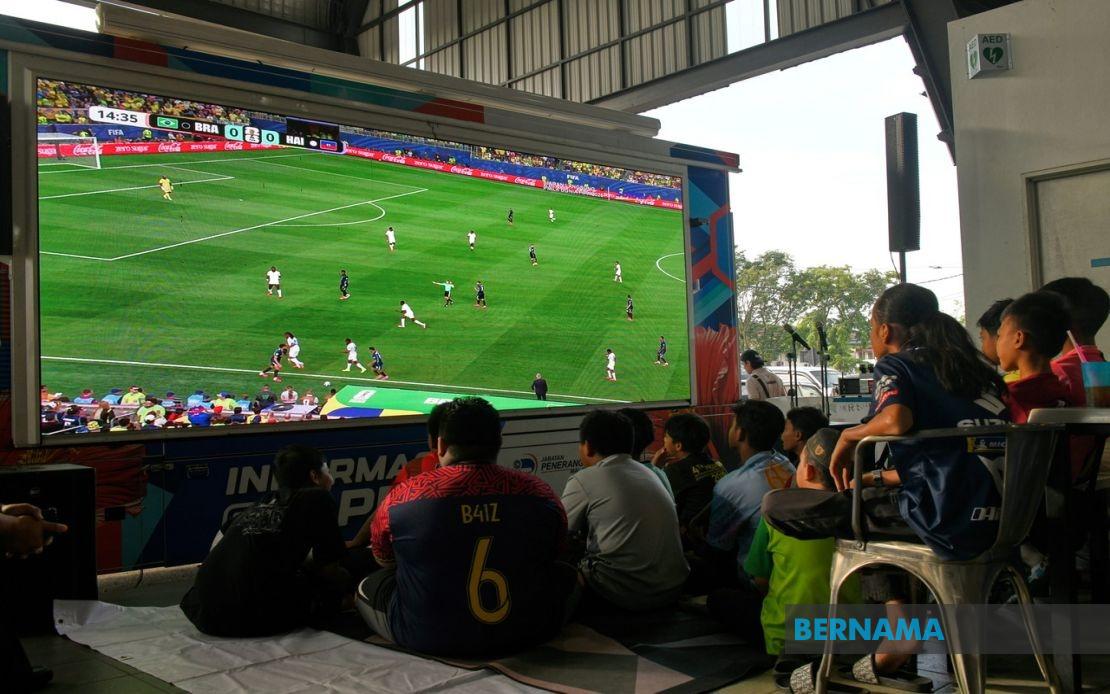
Communications Minister Datuk Fahmi Fadzil has highlighted the positive reception accorded to the Malaysian government's decision to make 2026 FIFA World Cup matches available without charge through Radio Televisyen Malaysia and Unifi TV, noting that the initiative is delivering measurable savings to both business owners and ordinary citizens. Speaking in Butterworth after observing the first half of a Brazil versus Haiti match at a local public market food court, Fahmi underscored how this broadcasting arrangement addresses a significant financial constraint that has long affected venues dependent on major sporting events.
The initiative reflects growing recognition within government circles that universal access to marquee international sporting competitions serves broader economic and social objectives beyond entertainment. By removing the financial barrier that typically requires food establishments to purchase premium broadcast rights, the government has effectively democratised viewing opportunities for a substantial segment of the population. This approach carries particular resonance in Malaysia, where restaurant aggregation points serve as communal gathering spaces where residents from diverse backgrounds converge during major tournaments.
Testimony from the Malaysian Muslim Restaurant Owners Association has reinforced the tangible impact of this policy intervention. Association representatives conveyed to the minister that the cost savings flowing from free access to World Cup content represent a material reduction in operational expenses during peak viewing periods. One food trader disclosed to Fahmi that this marked the first occasion in more than two decades when he could transmit World Cup matches to his customers without incurring substantial licensing fees—a striking measure of how commercialisation had previously constrained access to such events within the wider community.
The technical infrastructure enabling this free access spans multiple platforms, with RTM providing traditional broadcast delivery, RTMKlik offering digital streaming capability, and Unifi TV extending reach through subscription television services. This multi-platform approach ensures that coverage is not confined to households with specific viewing capabilities, but rather extends across varied demographic and geographic segments. For restaurant operators particularly, the ability to screen matches without negotiating individual broadcast licensing arrangements removes administrative complexity while simultaneously reducing financial exposure.
Fahmi's visit to the Seberang Jaya Public Market represented more than ceremonial political engagement; it functioned as a direct feedback-gathering exercise with constituency stakeholders grappling with contemporary economic pressures. Beyond discussing World Cup broadcasting arrangements, the minister engaged with market traders regarding broader operational conditions and competitive challenges they face. This ground-level interaction provided firsthand exposure to trader perspectives on business viability and the concrete constraints limiting their operational capacity.
The conversation between government representative and business operators extended naturally to encompassing the wider economic environment affecting commercial activity throughout Malaysia. Traders articulated concerns regarding sustained cost inflation stemming from regional geopolitical instability, specifically referencing the ongoing conflict in West Asia and its cascade effects on import costs for certain categories of goods. These input costs, being largely beyond the control of individual business proprietors, compress profit margins and necessitate difficult choices regarding pricing strategies and service provision.
Fahmi signalled his intention to relay trader feedback to Prime Minister Datuk Seri Anwar Ibrahim and Penang Chief Minister Chow Kon Yeow, positioning the informal gathering as an avenue through which localised commercial concerns gain traction within higher-level government deliberations. This escalation pathway acknowledges that restaurant operators and market traders, while representing individual economic units, collectively constitute a politically significant constituency whose welfare bears upon broader public sentiment regarding government economic stewardship.
The minister's broader reflection on ministerial engagement patterns carries implications for governance practice and political responsiveness. His observation that increased ground-level participation by ministers, parliamentary representatives, and state assemblymen would enhance understanding of citizen and trader circumstances suggests recognition that bureaucratic distance can erode policy efficacy. Direct exposure to operational realities facing small business proprietors furnishes context that statistical economic data alone cannot convey, potentially refining subsequent policy formulation.
From a Southeast Asian perspective, Malaysia's approach to World Cup broadcasting accessibility offers a template worthy of consideration by regional governments. The decision to leverage state broadcasting resources to ensure universal access to major sporting spectacles acknowledges that such events function as cultural rallying points around which communities coalesce. When financial barriers exclude substantial population segments from participation in shared cultural moments, social cohesion potentially suffers whilst commercial operators shoulder unreasonable cost burdens.
The implicit policy framework underlying this broadcasting initiative reflects prioritisation of inclusive economic participation over maximising revenue extraction from sports media rights. Rather than permitting commercial broadcasters exclusive licensing arrangements that concentrate costs, the government has opted for a distribution model acknowledging that society-wide economic health and social cohesion generate returns exceeding those derivable from concentrated licensing fee arrangements. This philosophy, if consistently applied across multiple policy domains, could reshape how Malaysian government approaches digital infrastructure and content access.
Looking toward the 2026 World Cup tournament itself, free broadcasting arrangements will likely prove consequential for viewership patterns and associated commercial activity within hospitality venues. The financial envelope available to restaurant and café operators for facility enhancement, staffing augmentation, and promotional activity expands when broadcasting costs contract. These marginal improvements in operator circumstances aggregate into measurable sectors-wide employment and service quality impacts.
The initiative further demonstrates how government interventions addressing specific cost pressures on defined business constituencies can generate multiplicative benefits across wider society. By reducing barriers to World Cup access, the policy simultaneously supports household recreational expenditure by enabling cost-free or reduced-cost viewing at food establishments rather than requiring home subscription arrangements, while supporting restaurant revenue during major tournaments—aligning incentives across multiple constituencies.
As Malaysia continues navigating macroeconomic pressures emanating from regional instability and inflationary environments, such targeted interventions addressing concrete operational challenges facing small business proprietors represent pragmatic governance. The apparent reception accorded this World Cup broadcasting initiative suggests appetite within business and public constituencies for government policies demonstrating cognisance of contemporary cost pressures and demonstrable commitment to alleviating them through innovative deployment of state resources.