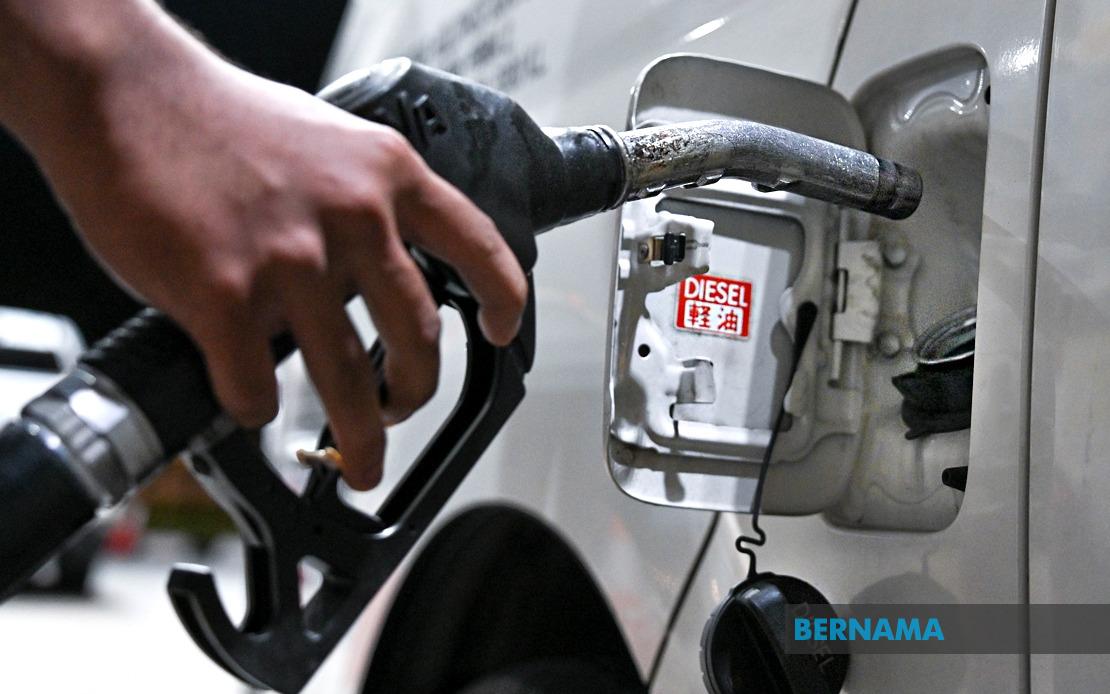
Prime Minister Datuk Seri Anwar Ibrahim announced a significant shift in Malaysia's fuel subsidy framework on June 21, confirming that subsidised diesel prices will decrease to RM2.10 per litre beginning July 2026. The adjustment represents a notable policy move designed to provide relief to Malaysians facing persistent fuel expenses while simultaneously strengthening targeting mechanisms to prevent subsidy leakage. The new structure will mirror the approach already established through the BUDI MADANI RON95 programme, utilising MyKad verification to confirm eligibility and restrict benefits to Malaysian citizens.
The price reduction addresses a persistent gap in Malaysia's regional fuel economics. Peninsular Malaysia has operated with an unsubsidised diesel retail price of RM4.37 per litre, whilst Sabah and Sarawak have enjoyed a subsidised rate of RM2.15 per litre. This disparity has created both equity concerns and operational complications for national fuel policy coordination. The new unified approach aims to harmonise pricing across the entire country whilst maintaining fiscal discipline through citizenship verification, potentially reducing the fiscal burden that subsidy programmes have historically imposed on government finances.
For transport-dependent workers and small business operators, the announcement delivered tangible encouragement about operational cost management. Night market trader Mohd Faizal Ahmad from Shah Alam described the reduction as a long-awaited development, emphasising that substantial savings would flow directly to his household budget. His optimism hinged particularly on the verification mechanism, reflecting broader concerns among users that subsidies should genuinely reach those whose livelihoods depend on fuel consumption rather than benefiting ineligible recipients or encouraging wasteful consumption patterns.
Small-scale contractors operating across the country similarly welcomed the initiative as a fairer approach to fuel support. Tan Chee Keong, who operates a four-wheel drive vehicle for maintenance and construction material delivery work from Johor Bahru, characterised the measure as positive whilst cautiously noting that implementation quality would determine its actual effectiveness. His concerns centred on whether the subsidy administration could credibly prevent abuse—a persistent challenge in previous subsidy reform attempts across the region. The distinction between subsidised and unsubsidised pricing remains substantial enough that incentives for circumvention could remain problematic without robust enforcement.
Agricultural and rural entrepreneurs represent another constituency experiencing genuine relief from the adjustment. Vegetable farm operator R. Mageswaran from Sungai Siput explained that daily van deliveries to markets and food establishments create consistent diesel demand, making fuel costs a significant component of operational expenses. For farmers and small agricultural traders whose profit margins typically remain constrained by commodity price fluctuations and transportation competition, even modest reductions in transport expenditure can meaningfully improve financial sustainability. The ability to retain more revenue from agricultural sales rather than surrendering it to fuel costs has implications for rural income and agricultural sector viability across Malaysia.
The implementation framework relies on MyKad verification to establish eligibility and prevent unauthorised usage. Second Finance Minister Datuk Seri Amir Hamzah Azizan was scheduled to provide comprehensive implementation details, suggesting that administrative procedures would require clarification to ensure smooth rollout across the nation's petrol station network. The verification mechanism represents an evolution in how Malaysia administers subsidies, moving toward digital citizenship confirmation rather than relying solely on price controls or consumption limits. This technological approach potentially offers greater precision in targeting but requires reliable system infrastructure and retailer cooperation.
The reform carries particular significance for Sabah, Sarawak, and Labuan, where the existing subsidised diesel price of RM2.15 per litre will fall to RM2.10 per litre. Whilst this represents a modest reduction for these regions, the policy change integrates them into a unified national framework rather than maintaining separate pricing architecture. For these states, particularly Sabah and Sarawak where fuel costs have substantial impacts on island and remote area economies, the shift symbolises greater national integration of subsidy policy whilst theoretically improving administrative coherence and reducing pricing arbitrage opportunities.
The financial implications of this adjustment deserve scrutiny given Malaysia's fiscal constraints and competing spending priorities. Reducing subsidised diesel prices expands the fiscal burden on government finances, requiring offsetting measures elsewhere or accepting higher budget deficits. The decision to restrict subsidies through MyKad verification rather than implementing alternative mechanisms like consumption quotas or differential pricing suggests policymakers have chosen a citizenship-based approach over consumption-based targeting. This distinction carries different distributional consequences, potentially benefiting wealthier citizens who consume more fuel whilst providing uniform support to poorer citizens regardless of consumption levels.
Regional perspectives offer additional context for Malaysia's subsidy reform trajectory. Neighbouring countries including Indonesia and Thailand have pursued various subsidy rationalisation strategies with mixed results, often encountering political resistance and implementation challenges. Malaysia's approach of combining modest price reductions with strengthened verification mechanisms represents a middle ground between maintaining broad subsidies and implementing aggressive price deregulation. However, whether this strategy can be sustained depends fundamentally on maintaining administrative discipline and preventing verification systems from becoming subject to circumvention or political manipulation.
The timing of the announcement, targeting implementation from July 2026, provides lead time for both government agencies and private sector petrol retailers to prepare operational adjustments. The advanced notice period should theoretically enable smoother system implementation than more sudden policy changes, though experience suggests that fuel subsidy reforms frequently encounter unanticipated complications during execution. Retailers will require training and system upgrades to implement MyKad verification, whilst government agencies must establish supporting infrastructure and monitoring mechanisms to prevent abuse whilst maintaining service accessibility.
Looking forward, this reform initiative reflects Malaysia's continued struggle to balance fiscal sustainability with social welfare objectives in a commodities-dependent economy. The decision to universalise subsidised diesel pricing across all regions whilst implementing citizenship verification represents deliberate policy choices with distributional and efficiency consequences. For Malaysian workers, small business operators, and rural communities dependent on fuel consumption, the adjustment offers immediate relief whilst signalling longer-term government commitment to maintaining subsidised fuel access. However, the reform's ultimate success will depend on implementation execution, administrative discipline, and the absence of political pressure to undermine verification mechanisms during subsequent budget cycles.

%22%2F%3E%3C%2Fpattern%3E%3C%2Fdefs%3E%3Crect%20width%3D%22100%25%22%20height%3D%22100%25%22%20fill%3D%22url(%23phbnsqg)%22%2F%3E%3Crect%20width%3D%22100%25%22%20height%3D%22100%25%22%20fill%3D%22url(%23phbnsqp)%22%2F%3E%3Ctext%20x%3D%2250%25%22%20y%3D%2250%25%22%20text-anchor%3D%22middle%22%20dominant-baseline%3D%22central%22%20fill%3D%22rgba(255%2C255%2C255%2C0.95)%22%20font-family%3D%22Georgia%2C%20'Times%20New%20Roman'%2C%20serif%22%20font-weight%3D%22700%22%20font-size%3D%22320%22%20letter-spacing%3D%22-0.02em%22%3EMUDA%3C%2Ftext%3E%3C%2Fsvg%3E)