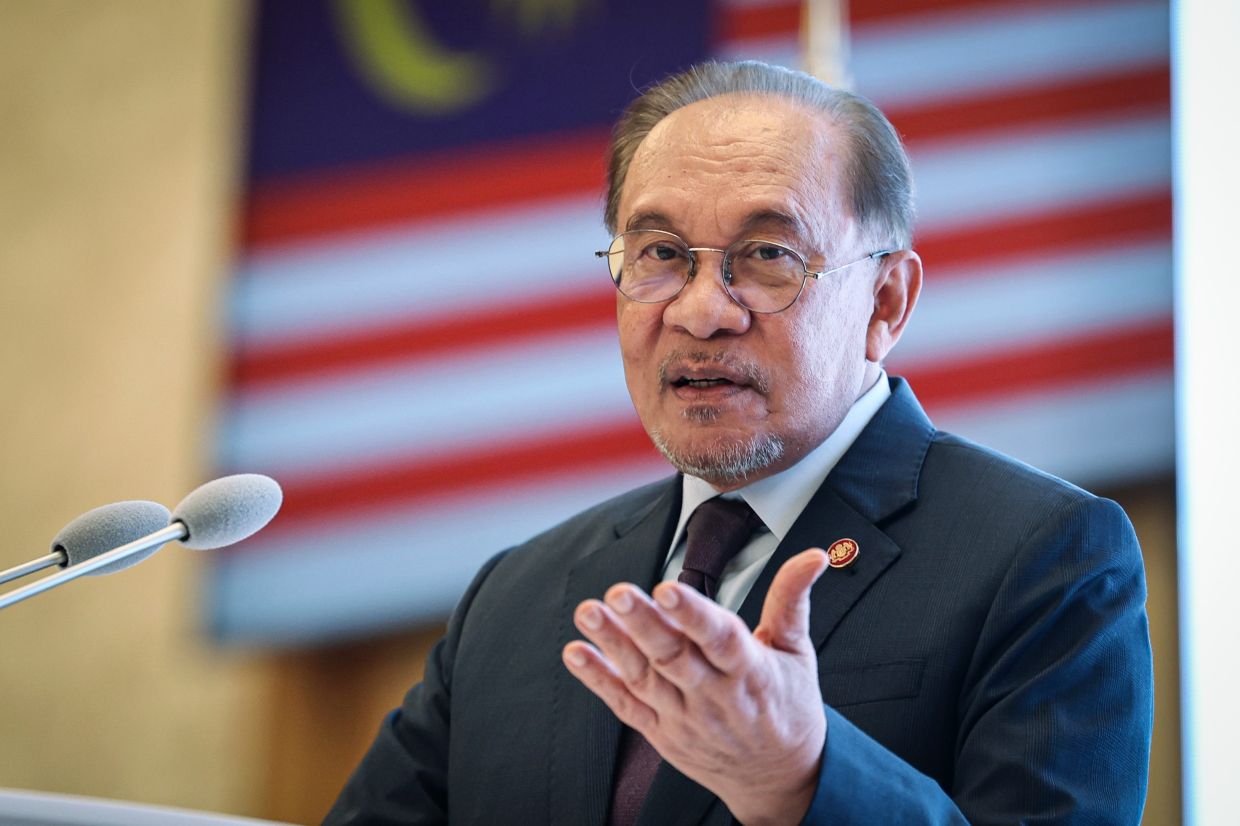
Prime Minister Datuk Seri Anwar Ibrahim has signalled the government's readiness to examine a proposal that would blend certain features of the Goods and Services Tax with Malaysia's current Sales and Service Tax framework, aiming to create a more equitable and progressive taxation structure. Speaking during the closing remarks of the Budget 2027 engagement session in Putrajaya, Anwar, who simultaneously holds the portfolio of Finance Minister, clarified that any such reform would preserve SST as the foundation of the national tax regime while selectively incorporating GST elements deemed suitable for the Malaysian context.
The Prime Minister's statement reflects an ongoing debate within Malaysian policymaking circles about optimal tax design, with proponents of GST-style reforms arguing that broad-based consumption taxes can generate more reliable government revenue and reduce economic distortions. However, Anwar made explicit his fundamental objection to implementing a comprehensive GST system, citing concerns about its regressive impact on lower-income households and vulnerable populations already struggling with elevated living costs. His position underscores the government's commitment to the Malaysia MADANI vision, which emphasises equitable distribution of economic benefits and protection of those facing financial hardship.
The distinction Anwar drew between studying hybrid approaches and adopting a full GST framework is significant for understanding the government's fiscal philosophy. While open-minded about borrowing specific design principles from GST—such as potential efficiency gains or administrative improvements—the administration remains fundamentally opposed to the universal coverage that characterises GST in other countries. This reflects lessons learned from Malaysia's previous GST implementation under the Najib Razak administration, which became politically contentious and was ultimately replaced by SST in 2018, partly because citizens across all income levels bore the tax burden simultaneously.
Anwar's emphasis on rejecting any taxation mechanism that indiscriminately affects the entire population reveals the political calculus underlying budget formulation in Malaysia. The government recognises that in an environment where cost-of-living pressures have intensified—driven by global inflation, property prices, and utility costs—introducing or expanding taxes that apply universally risks creating public backlash and undermining consumer confidence. By contrast, SST's selective application to specific goods and services allows for more targeted revenue collection while theoretically exempting essential items consumed predominantly by poorer households, though implementation details remain important.
The timing of this discussion, coinciding with the Budget 2027 engagement sessions, suggests that revenue considerations are pressing for the government. Malaysia faces ongoing fiscal challenges, including infrastructure financing needs and social spending commitments, making tax policy reform a live issue. Officials representing the Treasury, Bank Negara Malaysia, and senior economic figures participated in the engagement session, indicating that detailed technical analysis would inform any future proposals. Treasury secretary-general Tan Sri Johan Mahmood Merican and Bank Negara Malaysia Governor Datuk Seri Abdul Rasheed Ghaffour's presence underscores the high-level attention devoted to taxation architecture.
For Malaysian businesses and investors, the government's openness to studying hybrid models could have mixed implications. Companies involved in goods production and services delivery might benefit from clearer, more efficient tax rules if GST-inspired administrative measures are adopted. However, the commitment to SST preservation suggests that significant structural changes are unlikely, reducing uncertainty for enterprises accustomed to the current regime. The government's consultation of industry associations and representatives during engagement sessions indicates an effort to balance fiscal needs with business competitiveness.
The broader Southeast Asian context adds another dimension to Malaysia's tax policy deliberations. Regional competitors employ varying taxation approaches—Singapore operates GST, Thailand has a value-added tax, and Indonesia uses a VAT system—creating comparisons about efficiency and revenue generation. However, Anwar's priority appears anchored in domestic equity concerns rather than regional convergence. This reflects the Malaysia MADANI framework's emphasis on inclusive prosperity and social cohesion, suggesting that distributional effects matter more to this government than achieving administrative parity with regional peers.
The government's willingness to study hybrid proposals also addresses long-standing criticisms from economists and policy analysts who have suggested that elements of both systems could be optimised through careful combination. Some scholars have proposed mechanisms that could retain SST's targeted approach while incorporating GST's efficiency features, such as improved tax compliance tracking or reduced compliance costs for businesses. Detailed feasibility studies announced by the government might examine such technical possibilities without implying inevitable implementation.
Anwar's repeated public statements opposing broad-based taxation reveal consistency in his fiscal philosophy and potentially constrain future policy evolution. By making explicit commitments about protecting vulnerable populations, the government creates political accountability but also establishes clear parameters for what taxation reforms would be acceptable to voters. This differs from previous administrations' approach, where major tax changes occasionally surprised citizens and generated public opposition. The current transparency appears calculated to build consensus, though it also signals that radical tax restructuring faces substantial political obstacles.
The Budget 2027, scheduled for parliamentary tabling on October 9, will likely provide more concrete indications of the government's direction regarding taxation. While the Prime Minister confirmed openness to studying hybrid proposals, actual incorporation of such elements into budget measures remains uncertain and would depend on technical analysis outcomes. For Malaysian taxpayers and businesses, the coming weeks will reveal whether this hybrid examination represents preliminary thinking or more advanced policy development.
Looking forward, the government's approach suggests a pragmatic stance balancing fiscal needs against equity concerns. Rather than pursuing transformative tax reform, the administration appears inclined toward incremental adjustments that extract additional revenue or improve efficiency without fundamentally shifting the tax burden toward lower-income households. This cautious approach reflects both political sensibilities and economic realities, acknowledging that rapid taxation changes risk destabilising consumer behaviour and business investment decisions. The emphasis on studying before implementing provides opportunity for rigorous analysis while maintaining fiscal flexibility.

