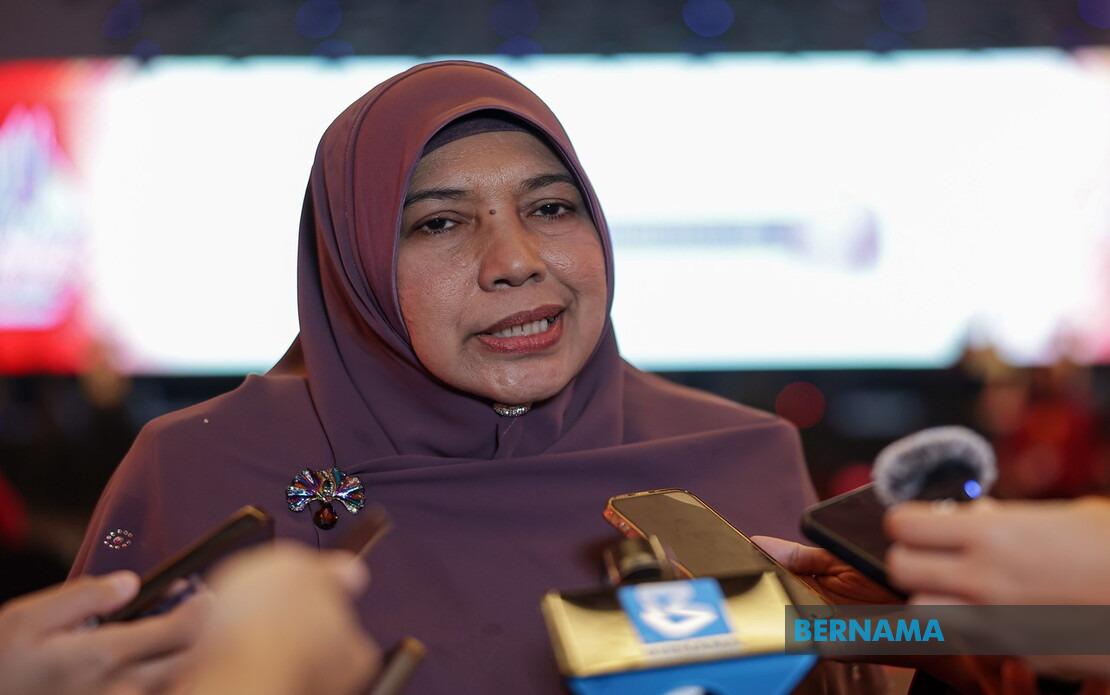
A comprehensive photo exhibition has opened in Butterworth to commemorate the HAWANA 2026 Summit, capturing both the institutional journey of Malaysia's National Journalists' Day and the human stories of those supported through the Tabung Kasih@HAWANA fund. The gallery serves as a visual archive of media industry collaboration and philanthropic effort, offering visitors insight into how the journalism profession has mobilized to support its most vulnerable members. The exhibition, unveiled ahead of tomorrow's summit at the PICCA Convention Centre @ Arena Butterworth, represents a deliberate effort to shine light on initiatives that typically operate without public fanfare.
Datin Paduka Nur-ul Afida Kamaludin, chief executive officer of the Malaysian National News Agency (Bernama), explained that the gallery's dual-focus structure reflects two interconnected narratives central to the HAWANA mission. The first segment traces the evolution of National Journalists' Day from its inception in 2018 through to 2025, documenting how the annual celebration has matured and expanded its reach across Malaysia. The second segment shifts focus to individual beneficiaries, presenting their circumstances and the tangible assistance they have received through the Tabung Kasih@HAWANA welfare scheme. This architecture allows visitors to understand both the macro-level organizational growth and the micro-level human impact of the initiative.
As chairman of the HAWANA 2026 Working Committee, Nur-ul Afida emphasized that the exhibition fulfills a strategic communications function for Bernama, which has long served as the secretariat and implementing agency for the celebration. Behind-the-scenes institutional roles often escape public notice, yet they constitute essential infrastructure for professional communities. The gallery corrects this visibility gap, positioning Bernama's contribution as integral to a celebration ostensibly designed to honor journalists themselves. By displaying the mechanisms through which Tabung Kasih@HAWANA operates and documenting its outcomes, the exhibition transforms administrative work into a narrative of tangible care and organizational commitment.
The curatorial approach emphasizes accessibility and context. Mohamad Bakri Darus, editor of Bernama's Photo Desk, noted that the selection process was meticulous, with each photograph accompanied by bilingual captions in Malay and English. This attention to language reflects Malaysia's multicultural media landscape and ensures that the exhibition's message reaches diverse audiences within the journalism profession and beyond. The bilingual presentation also reinforces the professional standard expected within Malaysian news media, where English-language reporting alongside Malay-language content remains essential for comprehensive national coverage.
The exhibition's scope encompasses the geographic spread of HAWANA celebrations across Malaysia's major media hubs. Previous summits have been held in Kuala Lumpur in both 2018 and 2025, demonstrating the capital's continued significance as a media center, alongside celebrations in Melaka in 2022, Ipoh, Perak in 2023, and Kuching, Sarawak in 2024. This rotational approach distributes the celebration's benefits and visibility across different regions, acknowledging that Malaysia's journalism workforce extends well beyond the Klang Valley. The geographic diversification also signals commitment to recognizing regional media contributions and ensuring that provincial journalists experience direct engagement with national industry initiatives.
The programming elements documented within the exhibition reveal the multifaceted nature of HAWANA as more than a commemorative event. The Strategic Partner Meeting component facilitates industry networking and coordination, while the Media Forum provides a structured space for professional discourse on journalism issues. The HAWANA-DBP Pantun Festival and Carnival elements inject cultural and recreational dimensions into what might otherwise be a purely professional gathering, reflecting Malaysian media's integration with broader cultural life. HAWANA Sports programming further underscores the industry's commitment to holistic wellbeing and camaraderie among practitioners. Each component serves distinct functions within the overall ecosystem of professional support and recognition.
The Tabung Kasih@HAWANA welfare scheme itself represents an innovative approach to addressing precarity within the journalism sector. Media professionals often face sudden health crises, financial hardship during career transitions, or long-term challenges inadequately covered by standard employment structures. A dedicated, industry-managed fund provides both material relief and the psychological reassurance that colleagues recognize mutual vulnerability and responsibility. The exhibition's visual documentation of beneficiaries and their circumstances creates accountability and visibility, transforming what might be perceived as charity into recognition of shared professional duty.
The timing of this exhibition, coinciding with Prime Minister Datuk Seri Anwar Ibrahim's scheduled attendance at tomorrow's summit, underscores government recognition of journalism's societal role and the legitimacy of professional support mechanisms. When senior political leadership participates in events celebrating media practitioners, it signals official acknowledgment that a healthy journalism sector constitutes national infrastructure rather than a merely commercial enterprise. The exhibition thus gains additional significance as a public statement about the government's stance toward press freedom and professional welfare.
For Malaysian journalists and media organizations, this exhibition offers several layers of relevance. For active practitioners, it validates professional identity and connects individual careers to an organized, supportive community with institutional memory extending back seven years. For media managers and organization leaders, it demonstrates how peer-support mechanisms can be effectively structured and sustained. For journalists considering career sustainability amid challenging economic conditions and shifting media consumption patterns, the visibility of Tabung Kasih@HAWANA represents a tangible safety net, however modest. The exhibition transforms abstract organizational capacity into concrete visual evidence of care.
The photo gallery ultimately serves as a mirror reflecting Malaysian journalism back to itself. By documenting HAWANA's expansion and Tabung Kasih@HAWANA's reach, it creates a historical record of the profession's attempts to organize itself around shared welfare and recognition. The exhibition suggests that even as individual news organizations navigate competitive pressures and audience fragmentation, the journalism profession maintains collective institutions and values. For Malaysian readers and the broader public, the exhibition's existence itself communicates that journalism possesses sufficient professional maturity and collective consciousness to create mechanisms for self-support and historical memory.


%22%2F%3E%3C%2Fpattern%3E%3C%2Fdefs%3E%3Crect%20width%3D%22100%25%22%20height%3D%22100%25%22%20fill%3D%22url(%23ph2re9gg)%22%2F%3E%3Crect%20width%3D%22100%25%22%20height%3D%22100%25%22%20fill%3D%22url(%23ph2re9gp)%22%2F%3E%3Ctext%20x%3D%2250%25%22%20y%3D%2250%25%22%20text-anchor%3D%22middle%22%20dominant-baseline%3D%22central%22%20fill%3D%22rgba(255%2C255%2C255%2C0.95)%22%20font-family%3D%22Georgia%2C%20'Times%20New%20Roman'%2C%20serif%22%20font-weight%3D%22700%22%20font-size%3D%22194%22%20letter-spacing%3D%22-0.02em%22%3ETeacher%3C%2Ftext%3E%3C%2Fsvg%3E)