Edmund Chen, the 64-year-old former Singaporean television actor, has secured a significant reduction in his custodial sentence following a successful appeal at the High Court on Monday, July 20. The judge slashed his five-day jail term to just one day for causing grievous hurt to a motorcyclist in a traffic accident, though the veteran performer still faces a five-year driving disqualification. The decision underscores the tension between judicial consistency and proportionality in traffic-related injury cases, a frequent source of sentencing disputes in Singapore's courts.
The incident that triggered this legal battle occurred on March 4, 2025, along the Ayer Rajah Expressway heading towards the Central Expressway. Chen, driving a car in the fourth lane, slowed his vehicle almost to a complete standstill as he attempted to change lanes without being properly positioned for an upcoming road split. He was manoeuvring to enter the Central Expressway or Seletar Link but had failed to form up in the correct lane ahead of the junction. A 21-year-old motorcyclist travelling from behind attempted to swerve but collided with Chen's vehicle anyway. The impact resulted in multiple wrist fractures requiring surgical intervention at Singapore General Hospital.
What emerged as crucial to the appeal was the nature of the injuries sustained. Chen's legal team, led by new counsel Senior Counsel Abraham Vergis from Providence Law Asia, successfully argued that the fractures, though classified as grievous hurt, fell within the less severe category of such injuries. The broken wrists were localised to the extremities rather than affecting vital body systems. The victim underwent surgery under local rather than general anaesthesia, a detail that suggested the injury severity did not warrant the harsher sentence the district judge had imposed. The motorcyclist spent only two days in hospital and received 99 days of hospitalisation leave, ultimately avoiding any permanent disability—factors that Vergis emphasised demonstrated the injury's limited long-term impact.
Justice Hri Kumar Nair's ruling acknowledged a nuanced position. While he determined that the original five-day custodial term was manifestly excessive and therefore warranted appellate intervention, he stopped short of concluding that the district judge had erred fundamentally in crossing the custodial threshold itself. This distinction matters considerably in Singapore's appellate jurisprudence, as it suggests that imprisonment may have been warranted, but not to the degree originally imposed. The judge's approach reflects a growing recognition that incarceration for traffic offences, particularly those resulting in injuries, requires careful calibration against the actual harm and culpability involved.
The district judge's original January 29 decision to impose five days in jail had surprised many legal observers, given that the prosecution itself had sought only a fine ranging from S$3,000 to S$5,000. This divergence—where a judge imposes custody despite prosecutors recommending financial penalties—occasionally occurs when judges view particular conduct as especially reckless or when they seek to send a deterrent message. In Chen's case, the district judge had focused on his violation of traffic rules, specifically his crossing of white chevron markings during the manoeuvre, as well as the fact that other drivers had sounded horns to warn him yet he persisted.
Dashcam footage from Chen's vehicle became pivotal evidence during the appeal hearing. The recording showed that Chen had activated his indicator lights before changing lanes, suggesting some attempt at signalling his intention. Vergis argued that the motorcycle had been obscured from Chen's view by a passing vehicle due to the road's curve, a circumstance that might have reduced his culpability. However, the same footage also documented Chen's controversial crossing of the chevron markings after the collision, confirming the traffic violation that the district judge had emphasised. These competing visual narratives illustrate how dashcam evidence, increasingly common in Singapore traffic cases, can support multiple interpretations of driver behaviour and responsibility.
The Deputy Public Prosecutor Ben Tan, in opposing the appeal, maintained that the district judge's sentence, while at the higher end of the sentencing spectrum, did not constitute an error requiring appellate correction. The prosecution noted that as Chen executed his manoeuvre, drivers of two passing cars had sounded their horns as warnings, yet he continued regardless. This persistence despite audible warnings suggested to prosecutors a disregard for other road users that merited custodial punishment. The DPP's position reflected the consistent approach of Singapore's law enforcement in treating traffic violations seriously, particularly when they result in injury, as part of broader road safety enforcement strategy.
Chen's legal representation underwent substantial change during the proceedings. Initially handled by lawyers from Invictus Law—Josephus Tan and Cory Wong—Chen subsequently engaged Contigo Law's Kelvin Ong and Dickson Chew after his sentencing. The decision to bring in Senior Counsel Vergis for the appeal proved strategically significant. Vergis pressed the maximum fine option of S$5,000 combined with the driving disqualification as proportionate punishment, arguing that the custodial threshold had never truly been crossed. This layered legal strategy, bringing in more senior counsel for appellate work, is a common pattern in Singapore's legal practice, particularly for individuals with means to afford such representation.
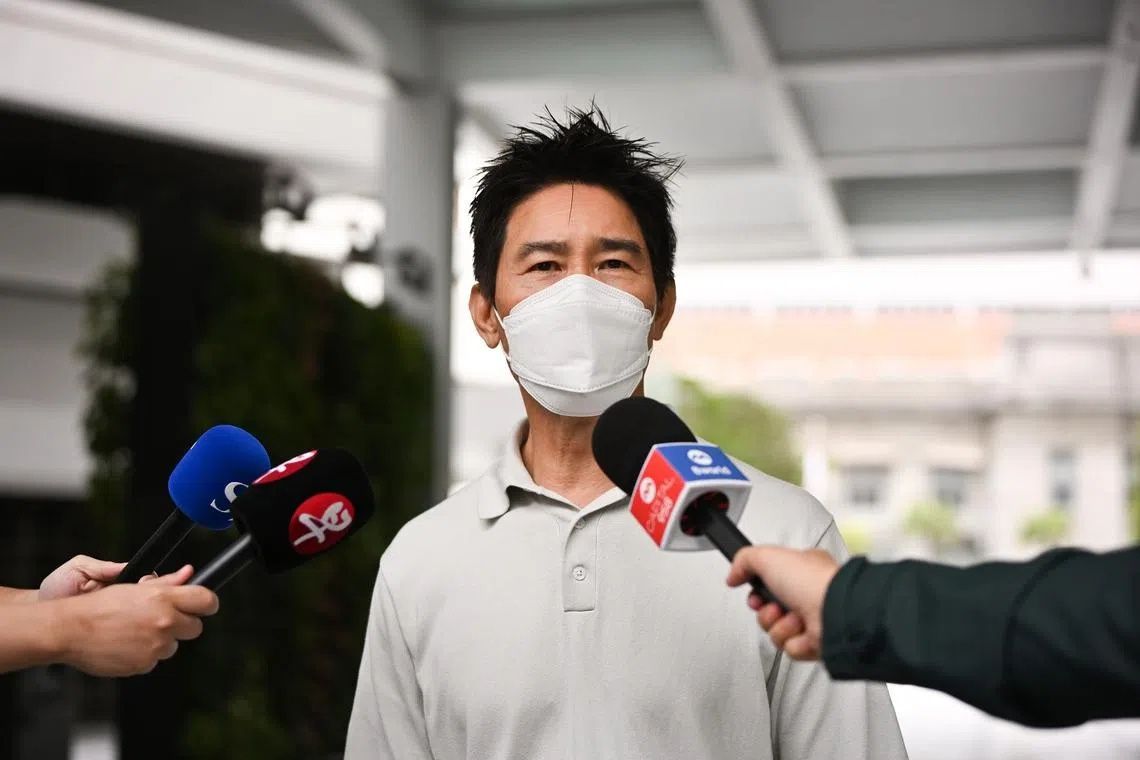
Before the hearing, Chen appeared visibly anxious, telling reporters he had prepared five days' worth of medication and that neither he nor his family had slept the previous night. This visceral account of pre-hearing anxiety humanised the proceedings and perhaps influenced public perception of the case. For many Singaporeans, the psychological toll of potential imprisonment, particularly for those unaccustomed to criminal justice processes, constitutes a significant punishment even before custodial sentences are served. Chen's emotional state also underscored the collateral consequences of traffic convictions for individuals with established careers and family responsibilities.
Chen's public profile as a television personality added a dimension of interest to the case beyond its legal substance. His legal name is Tan Kai Yuan, and he had built a career appearing in popular television dramas including Star Maiden and Patrol. Though he had stepped away from the entertainment industry after his daughter Chen Yixin was born in 2000, he maintained occasional acting work, including a role in the 2017 television series Life Less Ordinary. His spouse, veteran actress Xiang Yun, has appeared in classic local dramas such as The Awakening, Double Happiness, and The Little Nyonya, making the couple a notable presence in Singapore's entertainment history.
The case carries implications for how Singapore's courts balance punishment and proportionality in traffic injury cases. As vehicular accidents continue to generate casualties despite sophisticated road infrastructure and enforcement mechanisms, courts must determine what combination of fines, driving bans, and custodial sentences most effectively serves both specific and general deterrence. The reduction from five days to one day, while maintaining the five-year disqualification, suggests that appellate judges increasingly view imprisonment for traffic offences as reserved for circumstances involving greater culpability, more severe injuries, or aggravated circumstances such as driving under the influence or deliberate endangerment. For Malaysian and Southeast Asian observers, Singapore's approach to traffic sentencing offers instructive lessons in calibrating legal consequences to actual harm and intent, particularly as road safety remains a pressing regional concern.

