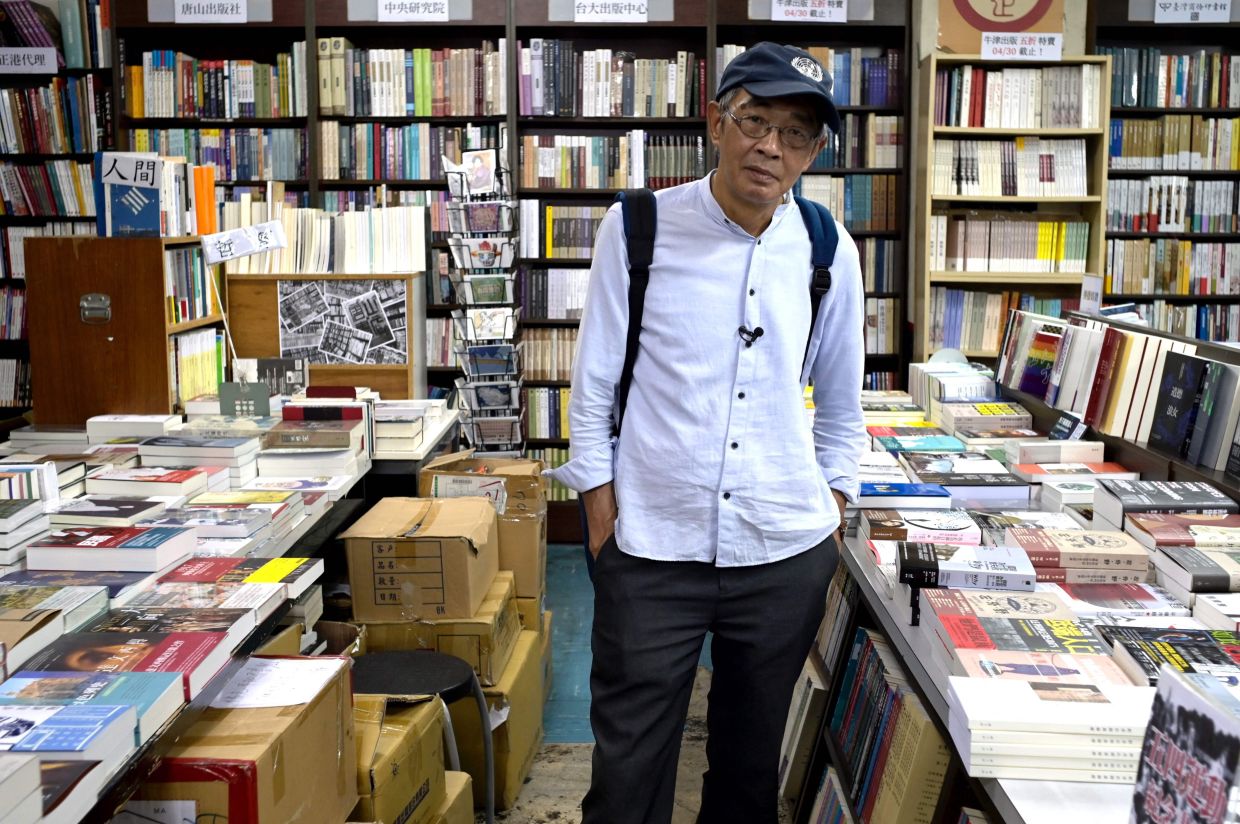
Lam Wing-kee, the former manager of Causeway Bay Books in Hong Kong who emerged as an emblem of defiance against Beijing's systematic suppression of press freedom, has passed away in Taiwan at the age of 70. Taiwan's Central News Agency confirmed his death on Thursday evening, following his admission to MacKay Memorial Hospital in Taipei earlier this week. The news organisation reported that Lam suffered a cancer relapse in the previous year and slipped into a coma on Wednesday before succumbing to his illness. While no official cause of death was disclosed, medical sources indicated his long-standing health struggles contributed to his deterioration.
Lam's journey from Hong Kong bookseller to international symbol of resistance began in October 2015, when he vanished across the border in Shenzhen. His case represented one of the most alarming episodes in the unravelling of Hong Kong's promised autonomy under China's "one country, two systems" framework. He was among five individuals connected to Causeway Bay Books who disappeared that autumn, an event that sent shockwaves through Hong Kong's civil society and triggered international condemnation. The bookstore had built its reputation by stocking titles unavailable on the mainland—works purporting to expose internal Communist Party politics and the private lives of senior Chinese leaders. This niche business model, legal in Hong Kong, became a flashpoint in the broader struggle over the city's freedoms.
When Lam resurfaced with his account in 2016, he provided a harrowing testimony that contradicted Chinese state narratives. Speaking at a crowded Hong Kong news conference, he described being blindfolded and transported by train for 13 hours to Ningbo in eastern China, where he endured five months of detention under constant surveillance by rotating interrogators. State security officials then coerced him into appearing on Chinese television to confess to fabricated charges, a humiliating spectacle orchestrated to demonstrate Beijing's control over the narrative. His willingness to publicise these experiences—despite risks to himself and potential repercussions—transformed him into an emblematic figure representing Hong Kong's vanishing civil liberties and the reach of mainland security apparatus into territories nominally under different legal jurisdictions.
Fearing further persecution, Lam relocated to Taipei in 2019, abandoning a life built over decades in Hong Kong. Rather than fade into quiet exile, he remained defiant and commercially active, reopening Causeway Bay Books in the Taiwanese capital in 2020. This relocation was itself a political statement, representing both a personal escape and a symbolic gesture of solidarity with Taiwan's democratic institutions. For Taiwan, which views itself as a bastion of Chinese-language publishing free from mainland censorship, hosting the reconstituted bookstore carried symbolic weight. The shop became a gathering place for Hong Kong exiles, Taiwan activists, and international observers concerned with authoritarianism in East Asia. It testified to Taiwan's commitment to sheltering those fleeing political persecution, even as cross-strait tensions mounted.
Lam's colleague at the bookstore, Gui Minhai, experienced an even grimmer fate. Gui, who held part-ownership of Causeway Bay Books, disappeared from Thailand in 2015 and was eventually sentenced to 10 years imprisonment in China in 2020 on charges of illegally transmitting intelligence abroad. This disparity in outcomes—Lam's eventual escape to Taiwan versus Gui's capture and incarceration—underscores the arbitrary and predatory nature of China's security operations. The two cases illustrate how Beijing's security apparatus operates across borders, targeting individuals regardless of jurisdiction, and how geopolitical vulnerability determines the difference between continued resistance and silenced imprisonment.
Taiwan's President Lai Ching-te marked Lam's passing with a Facebook tribute that transcended conventional condolences. Lai portrayed Lam as having embodied a profound civic lesson about the fragility and necessity of freedom. "The passing of Mr Lam Wing-kee is deeply saddening, but the courage he left behind would not fade," the president wrote, positioning Lam's legacy as a democratic inheritance requiring active defence across generations. This official recognition reflected how Hong Kong's crisis has become interwoven with Taiwan's identity and self-conception. For many Taiwanese citizens, the detention of Hong Kong booksellers serves as cautionary evidence supporting arguments against unification with mainland China and validating their commitment to preserving democratic institutions.
The Hong Kong that Lam fled has undergone profound transformation since his departure. Following the massive pro-democracy protests of 2019, mainland and Hong Kong authorities implemented sweeping controls to extinguish dissent almost entirely. The imposition of the 2024 National Security Law marked an escalation in this campaign, dismantling remaining space for independent expression and political organising. In June 2024, police acting under this legislation arrested two individuals suspected of operating a bookstore and selling seditious publications while allegedly receiving funding from overseas political organisations. This enforcement action suggests that the climate of fear Lam experienced a decade earlier has only intensified, with authorities now prosecuting bookselling itself as a national security threat.
Lam's decision to maintain his bookstore operation in Taiwan despite deteriorating health demonstrated a commitment to principle that extended beyond personal survival. Last month, he disclosed to the Central News Agency that he had temporarily shuttered the Taipei location due to medical decline, unable to commit to reopening timelines. Yet the shop remained a functioning memorial to Hong Kong's lost autonomy and a practical resource for those seeking uncensored Chinese-language literature. On Monday, an anonymous visitor from Hong Kong left a white rose outside the shop's entrance—a gesture of remembrance suffused with political meaning, honouring Lam's steadfast defiance and marking the diminishment of a voice that refused silence in the face of authoritarianism.
Lam Wing-kee's death arrives at a moment when his core concerns about institutional erosion and authoritarian control have proven prophetic rather than alarmist. The trajectory of Hong Kong from 2015 onwards vindicated every warning Lam issued about Beijing's willingness to override the city's legal protections and suppress fundamental freedoms. His legacy extends beyond his personal courage to encompass a broader indictment of authoritarianism's appetite for control and a validation of democratic societies like Taiwan that provide sanctuary for those fleeing political persecution. For regional observers and policymakers, Lam's life and death serve as persistent reminders that freedom requires active defence and that commerce in ideas remains an act of resistance.

