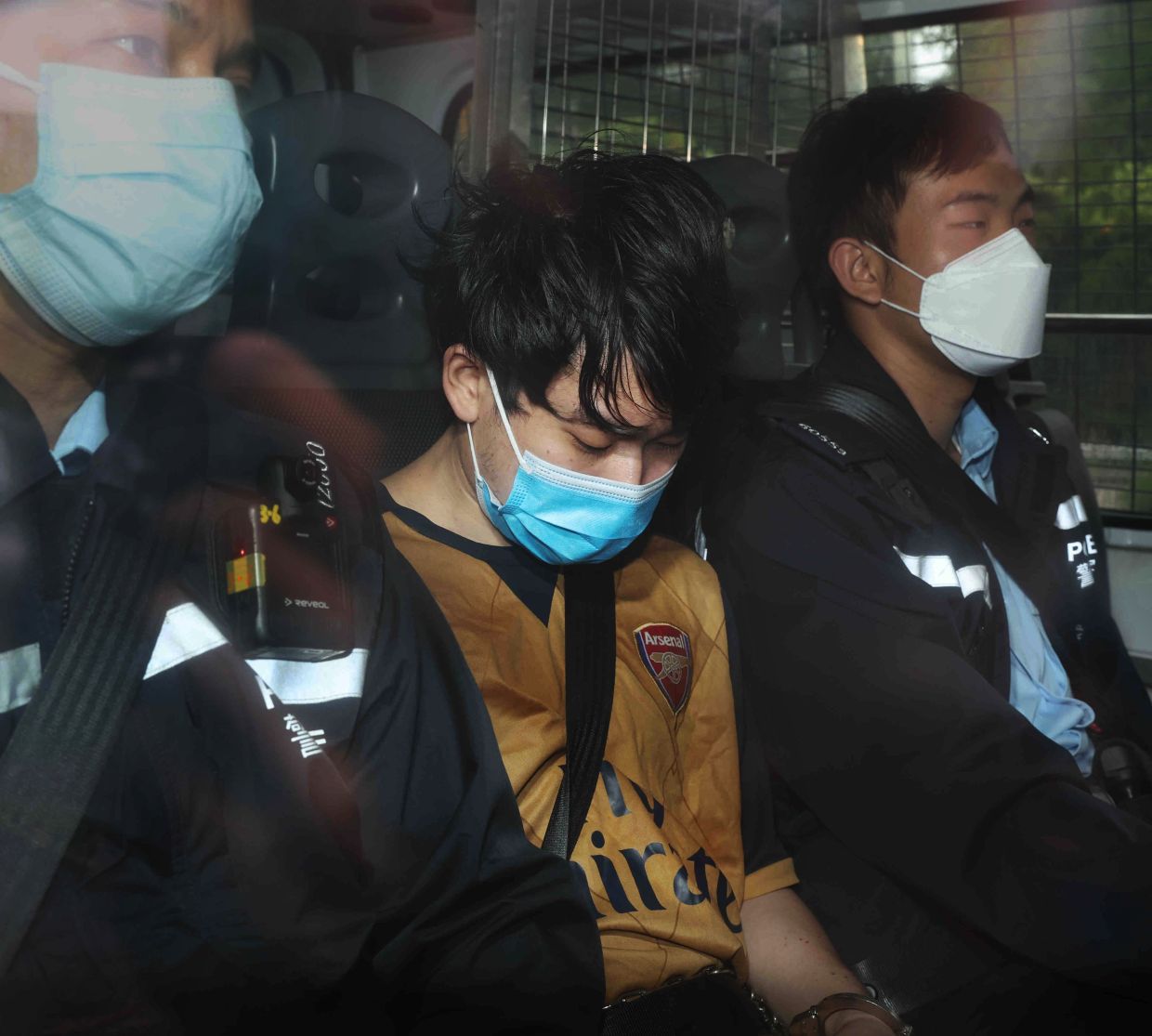
A 29-year-old unemployed man is defending himself in Hong Kong's High Court against murder allegations stemming from the death of his 30-year-old girlfriend in April 2022. Ng Ka-sing maintains that the fatal injuries sustained by Yip Tsz-ching during a night of sustained beating were unintentional, part of a misguided weight-loss regimen he had been attempting at their 700 square-foot apartment in Galore Garden, Hung Shui Kiu. The defence strategy represents one of the most unusual justifications presented in a Hong Kong homicide case, though prosecutors have signalled their complete rejection of the narrative Ng has presented to investigators and the court.
The central claim at the heart of Ng's defence involves a methodology that experts would consider dangerously pseudoscientific. According to his account to police, he had been deliberately preventing Yip from sleeping since the evening of April 27, 2022, based on a belief that sleep deprivation could facilitate weight loss. When she attempted to rest, he used a rod to strike her repeatedly, maintaining this assault across multiple intervals throughout the night and into the following morning. The court heard testimony indicating that Ng paused during his assault to seek guidance from his sworn sister, who resided in the same flat, and was allegedly encouraged to "continue for a bit longer" before resuming his violent actions.
The timeline of violence, as reconstructed through Ng's own admissions to police, reveals a sustained and deliberate pattern rather than a momentary lapse in judgment. Between 10 p.m. on April 27 and 1:30 a.m. on April 28, he administered intermittent beatings. After a pause, he resumed the assault between 3 a.m. and 5:30 a.m. Ng told investigators that he persisted because Yip had not explicitly instructed him to cease, a rationale that senior public prosecutor Audrey Parwani has characterized as fundamentally unreliable. The prosecutor's opening statement made clear that the Crown views Ng's explanations as incomplete and deliberately misleading, particularly regarding the severe chemical burns covering 55 percent of Yip's body.
The question of responsibility for the corrosive injuries represents a critical point of contention. Ng claims that Yip poured drain cleaner over herself, while he only splashed the liquid onto the floor in an attempt to "stimulate" her feet. He additionally asserts that Yip struck herself repeatedly against a wall on seven or eight occasions after slipping on the contaminated floor surface. These claims, taken together, suggest a narrative in which the victim bore substantial responsibility for her own injuries, a perspective that prosecutors clearly find implausible and that forensic evidence may challenge.
By approximately 5 a.m. on April 28, Yip's condition had deteriorated significantly. She communicated to Ng that she was experiencing severe pain and believed she might not survive. Her final words were recorded at 7:21 a.m., after which she fell into a coma from which she would not recover. Government pathologist Dr Foo Ka-chung later determined that Yip had died from suffocation following head injuries and extensive chemical burns across her chest, abdomen, and limbs. The pathologist documented multiple bruises, abrasions, and lacerations consistent with blunt-force trauma from punching and kicking.
The disposal of Yip's body on the morning of April 29 brought the case into public view and initiated the criminal investigation. Joggers discovered her leg protruding from a rolled-up quilt mounted on a wheelboard that Ng was transporting along Tin Ha Road at approximately 6 a.m. Witness Lau Kwok-yan, who reported the discovery to police, observed Ng standing motionless while awaiting police arrival, displaying what Lau described as an absence of panic. A street cleaner, Wong Ah-sum, questioned Ng about the load, and Ng allegedly identified it matter-of-factly as a "corpse" and stated his intention to deliver it to a police station.
Forensic examination of the body revealed meticulous preparation for concealment. Yip's remains were bound to an overturned wooden chair with black rubbish bags and covered by a quilt. Her head had been wrapped in multiple layers of cling film and adhesive tape, a level of wrapping that suggests deliberate effort to restrict decomposition visibility or contain biological evidence. Forensic evidence specialist Lo Man-hung documented these details, establishing that considerable care had been taken in the preparation and transport of the body. This evidence contradicts any suggestion that the death resulted from momentary loss of control; instead, it indicates calculated action in the aftermath.
Upon his arrest at 6:36 a.m., Ng's initial statement to police demonstrated awareness of the severity of the situation. He told officers: "This was my girlfriend. I hit her to death with a rod by mistake." However, the inconsistencies between this initial admission and the detailed explanations he subsequently provided to investigators suggest possible evolution of his defence strategy. Ng previously offered to plead guilty to the lesser offence of manslaughter, an offer that prosecutors rejected, indicating confidence in their case for the more serious charge of murder.
Dr Foo Ka-chung's pathological assessment estimated that Yip had been deceased between 12 and 24 hours at the time of discovery, establishing a timeline consistent with the events described by Ng. The extensive nature of her injuries and the chemical burns over such a significant portion of her body present challenges to any defence based on accident or self-infliction. The prosecution's case rests substantially on demonstrating that the injuries were inflicted deliberately and that subsequent concealment demonstrates consciousness of guilt.
The trial, presided over by Mrs Justice Judianna Barnes with a seven-member jury, is expected to extend over 18 days. Malaysian observers of the case may note several parallels with domestic violence patterns documented in Southeast Asia, where inadequate intervention by bystanders and distorted justifications for harm have featured in previous homicide cases. The case also raises questions about how weight-loss obsession, increasingly prevalent across the region due to social media influences, can intersect dangerously with relationship dynamics characterized by power imbalance and control.
The prosecution's closing statement, when delivered, will likely emphasize the sustained nature of the violence, the deliberate wrapping and concealment of the body, and the lack of credible explanation for the chemical burns. The defence faces the substantial burden of establishing reasonable doubt regarding Ng's intent, given the evidence of premeditation implicit in the body's preparation and transportation. For Malaysian legal observers, this case illustrates how contemporary Hong Kong courts handle domestic homicide defences that strain credulity while examining the forensic and circumstantial evidence that typically determines outcomes in such prosecutions.

%22%2F%3E%3C%2Fpattern%3E%3C%2Fdefs%3E%3Crect%20width%3D%22100%25%22%20height%3D%22100%25%22%20fill%3D%22url(%23ph7yswg)%22%2F%3E%3Crect%20width%3D%22100%25%22%20height%3D%22100%25%22%20fill%3D%22url(%23ph7yswp)%22%2F%3E%3Ctext%20x%3D%2250%25%22%20y%3D%2250%25%22%20text-anchor%3D%22middle%22%20dominant-baseline%3D%22central%22%20fill%3D%22rgba(255%2C255%2C255%2C0.95)%22%20font-family%3D%22Georgia%2C%20'Times%20New%20Roman'%2C%20serif%22%20font-weight%3D%22700%22%20font-size%3D%22320%22%20letter-spacing%3D%22-0.02em%22%3ERim%3C%2Ftext%3E%3C%2Fsvg%3E)
%22%2F%3E%3C%2Fpattern%3E%3C%2Fdefs%3E%3Crect%20width%3D%22100%25%22%20height%3D%22100%25%22%20fill%3D%22url(%23phl7sfg)%22%2F%3E%3Crect%20width%3D%22100%25%22%20height%3D%22100%25%22%20fill%3D%22url(%23phl7sfp)%22%2F%3E%3Ctext%20x%3D%2250%25%22%20y%3D%2250%25%22%20text-anchor%3D%22middle%22%20dominant-baseline%3D%22central%22%20fill%3D%22rgba(255%2C255%2C255%2C0.95)%22%20font-family%3D%22Georgia%2C%20'Times%20New%20Roman'%2C%20serif%22%20font-weight%3D%22700%22%20font-size%3D%22272%22%20letter-spacing%3D%22-0.02em%22%3EMITRA%3C%2Ftext%3E%3C%2Fsvg%3E)