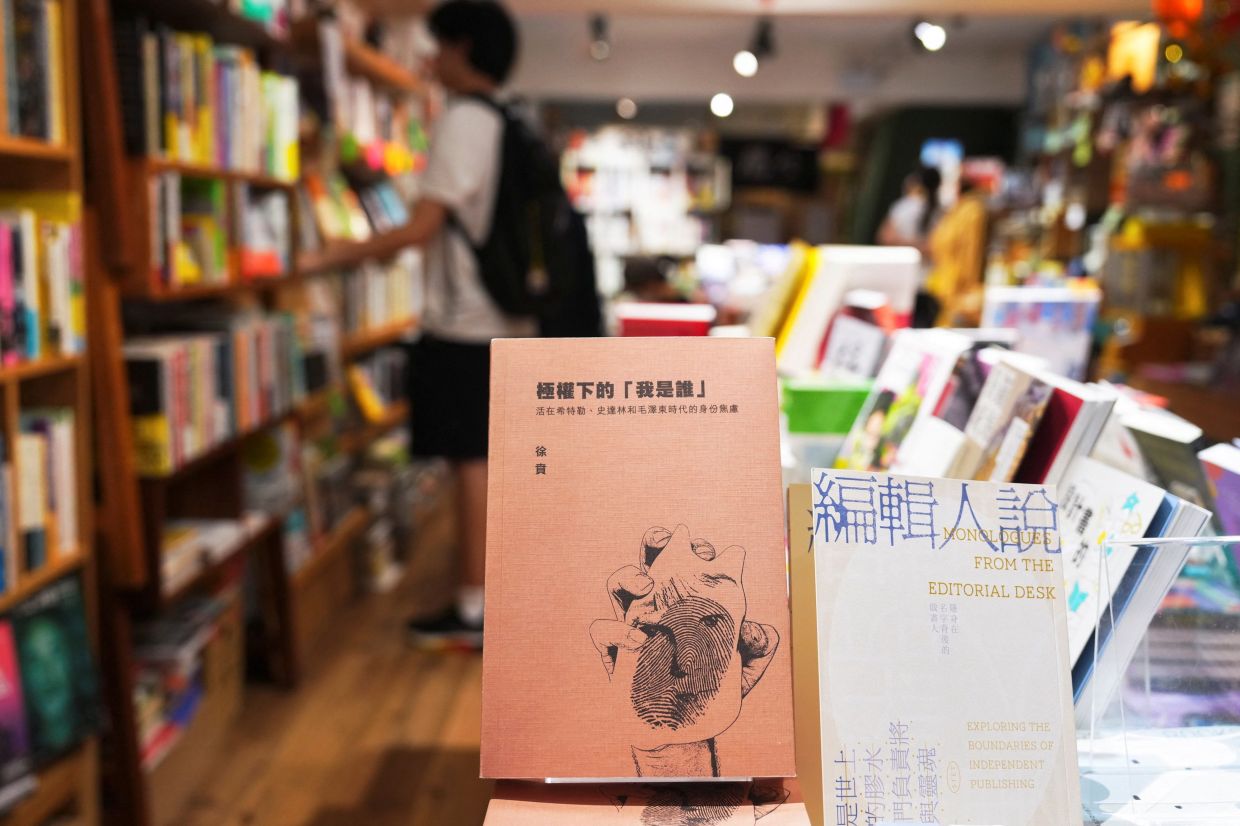
Hong Kong's Secretary for Security Chris Tang has issued a stark warning to the city's bookselling community, declaring that shop owners must shoulder legal responsibility for preventing the sale of publications deemed harmful to national security. The pronouncement came just one day after police arrested five individuals connected to two independent bookstores in what marked the third enforcement operation against such outlets within four months, intensifying concerns among media freedom advocates about the scope and application of the national security framework.
The police raids on Wednesday targeted Have A Nice Stay, a bookshop established by former journalists, and the longstanding Greenfield Book Store. Authorities alleged that the five detainees had been displaying and selling seditious materials, with police statements claiming the publications in question stirred up hatred toward the government, courts, and law enforcement. Two of those arrested were subsequently released on bail by Friday morning, though the exact charges and legal proceedings remained unclear at the time.
Tang's comments at the legislative building drew parallels between booksellers' obligations and those of food vendors, suggesting that just as restaurants must ensure their offerings are not poisonous or spoiled, bookshop operators must verify their inventory poses no security threat. However, this analogy drew criticism for its simplistic framing of what many view as a far more complex and subjective determination. The official explicitly rejected calls for authorities to publish an official list of banned titles, arguing that such a measure would undermine law enforcement efforts and allow "criminals" to evade consequences by simply working around a predetermined catalog.
The vagueness surrounding what constitutes a security threat has emerged as a central flashpoint in the ongoing debate about Hong Kong's freedom of expression. Have A Nice Stay itself announced it would cease operations on August 30, citing in a social media statement that financial hardship and an indefinable "red line" had made continued business untenable. The bookstore lamented its inability to thoroughly evaluate every title in its collection and determine which books might be deemed "problematic" by authorities, highlighting the practical impossibility of complying with Tang's directives when the legal boundaries remain nebulous.
This latest crackdown represents an escalation in what observers describe as a systematic narrowing of intellectual freedom in the territory. In March, police had arrested staff and the proprietor of Book Punch, another independent bookstore, on suspicion of vending seditious publications. That operation specifically targeted the distribution of a biography of Jimmy Lai, the former media magnate and pro-democracy activist who received a twenty-year prison sentence in his own national security case, underscoring how the authorities' definition of prohibited content extends to legitimate biographical and journalistic works.
A previous operation in June saw the arrest of two additional booksellers accused of selling seditious materials and accepting funding from overseas political organisations, suggesting that international connections and financial ties have become investigative focal points. These successive waves of enforcement actions have collectively sent a chilling message through the independent publishing and retail sector, with many operators struggling to navigate the murky legal terrain or deciding to exit the business altogether.
The situation has not escaped the attention of neighbouring Taiwan, where President Lai Ching-te used Facebook to voice concern about Hong Kong's deteriorating publication freedoms. Describing independent bookstores as "vital in guarding free thought," Lai's remarks reflected broader regional anxiety about intellectual liberty and the implications of Hong Kong's tightening restrictions. The Taiwanese government's Deputy Minister of the Mainland Affairs Council, Liang Wen-chieh, further disclosed that some Taiwanese publishers have begun self-censoring their catalogues when preparing materials for participation in Hong Kong book fairs, indicating that the chilling effect extends beyond Hong Kong's borders into the wider Chinese-speaking world.
For Malaysia and other Southeast Asian nations, the Hong Kong scenario presents instructive lessons about the mechanics and consequences of content regulation systems. The lack of clearly defined legal boundaries, combined with aggressive enforcement against retail operators rather than publishers or authors, creates a form of indirect censorship that forces business decisions without necessarily requiring formal prohibitions. Booksellers facing potential arrest for stocking titles they cannot definitively determine are illegal will inevitably adopt the most conservative inventory policies, effectively allowing authorities to control the market through intimidation rather than explicit law.
The precedent is particularly significant given the region's existing concerns about press freedom and political expression. While Malaysia, Singapore, and other Southeast Asian democracies maintain different constitutional frameworks and legal traditions from Hong Kong, the techniques being deployed there—particularly the ambiguous security standards and the transfer of enforcement burdens to retail intermediaries—represent a model that could theoretically be adapted elsewhere. The Malaysian media industry and civil society organisations have traditionally monitored Hong Kong closely as a barometer of freedom in the broader Asia-Pacific region.
The international dimensions of this crackdown also warrant attention. By targeting funding flows from foreign sources and criminalising biographical works about political figures, Hong Kong authorities are signalling that they view certain information flows as inherently destabilising, regardless of their factual accuracy. This nationalist framing of information control differs from traditional censorship models that explicitly banned specific titles and reflects a more ambiguous approach where the security justification itself becomes difficult to contest publicly.
For readers and researchers across Southeast Asia, the implications are sobering. Bookstores from Bangkok to Kuala Lumpur that stock Hong Kong-produced or Hong Kong-distributed publications may increasingly face pressure to self-censor, anticipating potential legal complications. Publishers considering regional distribution strategies will factor in the uncertainty of Hong Kong's market, potentially leading to a contraction in the diversity of materials available throughout the region.

