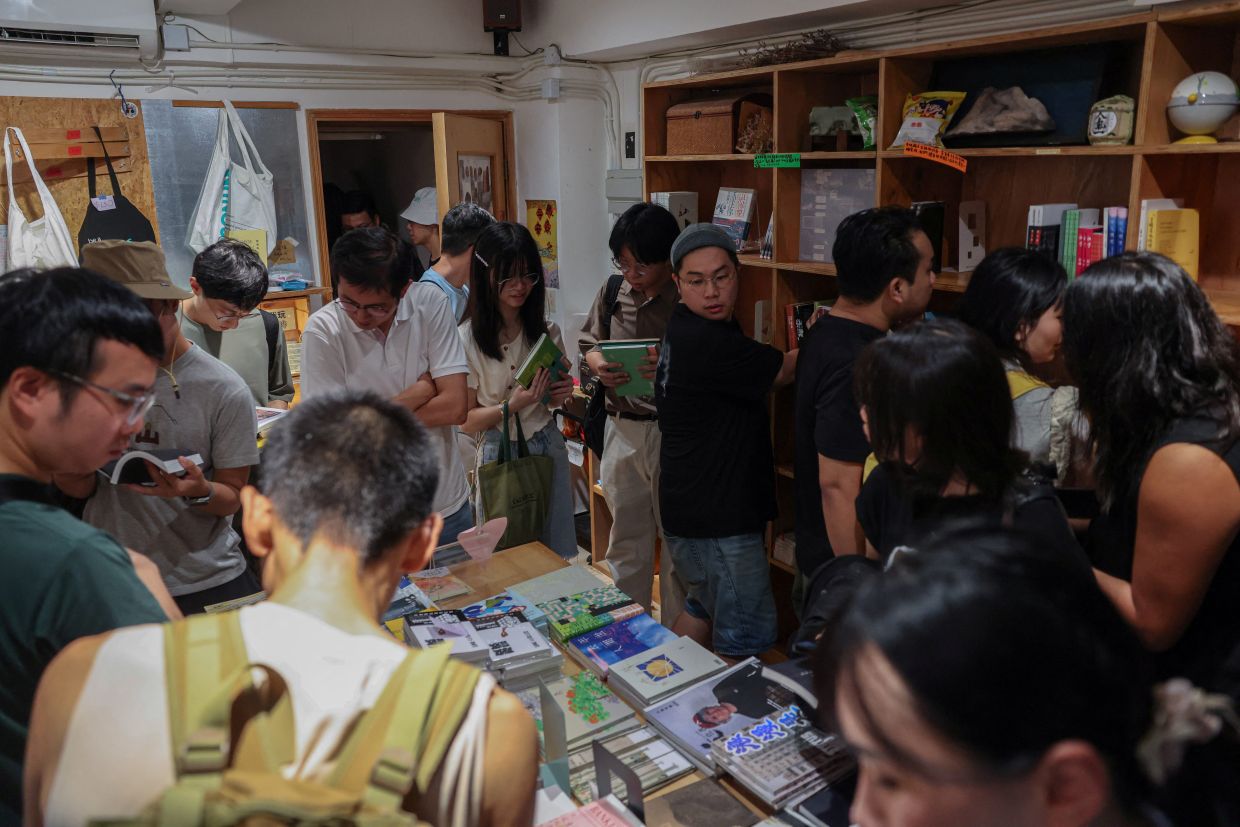
For mainland Chinese university student Fleming Cheng, a visit to Greenfield Book Store in Hong Kong last year offered something impossible to experience at home: the ability to stand in a physical space and hold political books that Beijing's internet filters had kept from view. Before that encounter, Cheng had only glimpsed titles critical of China through VPN-assisted online browsing. At the bookstore, he absorbed pages from volumes examining a reform-minded Chinese leader who sympathised with the Tiananmen Square protesters in 1989. These encounters with alternative narratives to Beijing's official line represented a rare window into intellectual freedom that mainland readers increasingly take for granted as a Hong Kong export.
Hong Kong's independent bookstores, many obscured in building interiors away from prime commercial streets, have functioned as intellectual sanctuaries for decades. These establishments have quietly served as conduits between the island of free expression and a mainland where political discourse is tightly controlled. For readers like Cheng, they represented something more than retail—a physical manifestation of the freedoms that once defined Hong Kong as a global publishing centre. Yet this peculiar ecosystem now faces existential pressure as authorities deploy new legal instruments and enforcement strategies that signal a fundamental recalibration of what Hong Kong's business environment will permit.
The turning point arrived with accelerated police action beginning in March 2024. Book Punch was targeted first, followed by Hunter Bookstore in June, then both Greenfield and Have A Nice Stay in July. The authorities accused booksellers of distributing seditious publications under provisions of the 2024 national security law. Though bail was eventually granted in these cases, the message proved sufficiently chilling that Greenfield announced closure at the end of its lease despite its fifty-year operating history. Have A Nice Stay, established by former journalists who presumably understood the risks of independent publishing, shut its doors on 30 August, citing vague "elusive red lines" and financial pressure—capitulation before formal charges materialised.
What makes this enforcement strategy particularly concerning for regional observers is its deliberate ambiguity regarding what constitutes prohibited content. Secretary for Security Chris Tang has insisted the law is clear about seditious intent while simultaneously declining to specify which books are considered problematic or to establish a published banned list. Instead, authorities have left bookstore operators to divine prohibited content through scattered references in anonymous government statements and media reports. Tang's analogy—comparing the booksellers' responsibility to ensure ideological safety to food vendors' obligation to prevent poisoning—obscures rather than clarifies the applicable standard. This regulatory opacity effectively grants authorities discretionary enforcement power while shifting burden of compliance onto businesses operating with incomplete information.
The deeper historical context reveals how Hong Kong's publishing freedoms have eroded incrementally rather than collapsed suddenly. In 2015, the Causeway Bay Books incident provided an early warning when bookseller Lam Wing-kee and four colleagues disappeared, with Lam later claiming detention by Chinese authorities. That episode triggered a chilling effect on politically sensitive titles in Hong Kong bookstores. The 2020 national security law imposed after the pro-democracy protests accelerated the trend—leading activists were arrested, civil society groups disbanded, and libraries removed books about Tiananmen and pro-democracy figures. The 2024 sedition law represents the next escalation, targeting the remaining independent retailers who survived earlier pressures.
For mainland readers, the implications extend beyond mere inconvenience. A Guangdong university student named Iris Wang observed that Hunter Bookstore encouraged critical thinking rather than merely executing retail transactions like mainland bookshops do. She appreciated not just the political titles but the intellectual atmosphere itself. Other mainland visitors patronise these stores for niche publications or simple refuge from surveillance-saturated public spaces. Fleming Cheng himself articulated the loss clearly: if Hong Kong becomes indistinguishable from the mainland, mainlanders lose access to ideas suppressed at home. The bookstores represented a safety valve for intellectual pressure that operated within Chinese-language cultural circulation.
Hong Kong's own residents experience the closures as cultural amputation. Brian Leung, a local, described the independent bookstores as spaces with distinct character, each reflecting its operators' values and curation. When arrests occurred at establishments he patronised, he felt something essential to Hong Kong's identity was being systematically rejected. He emphasised that bookshops had not "incited" him because readers retain capacity for independent judgment—a principle that apparently no longer carries legal weight under the amended security regime.
The vacuum created by Hong Kong's contracting publishing ecosystem is being filled by Taiwan, which has emerged as the primary repository for Chinese-language political literature. Tunghai University sociology professor Cheng Tsu-Bang documented that Taiwan publishers released six times as many books about Hong Kong between 2020 and 2024 compared to the preceding five years. This trajectory suggests Taiwan is becoming the designated keeper of Hong Kong's intellectual heritage and contemporary political discourse. Publishers there actively translate and publish works by Hong Kong writers and about the pro-democracy movement, establishing what Professor Cheng describes as a "medium of mutual support" between the two societies.
However, even this cross-strait pipeline faces potential disruption. In July, Taiwan's broadcaster FTV reported that a logistics firm halted orders to ship books from Taiwan to Hong Kong bookstores under police investigation. The same firm demanded comprehensive book inventories before servicing other Hong Kong retailers. This detail suggests authorities are monitoring not merely domestic publishing but transnational supply chains that might circumvent local restrictions. One Hong Kong author who relocated to Taiwan and publishes there anonymously described independent bookstores as bridges connecting Hong Kong to diaspora writers and preserving works about the pro-democracy movement.
The metaphors emerging from interviews capture something genuine about what is being lost. Lee, the Hong Kong author residing in Taiwan, compared civil society's collapse to a boulder rolling downhill, crushing what lies in its path. Independent bookstores represented, in this formulation, a small flower field where people could breathe and attempt preservation of what remained. Yet Lee's own description of the current moment—being told "very directly and cruelly that perhaps this borrowed time is coming to an end"—suggests even those modest refuges are now being dismantled.
For Southeast Asian readers and publishers, Hong Kong's transformation carries cautionary implications about how security legislation can be deployed to reshape cultural production through regulatory uncertainty. The technique of criminalising undefined categories of content while disclaiming the existence of banned materials creates an enforcement regime more effective than transparent censorship. Books are not formally prohibited; they simply become too risky to stock, display, or distribute. This chilling effect propagates without explicit prohibition, making the restriction difficult to challenge or even definitively catalogue. The international publishing industry is watching whether other regional governments might adopt similar approaches.

