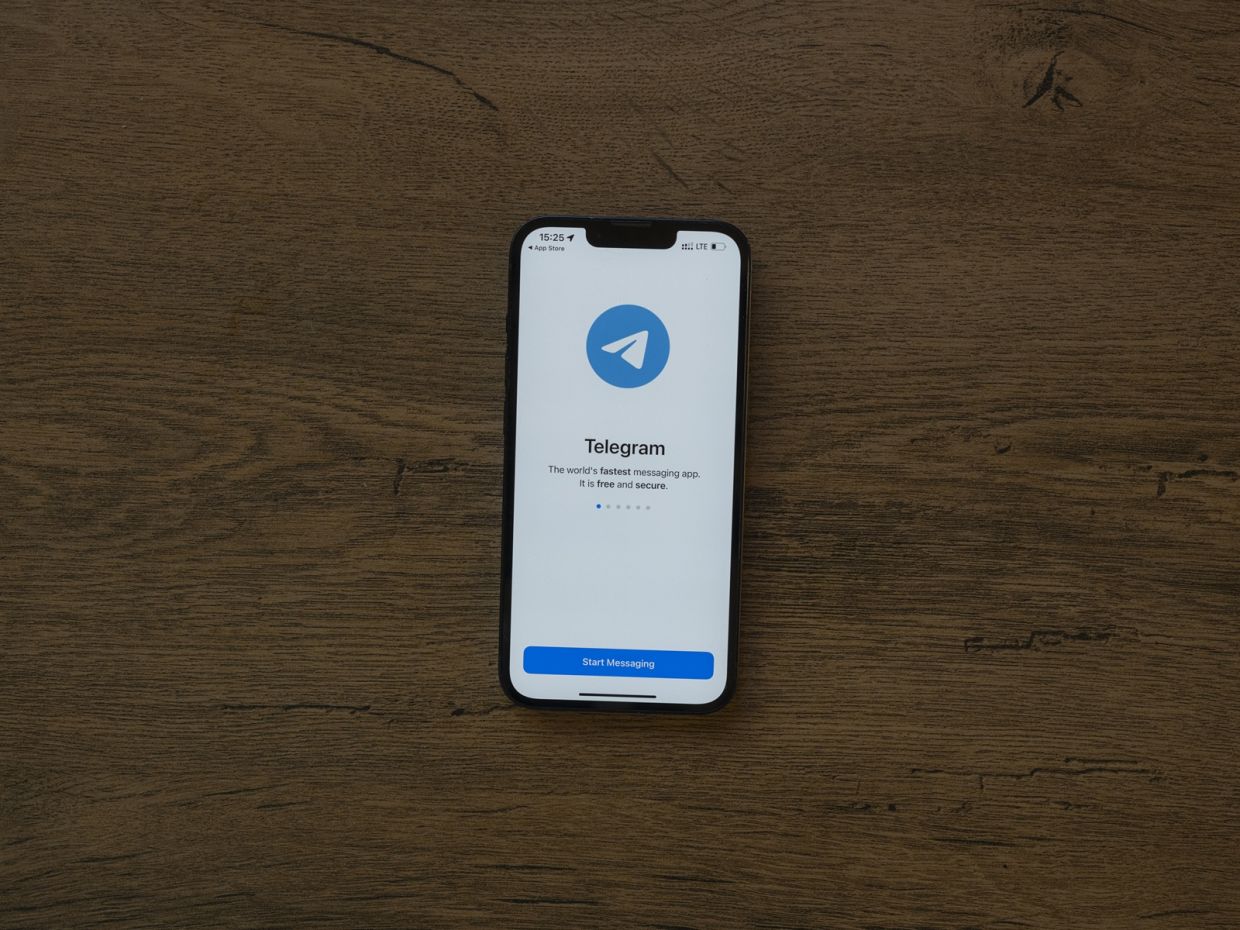
Telegram has emerged as one of the most contested digital platforms of our time, caught at the intersection of fundamental tensions between online privacy, government authority and public safety. Once celebrated by journalists, dissidents and ordinary citizens as a haven from surveillance, the encrypted messaging application now finds itself under sustained legal attack from multiple major governments simultaneously, each claiming the app enables harmful activities ranging from terrorism to exam fraud. The escalating crackdown reveals how the platform's technical features—particularly its strong encryption and relative opacity—that protect users in authoritarian regimes are being weaponised by democracies and autocracies alike as arguments for its restriction or outright prohibition.
The most recent flashpoint erupted in India, home to over 150 million Telegram users and one of the app's largest markets globally. Indian authorities discovered that fraudsters had exploited Telegram channels to sell what purported to be leaked examination papers for the National Eligibility cum Entrance Test, a crucial medical college entrance examination taken by millions of candidates. The scheme proved entirely fictitious—the leaked materials were fabrications, yet thousands of desperate students and their families were deceived. When the National Testing Agency uncovered the fraud, it took the drastic step of invalidating all scores from the May examination and ordering a complete retest for the following Sunday. This decision triggered considerable backlash among young people who viewed the government's handling of the examination system as fundamentally mismanaged. The temporary ban on Telegram, imposed until June 22, represented an extraordinary measure that affected every user in the country, not merely the perpetrators of the specific fraud. Founder Pavel Durov responded sharply to the blanket ban, arguing through social media that such punishment inflicted collateral damage on legitimate users whilst the actual criminals remained unpunished, and noting that Telegram had already proactively removed hundreds of channels related to examination materials and associated scams.
Russia's relationship with Telegram illustrates the app's deeper strategic significance to state authorities. When Durov created Telegram, he was based in Russia, but tensions emerged when the Kremlin demanded access to encrypted user communications to monitor dissent and extremism. Durov refused on principle and technical grounds, maintaining that the company's encryption architecture rendered such decryption impossible without fundamentally compromising the platform's security model. In 2018, a Russian court authorised a nationwide block on Telegram, yet the ban proved difficult to enforce technically and created an awkward paradox: Russian government agencies themselves relied heavily on Telegram for internal communications. By 2020, Moscow quietly lifted the ban after Telegram ostensibly agreed to strengthen enforcement against extremist content. However, as Russia intensified its military campaign against Ukraine and cracked down on domestic dissent, authorities attempted to block Telegram again in 2024, this time characterising the platform as a vector for fraud, data theft, terrorism and criminal activity. Durov accused the Russian government of seeking to force users toward a state-controlled alternative built explicitly for "surveillance and political censorship." Telegram is now effectively inaccessible across Russia, yet the app paradoxically remains essential for millions of Ukrainian civilians seeking real-time information about incoming Russian attacks and locating food, medicine and shelter amid the ongoing war.
Ukraine itself has grown wary of Telegram despite its utility as a communications lifeline. The platform has become a channel for Russian disinformation operations and intelligence gathering, prompting Ukrainian authorities to take defensive measures. In 2024, the government implemented a security protocol prohibiting military personnel, civilian government officials and workers in critical infrastructure sectors from installing Telegram on work devices. Some officials have advocated for regulatory requirements forcing Telegram to disclose the identities of operators behind large anonymous channels, recognising that the app's capacity for pseudonymous communication—a feature that protects activists—also enables coordinated disinformation campaigns and potential espionage.
France has pursued perhaps the most aggressive legal strategy, targeting Durov personally rather than merely restricting the app. When the entrepreneur arrived in the country in 2024, authorities arrested him and initiated criminal proceedings encompassing a broad spectrum of alleged failures: inability to prevent child sexual abuse material, drug trafficking operations and online hate speech. Durov was initially barred from leaving French territory. Telegram responded by contending that it complies with European Union regulations and that holding a platform operator criminally responsible for user misconduct represents an absurd inversion of responsibility. Durov was eventually permitted to leave France, reportedly returning to Dubai in the United Arab Emirates, though legal proceedings against him continued. The French case reflects how democracies with sophisticated law enforcement capabilities are beginning to treat platform founders as accountable parties for content moderation failures, a legal principle with profound implications for the technology industry globally.
Brazil has deployed repeated temporary bans as a pressure tactic to enforce compliance. In 2022, the Supreme Court blocked Telegram nationwide ahead of a presidential election, claiming the platform had ignored orders to remove accounts operated by supporters of former President Jair Bolsonaro who were allegedly spreading electoral disinformation and threatening judicial officials. Durov acknowledged the suspension resulted from administrative failure—Telegram had simply missed the court's correspondence. The ban was rescinded once Telegram submitted to court orders. In 2023, another Brazilian judge ordered a new nationwide block after Telegram allegedly declined to provide complete user data from neo-Nazi group chats in violation of court orders. Telegram replied that the groups had been deleted and data recovery was technically unfeasible. An appeals court subsequently lifted that suspension but imposed substantial financial penalties, establishing a pattern where Brazilian courts use temporary bans as enforceable compliance mechanisms.
Norway has adopted a more cautious approach focused on government operations rather than public prohibition. In 2023, Norway's justice minister formally advised that state officials should not install Telegram or TikTok on work devices, characterising both platforms as national security risks. This reflects growing concern among democratic governments about the concentration of private communications infrastructure in foreign hands, particularly applications with opaque governance structures and encryption systems that governments cannot access even with court warrants.
The global regulatory assault on Telegram reveals a fundamental paradox at the heart of modern digital governance. The platform's technical features—end-to-end encryption, large-group channels, and resistance to surveillance—that made it invaluable to journalists exposing corruption, dissidents organising against authoritarian rule, and ordinary citizens protecting their privacy from both criminals and oppressive governments, simultaneously create vulnerabilities that law enforcement agencies worldwide claim they must address. Governments ranging from liberal democracies like France and Brazil to hybrid regimes like Russia have concluded that Telegram's opacity and the company's unwillingness to build surveillance backdoors justify extraordinary measures including criminal prosecution of its founder and outright prohibition.
The implications for Southeast Asia are particularly significant. Malaysia, Indonesia, Thailand and other regional nations with mixed records on press freedom and digital governance will likely monitor these international precedents closely. If Western democracies establish legal frameworks holding platform founders criminally liable for user misconduct, or if blanket national bans become acceptable international practice, the precedent could embolden other governments to impose similar restrictions on Telegram and competing encrypted platforms. This could fundamentally reshape digital communications across a region where Telegram has become essential infrastructure for business, activism and family communication. Conversely, the failure to reach consensus international standards for platform accountability may encourage a fragmented landscape where different countries operate entirely separate digital ecosystems with incompatible regulatory requirements.
Durov's position has grown increasingly isolated as major democratic and authoritarian governments align around the argument that Telegram has failed to meet minimum obligations for content moderation and law enforcement cooperation. The founder has consistently resisted what he characterises as demands for surveillance capabilities, arguing that technical encryption cannot be selectively disabled and that law enforcement overreach threatens fundamental privacy rights. Yet his arguments have gained limited traction against the cumulative weight of specific criminal incidents—fraudulent examination schemes, child exploitation, drug trafficking, hate speech—that governments cite as justification for intervention. The core tension remains unresolved: whether encrypted messaging platforms can realistically balance legitimate user privacy against governments' law enforcement and national security interests, or whether that balance is fundamentally incompatible with the technology's technical architecture.

%22%2F%3E%3C%2Fpattern%3E%3C%2Fdefs%3E%3Crect%20width%3D%22100%25%22%20height%3D%22100%25%22%20fill%3D%22url(%23ph2re9gg)%22%2F%3E%3Crect%20width%3D%22100%25%22%20height%3D%22100%25%22%20fill%3D%22url(%23ph2re9gp)%22%2F%3E%3Ctext%20x%3D%2250%25%22%20y%3D%2250%25%22%20text-anchor%3D%22middle%22%20dominant-baseline%3D%22central%22%20fill%3D%22rgba(255%2C255%2C255%2C0.95)%22%20font-family%3D%22Georgia%2C%20'Times%20New%20Roman'%2C%20serif%22%20font-weight%3D%22700%22%20font-size%3D%22194%22%20letter-spacing%3D%22-0.02em%22%3ETeacher%3C%2Ftext%3E%3C%2Fsvg%3E)
%22%2F%3E%3C%2Fpattern%3E%3C%2Fdefs%3E%3Crect%20width%3D%22100%25%22%20height%3D%22100%25%22%20fill%3D%22url(%23phu80ug)%22%2F%3E%3Crect%20width%3D%22100%25%22%20height%3D%22100%25%22%20fill%3D%22url(%23phu80up)%22%2F%3E%3Ctext%20x%3D%2250%25%22%20y%3D%2250%25%22%20text-anchor%3D%22middle%22%20dominant-baseline%3D%22central%22%20fill%3D%22rgba(255%2C255%2C255%2C0.95)%22%20font-family%3D%22Georgia%2C%20'Times%20New%20Roman'%2C%20serif%22%20font-weight%3D%22700%22%20font-size%3D%22136%22%20letter-spacing%3D%22-0.02em%22%3EProsecuti%E2%80%A6%3C%2Ftext%3E%3C%2Fsvg%3E)