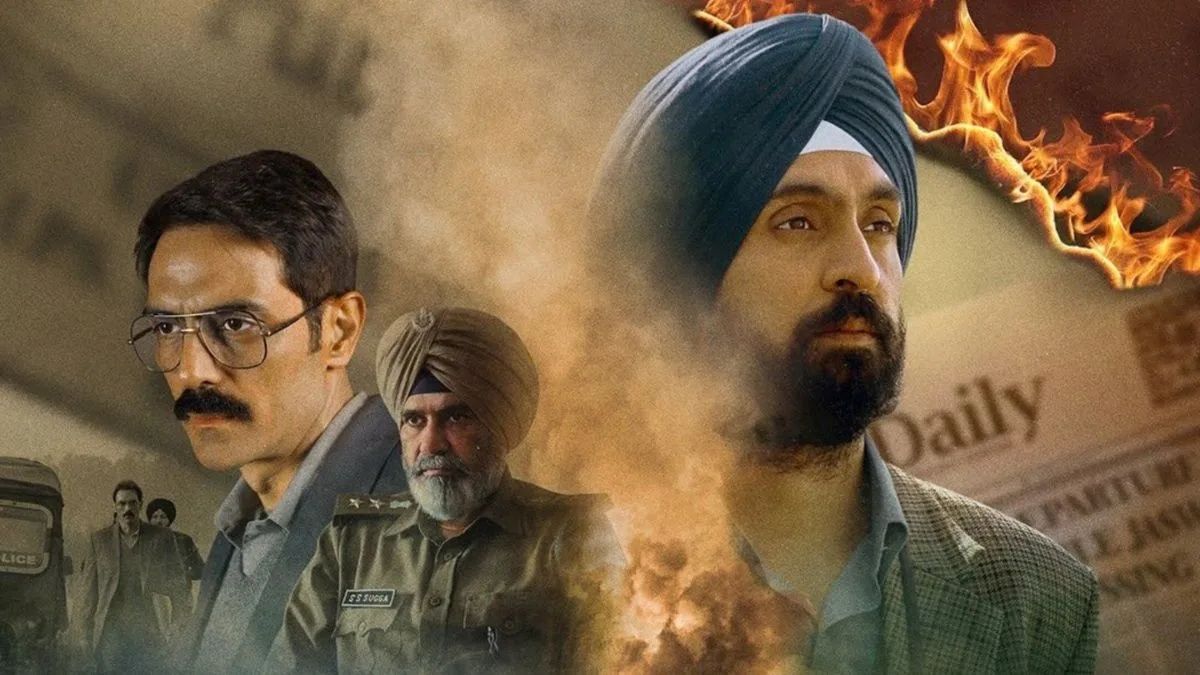
The recent withdrawal of the film "Satluj" from the ZEE5 streaming platform has crystallised growing concerns among Indian filmmakers about what they characterise as a systematic tightening of creative freedom under Prime Minister Narendra Modi's administration. The biographical movie, which chronicles the life of Jaswant Singh Khalra, a Sikh human rights activist who documented police brutality and extrajudicial killings during Punjab's turbulent counterinsurgency campaign in the 1980s and 1990s, was pulled down within 48 hours of its release. Producer Honey Trehan reports that unnamed government officials cited "security concerns" as the justification, though the streaming platform provided no detailed explanation for the removal.
Treehan's struggle to bring "Satluj" to public audiences encapsulates a broader challenge facing India's creative industry. Over roughly four years, he engaged repeatedly with India's film authorities, encountering escalating demands for modifications to the narrative. The censorship board ultimately requested 127 alterations—a volume of demanded changes that ultimately exhausted Trehan's patience and resources, prompting him to bypass theatrical release entirely and move directly to streaming. Yet even this alternative proved insufficient to shield the film from state intervention, suggesting that the mechanisms of content control in India have expanded beyond traditional certification pathways.
The statistical evidence supports filmmaker anxieties about intensifying scrutiny. Official figures tabled before Parliament reveal that 3,033 films during fiscal year 2025 required cuts or modifications before receiving clearance for public exhibition—a figure that represents a more than doubling of demands from four years prior. However, the transparency gap undermines accountability; these data reveal neither the nature of requested changes nor the justifications authorities provided. The Central Board of Film Certification, India's primary regulatory body, has ceased publishing comprehensive annual reports detailing its decision-making rationale since 2017, leaving the industry and public largely in darkness about censorship patterns and standards.
India's censorship framework differs fundamentally from classification systems prevalent in Western democracies. Unlike the age-based rating structures employed across North America and Europe—where regulatory bodies determine age-appropriateness but leave creative decisions largely to producers and distributors—India's government-appointed certification body wields direct editorial authority. Before any film reaches cinema screens, authorities can demand substantive modifications to content. This structural power imbalance grants the Indian state capabilities to shape narrative that few other major democracies retain, even among nations with active film regulation mechanisms.
The current environment represents a marked departure from earlier periods, according to observers tracking South Asian political and cultural dynamics. Sadanand Dhume, a senior fellow at the Council on Foreign Relations, notes that India's political trajectory since Modi's ascension in 2014 has produced downstream effects throughout the creative industries. The convergence of right-wing Hindu nationalist politics with state institutional power has created conditions where filmmaking perceived as threatening to official narratives faces systematic obstruction. The government's Ministry of Information and Broadcasting—the parent ministry overseeing the certification board—argues that modifications occur only when content violates strictures around national sovereignty, security, public order, decency, morality, defamation, contempt of court, or incitement to offence. Yet the absence of transparent published criteria or detailed reasoning invites scepticism about whether these justifications reflect genuine security considerations or function as pretexts for political control.
The "Satluj" case derives particular sensitivity from its subject matter and contemporary geopolitical context. Starring Punjabi entertainer Diljit Dosanjh, the film examines Khalra's documentation of counterinsurgency violence—a chapter of Indian history that remains deeply contested. The Modi government's Bharatiya Janata Party maintains pronounced wariness toward Sikh separatism and independence movements, concerns that intensified following Canada's 2023 allegations that Indian government agents orchestrated the killing of a Sikh activist in Vancouver. The intersection of historical grievance narratives with current great-power tensions has evidently triggered official concern that the film might amplify or legitimise separatist sentiment, even though the violence it documents occurred decades earlier.
Recent years have witnessed multiple instances of cinematic content facing pressure to accommodate censorship demands either before or after theatrical release. In 2025, the certification board accepted 24 post-release modifications to "L2: Empuraan," a Malayalam-language commercial success, following objections from Hindu nationalist groups disturbed by its portrayal of the 2002 communal riots. The biopic "Phule," focused on 19th-century caste reformers, encountered demands to eliminate caste-related language—a constraint particularly striking given the film's explicit engagement with caste as a historical and social phenomenon. India's 2026 Academy Awards submission, "Homebound," secured clearance only after accepting 11 cuts targeting caste and religious references. These episodes illustrate how political sensitivities around religious communalism, caste hierarchies, and nationalist mythology shape the boundaries of permissible cinematic expression.
Filmmakers approaching subject matter perceived as patriotically affirming encounter markedly fewer obstacles. The 2025 spy thriller "Dhurandhar," which dramatises Indian intelligence operations against Pakistan, navigated certification with routine modifications limited to violence depiction—standard practice in most regulatory regimes. The film subsequently became the highest-grossing Hindi-language production ever, demonstrating audience appetite for narratives celebrating state power and military prowess. The contrast between rapid certification of nationalist-triumphalist content and prolonged obstruction of films addressing historical violence or social inequality suggests that regulatory decisions reflect political preferences rather than consistent application of formal standards.
Filmmakers across genres report escalating demands for textual modifications, extending even to terminology deemed politically sensitive. Director Onir, a significant figure in Indian independent cinema, faced censorship board objections to the word "gay" appearing in dialogue featuring a nine-year-old character in his 2023 film "Pine Cone." The board cleared the film only after Onir removed the disputed language—a decision that reflects concerning assumptions about which concepts warrant protection from child audiences. Onir characterises the current period as among "the worst phases of Indian cinema," lamenting the narrowing of narrative possibilities and the disappearance of thematic variety that previously distinguished Indian filmmaking's international reputation.
Despite official obstruction, "Satluj" continues reaching audiences through unconventional channels, transforming the censorship controversy itself into a narrative that amplifies the film's impact. Trehan screened the production privately during Cannes Film Festival in May, while the film had previously earned selection at the 2023 Toronto International Film Festival before being withdrawn by producers due to ongoing legal battles with Indian censors. Within Punjab specifically, the film has circulated through grassroots screenings in Sikh temples, community centres, and village squares—distributed by audiences who downloaded copies before the streaming platform's removal. Trehan describes these scenes as transformative communal experiences, transcending caste and religious divisions and uniting Punjabi society around a suppressed historical narrative. The paradoxical effect of censorship has been to transform the film from entertainment into a symbol of resistance and, for many viewers, an emblem of state overreach.
The implications of India's censorship trajectory extend beyond cinema into questions about democratic accountability and cultural expression in the world's largest democracy. A state that controls narrative through institutional gatekeeping fundamentally constrains the marketplace of ideas essential to healthy democratic deliberation. For Southeast Asian observers, India's experience offers cautionary lessons about how institutional structures—when combined with political movements privileging nationalist mythology over historical candour—can progressively restrict creative freedom. The doubling of censorship demands, the absence of transparent standards, and the targeting of films addressing religious minorities, caste inequality, and historical state violence suggest systematic effort to reshape public discourse around contested national narratives. Regional filmmakers and policymakers monitoring India's trajectory confront evidence that formal democratic institutions can accommodate authoritarian cultural management, a reality bearing uncomfortable implications for democracies across South and Southeast Asia.

