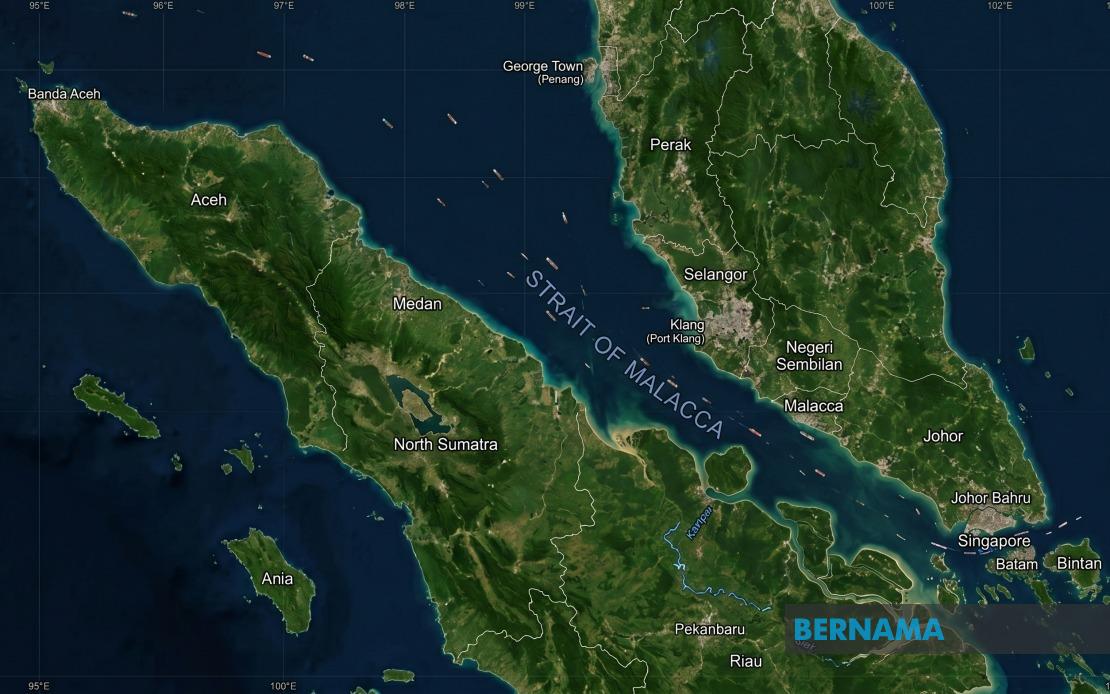
Indonesia and Singapore have reinforced their shared dedication to protecting the Strait of Malacca, with both nations signalling their intention to work closely alongside Malaysia and Thailand in preserving the strategic passage's security and accessibility. The commitment emerged from Monday's annual leaders' retreat in Jakarta, where President Prabowo Subianto and Singapore Prime Minister Lawrence Wong held their second formal bilateral summit since Prabowo assumed office.
The Strait of Malacca remains one of the world's most consequential maritime corridors, serving as a conduit for nearly one-third of global seaborne trade and oil shipments. For Indonesia and Singapore, which directly border this waterway, the stakes are particularly high. Both nations have insisted that their engagement with the strait's stewardship is grounded in the 1982 United Nations Convention on the Law of the Sea, establishing a framework that upholds principles of open passage while respecting coastal state interests. Prabowo articulated this balance during the press conference, emphasising that maintaining the waterway as an open passage benefits all parties while remaining central to regional stability.
The protection mandate extends well beyond simple transit oversight. Prabowo identified a constellation of operational challenges that demand coordinated attention: pollution risks, maritime accidents, and piracy represent immediate threats to the strait's viability. These concerns are not merely technical—they directly affect economies throughout Southeast Asia and beyond. For Malaysia, which shares extensive coastline along the strait, such threats carry particular weight. Thailand's involvement in the coordination framework broadens the partnership to include the waters near the Andaman Sea approaches, creating a more comprehensive security architecture.
The bilateral retreat served as a venue for discussing matters stretching far beyond the strait itself. Both leaders addressed broader regional security dynamics and global developments with potential implications for their respective nations and Southeast Asia more broadly. This expansion of the agenda reflects the deepening of Indonesia-Singapore ties, which have matured considerably in recent years despite historical complexities in their relationship.
A significant dimension of Monday's engagement involved reiterating ASEAN's collective position on dispute resolution. Both leaders emphasised that disagreements—whether regional or global—must be addressed through peaceful dialogue and diplomatic channels rather than coercive measures. This stance carries particular resonance given ongoing tensions in other parts of the region, most notably in the South China Sea. By publicly recommitting to these principles, Prabowo and Wong sent a signal about ASEAN's expected standards for responsible conduct among member states and major powers operating in the region.
The leaders also addressed the importance of managing misunderstandings and perceptions before they escalate into substantive conflicts. This emphasis on preventive diplomacy suggests both countries recognise that perception management and transparent communication can avert crises more cost-effectively than crisis management itself. For smaller Southeast Asian nations watching the behaviour of larger neighbours, such commitments to dialogue offer reassurance.
Wong's visit to Jakarta, arriving on Sunday evening specifically for this retreat, underscores Singapore's valuation of the bilateral relationship. The fact that this constitutes the second such annual gathering indicates consolidating diplomatic practice rather than ad hoc engagement. Regular high-level meetings create institutional rhythms that facilitate deeper understanding and faster resolution of emerging issues.
The upcoming 60th anniversary of Indonesia-Singapore diplomatic relations provides a symbolic anchor for both nations to reflect on shared achievements and future cooperation. This milestone presents an opportunity to evaluate what has been accomplished and to recalibrate engagement for subsequent decades. For a region dependent on stable great-power relations and functional multilateralism, the health of Indonesia-Singapore ties matters considerably.
Prabowo's framing of the retreat as preparation for future partnership challenges suggests forward-looking rather than merely reactive diplomacy. This orientation becomes crucial as both countries navigate demographic changes, technological disruption, and shifting global power dynamics. The Strait of Malacca, in this context, represents not simply a waterway to be policed but a shared asset requiring continuous investment in surveillance, maritime capability, and collaborative governance structures.
The coordinated approach involving Malaysia and Thailand reflects a recognition that the strait's security cannot be ensured through bilateral mechanisms alone. Inclusive frameworks that respect the interests and capabilities of all littoral states generate broader legitimacy and more durable arrangements. This principle extends beyond piracy suppression and accident response to encompass environmental stewardship and sustainable resource management.
For Malaysian readers and policymakers, the Indonesia-Singapore reaffirmation carries direct implications. Malaysia's position as a key stakeholder in strait stewardship gains reinforcement when its larger neighbours demonstrate commitment to collaborative management. The mention of continued coordination specifically with Malaysia signals that bilateral mechanisms will remain functional channels for addressing shared concerns.
The broader context of ASEAN unity on dispute resolution principles suggests that regional frameworks remain viable vehicles for managing conflicts without allowing them to metastasise into security crises. This institutional strength, dependent on consistent reinforcement by major regional players, provides foundation for prosperity and stability that benefits all Southeast Asian economies.
The retreat outcomes demonstrate that despite divergent interests and occasional bilateral tensions, Indonesia and Singapore recognise interdependencies that incentivise cooperation. This practical approach to partnership—focused on specific shared interests like maritime security rather than attempting artificial consensus on all matters—offers a template applicable to other regional relationships and disputes.

