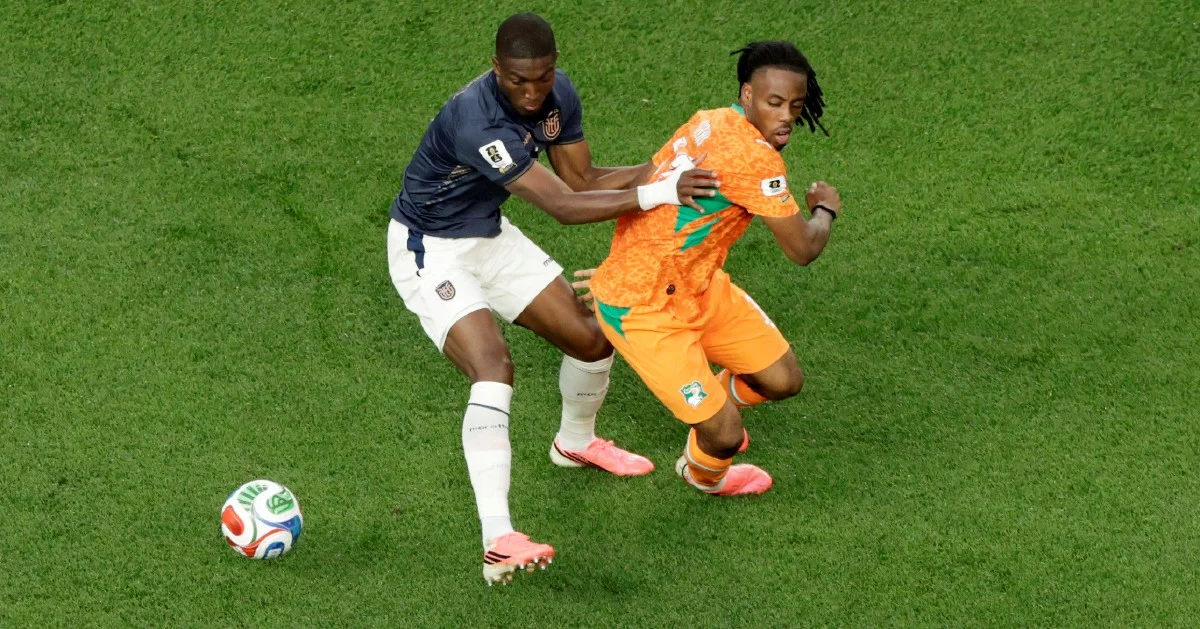
The Ivorian Football Federation announced on Thursday that striker Elye Wahi will not be available for this weekend's World Cup encounter against Germany in Canada, marking a significant disruption to the team's preparation. The decision came swiftly after French authorities began investigating alleged manipulation in a Ligue 1 fixture, with Wahi reportedly among those under scrutiny for potential involvement in the suspected irregularities.
The timing of the suspension underscores the growing intersection between international football governance and domestic match-fixing investigations. Wahi, who competes for a French club, found himself at the centre of a sprawling corruption probe that threatens to taint the credibility of Europe's most prestigious league. His removal from the squad reflects how seriously the Ivorian federation is treating the allegations, prioritising institutional integrity over short-term competitive considerations.
Match-fixing scandals have become an increasingly pressing concern in professional football worldwide. In recent years, multiple leagues across Europe, Asia, and Africa have grappled with systematic corruption involving players, officials, and criminal syndicates seeking to manipulate outcomes for financial gain. The Ligue 1 investigation represents yet another chapter in this troubling narrative, suggesting that even top-tier competitions remain vulnerable to infiltration by those willing to compromise the sport's fundamental fairness.
For Malaysian and Southeast Asian football followers, the Wahi case offers a sobering reminder of how integrity issues in distant leagues can ripple through the global game. Regional players and clubs increasingly aspire to compete in European competitions, making them potential targets for match-fixing networks. The vigilance demonstrated by the Ivorian federation—removing a valuable player mid-tournament—provides a model for how football bodies might respond decisively when corruption allegations emerge.
The World Cup context adds another layer of complexity. International tournaments represent the pinnacle of footballing achievement, where national pride and global audiences converge. Any suggestion of impropriety threatens not just individual matches but the entire credibility of the competition. By acting preemptively, Ivory Coast's federation signals that no player, regardless of talent or importance, stands above the rules governing fair play.
Wahi's exclusion also reflects broader challenges facing modern football administration. Leagues and national federations must balance competing interests: maintaining competitive advantage, protecting players' rights, and upholding sporting integrity. The decision to bench a key player creates tactical disadvantages, yet allowing someone under investigation to represent the nation would send an unmistakable message that integrity is negotiable.
The investigation's scope remains unclear, but Ligue 1's international prominence means its outcomes will receive substantial attention across African and Asian football circles. If systematic corruption is uncovered, it may prompt regional leagues—including Malaysia's Super League and other Southeast Asian competitions—to strengthen their own anti-corruption frameworks and monitoring systems.
For Wahi personally, the suspension represents a significant setback to his international career. Being unavailable for a World Cup match at a crucial stage denies him the opportunity to showcase his abilities on football's biggest stage. Whether his exclusion is temporary or permanent will depend on how the investigation progresses and what evidence ultimately emerges.
The Ivorian Football Federation's swift action demonstrates institutional accountability that, unfortunately, not all football bodies consistently demonstrate. Corruption investigations often drag on inconclusively, with governing bodies appearing reluctant to take decisive measures. The contrasting approach here—removing a player within 24 hours of allegations surfacing—suggests leadership willing to place principle above pragmatism.
Beyond the individual case, this episode highlights how interconnected modern football has become. A player competing in France, representing Ivory Coast, at a tournament hosted in Canada, yet affecting discussions about integrity across the entire sport. This globalised ecosystem means that misconduct in one jurisdiction inevitably impacts others, reinforcing the necessity for coordinated international approaches to corruption prevention.
For Southeast Asian football administrators and fans, the situation underscores why investment in robust anti-corruption mechanisms matters. As regional leagues develop commercially and attract international investment, they simultaneously become more vulnerable to match-fixing networks. Learning from how European leagues—and national federations like Ivory Coast's—respond to these threats could prove invaluable for protecting the sport's future credibility in the region.