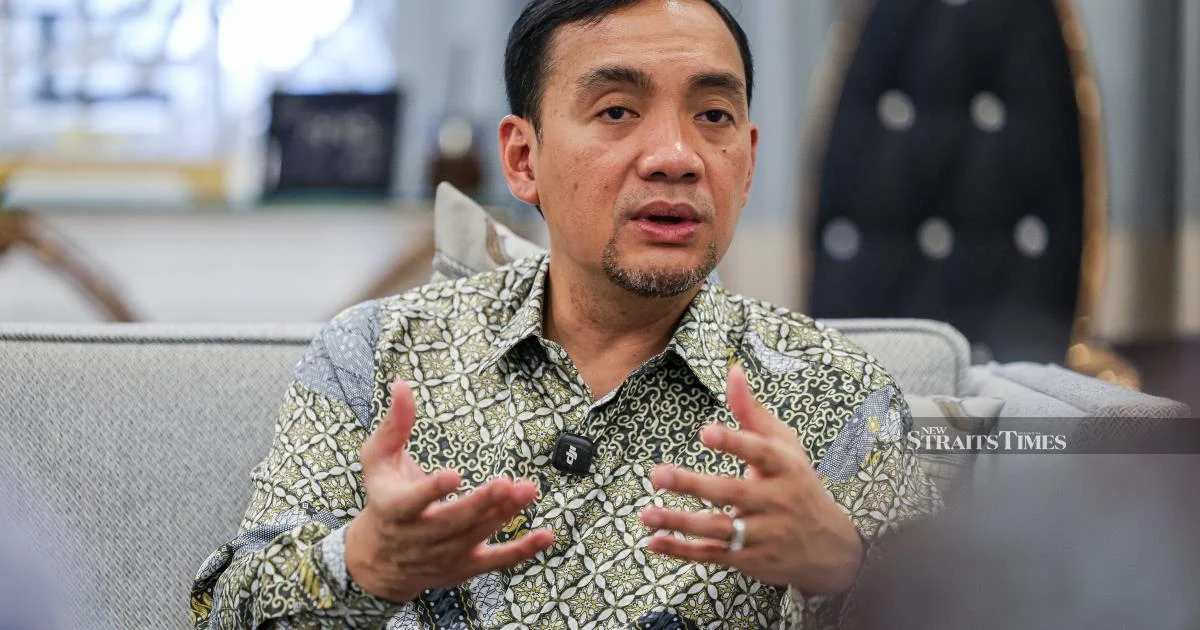
Johor's caretaker Menteri Besar Datuk Onn Hafiz Ghazi has categorically dismissed any prospect of Barisan Nasional allying with DAP to establish a state administration in the country's southern peninsula, should his coalition secure fresh electoral backing. His latest pronouncement underscores deepening ideological divides that continue to fragment Malaysian politics, particularly in resource-rich Johor where coalition-building remains fraught with philosophical tensions.
The stark rejection highlights fundamental differences between Umno-led Barisan Nasional and the Democratic Action Party that extend beyond mere partisan rivalry. Onn Hafiz's emphasis on ideology—rather than pragmatic coalition mathematics—signals that certain political partners remain taboo regardless of electoral arithmetic, a position that reflects the substantial doctrinal gulf separating these organisations on matters of governance, religious policy, and national identity.
For Malaysian observers, Onn Hafiz's stance clarifies the political landscape in one of the federation's most strategically important states. Johor, home to Malaysia's second-largest population and significant economic heft, has long served as a bellwether for broader national political trends. The caretaker Menteri Besar's explicit boundary-drawing suggests that even if electoral results fail to deliver a clear mandate, he remains unwilling to compromise on fundamental principles to secure office through cross-coalition partnerships.
This ideological inflexibility carries implications beyond Johor's borders. DAP's expansion in peninsular Malaysia, particularly in urban and semi-urban constituencies, has created uncomfortable coalition scenarios across multiple states. By preemptively closing the door to DAP partnership, Onn Hafiz effectively signals to his Barisan Nasional colleagues and to Johor voters that victory must be achieved within coalition parameters rather than negotiated afterwards through politically expedient compromises.
Historically, Malaysian politics has demonstrated remarkable flexibility in forming governing coalitions. Previous administrations at both state and federal levels have seen erstwhile opponents suddenly discover common ground upon election results. However, the contemporary political climate has fostered stronger ideological coherence within blocs, with party leaders increasingly reluctant to soften positions on principles that define their respective political identities and organisational bases.
The DAP, as Malaysia's dominant Chinese-based party and self-identified progressive force, occupies a position fundamentally at odds with Umno-led Barisan Nasional's traditional emphasis on Malay-Muslim majority interests and Islamic institutional frameworks. These are not negotiable platform differences but rather foundational identity questions that generate persistent tension regardless of short-term electoral considerations.
Onn Hafiz's remarks also reflect intra-coalition dynamics within Barisan Nasional itself. Umno remains extraordinarily sensitive to accusations of accommodating non-Muslim-majority parties on matters touching communal and religious sensibilities. Any collaboration with DAP risks antagonising the coalition's core constituency and providing ammunition to Perikatan Nasional and other competitors for the Malay-Muslim vote. By explicitly rejecting DAP partnership, the caretaker Menteri Besar inoculates himself against such criticism while reinforcing Barisan Nasional's claim to represent Malay and Muslim interests authentically.
The timing of this statement, made during a caretaker period when elections loom, suggests strategic messaging aimed at multiple audiences. Johor voters sceptical of coalition politics receive assurance that Barisan Nasional leadership maintains unwavering principles. Party members and allied groups gain confidence that electoral victory will not be squandered through ideologically incomprehensible partnerships. Simultaneously, rival coalitions are warned that post-election negotiations will not produce unexpected alliances that could alter the political configuration.
ForSoutheast Asian context, Malaysia's coalition politics increasingly reflect the broader regional pattern of sharpening ideological divides between conservative and progressive blocs. Unlike the fluid, personalistic politics of earlier decades, contemporary Malaysian politics increasingly organise around coherent ideological platforms that prove resistant to expedient restructuring. This hardening of lines has implications for governance stability, as election outcomes increasingly determine power distribution rather than serving as opening bids for extensive post-election negotiations.
Onn Hafiz's positioning also suggests awareness that some electoral combinations prove politically toxic irrespective of their mathematical viability. A Barisan Nasional-DAP government, even if numerically sufficient to form an administration, would face legitimacy questions that could undermine its effectiveness and provoke sustained challenges to its moral authority to govern. By foreclosing this possibility explicitly, he avoids creating false expectations and removes a potential source of political instability.
The caretaker Menteri Besar's insistence on ideology as a binding constraint rather than a flexible consideration ultimately reflects where Malaysian politics has travelled since earlier eras of opportunistic coalition-building. Modern political parties increasingly derive legitimacy from doctrinal consistency rather than merely electoral performance, making partners' ideological compatibility crucial to coalition sustainability. Onn Hafiz's unequivocal stance recognises this fundamental shift in how Malaysian political legitimacy operates in the contemporary period.