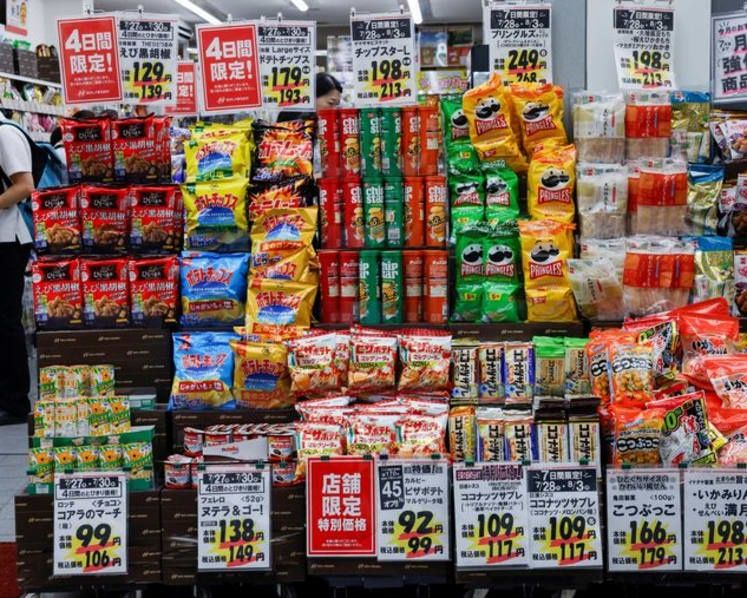
Prime Minister Sanae Takaichi has announced that Japan will dramatically reduce the consumption tax on food and beverages to just one per cent from next April, delivering on a campaign pledge that proved instrumental in securing her electoral mandate. The historic cut—the first reduction in the tax rate since its introduction in 1989—will remain in effect for two years before reverting to the standard eight per cent rate in 2029, a timeline that reflects the government's desire to balance immediate relief with fiscal responsibility concerns.
The decision comes as Japan grapples with persistent inflationary pressures stemming from multiple sources, including global supply chain disruptions linked to Middle Eastern tensions and the weakness of the yen against major currencies. These factors have combined to push everyday living costs higher across the world's fourth-largest economy, creating palpable strain on household budgets and sparking public demand for government intervention. Food price inflation has been particularly acute, making this sector an obvious target for tax relief measures aimed at demonstrating responsiveness to citizen concerns.
Takaichi's pledge to eliminate or drastically reduce the sales tax on food was a centrepiece of her electoral platform when she competed for the leadership position, and Thursday's announcement represents the fulfilment of that commitment. The prime minister indicated that the temporary two-year window is deliberately aligned with a broader economic strategy: when the tax rate normalises in 2029, the government plans to introduce more precisely targeted subsidy programmes focused on lower-income households facing increased social insurance contribution obligations. This suggests a shift from broad-based tax relief to means-tested support mechanisms.
The fiscal implications of this decision are substantial. Media calculations indicate that the two-year tax cut will result in approximately 10 trillion yen (USD 61 billion) in forgone government revenue, a significant sum for any treasury. This figure underscores the scale of the government's commitment to addressing inflation, though it also raises important questions about how Japan—already burdened by the highest debt-to-GDP ratio among developed nations at more than twice its annual economic output—will manage this additional revenue loss without further straining its already precarious fiscal position.
Acknowledging these budgetary constraints, Takaichi has committed her administration to identify offsetting savings rather than resorting to increased government borrowing. The strategy involves reassessing existing tax relief measures and subsidy programmes with an eye toward rationalisation and reallocation. By consolidating or eliminating less effective support initiatives, officials hope to redirect resources toward the food tax cut while avoiding the issuance of additional special government bonds, which could undermine market confidence in Japan's fiscal management and potentially drive up borrowing costs.
The approach reflects a delicate balancing act inherent in contemporary Japanese policymaking. The government must simultaneously address immediate public anxieties about cost-of-living pressures, honour electoral commitments, and maintain the confidence of international investors and credit markets. Japan's massive debt burden, accumulated through decades of deficit spending to support economic growth and address deflationary crises, leaves limited room for expansionary fiscal measures without consequences. Each new government programme must be carefully calibrated to avoid signalling fiscal deterioration.
The decision to sunset the tax cut after two years rather than make it permanent reveals important assumptions about the government's inflation outlook. By setting a defined end date, policymakers are implicitly predicting that price pressures will moderate over this timeframe, whether through normalisation of global supply chains, stabilisation of energy markets, or appreciation of the yen. If inflation persists beyond 2029, the restoration of the eight per cent food tax could prove politically contentious, potentially negating the goodwill generated by the initial reduction.
For Malaysian and Southeast Asian observers, Japan's approach offers instructive lessons about managing inflation through selective rather than universal tax cuts. Many regional economies face similar pressures from weakened currencies, supply chain vulnerabilities, and volatile commodity prices. Japan's emphasis on targeting vulnerable populations through means-tested subsidies rather than blanket reductions also warrants attention, particularly for policymakers seeking to balance fiscal prudence with social equity.
The timing of implementation—April 2025—provides Japan's finance ministry and tax authorities several months to prepare administrative systems for processing food items at the dramatically reduced rate. This will require careful classification of what qualifies as food and beverages under the new regime, potentially raising technical questions about prepared meals, restaurant services, and other boundary cases that have long complicated consumption tax administration globally.
Takaichi's willingness to advance this proposal despite prevailing fiscal constraints demonstrates that electoral mandates and public pressure can still drive significant policy shifts even in fiscally constrained environments. Her election victory appears to have provided her with sufficient political capital to override Treasury concerns about revenue loss, at least temporarily. Whether this policy succeeds in materially alleviating household cost pressures while remaining fiscally sustainable will significantly influence both Japan's economic trajectory and the appetite for similar measures across Asia.

