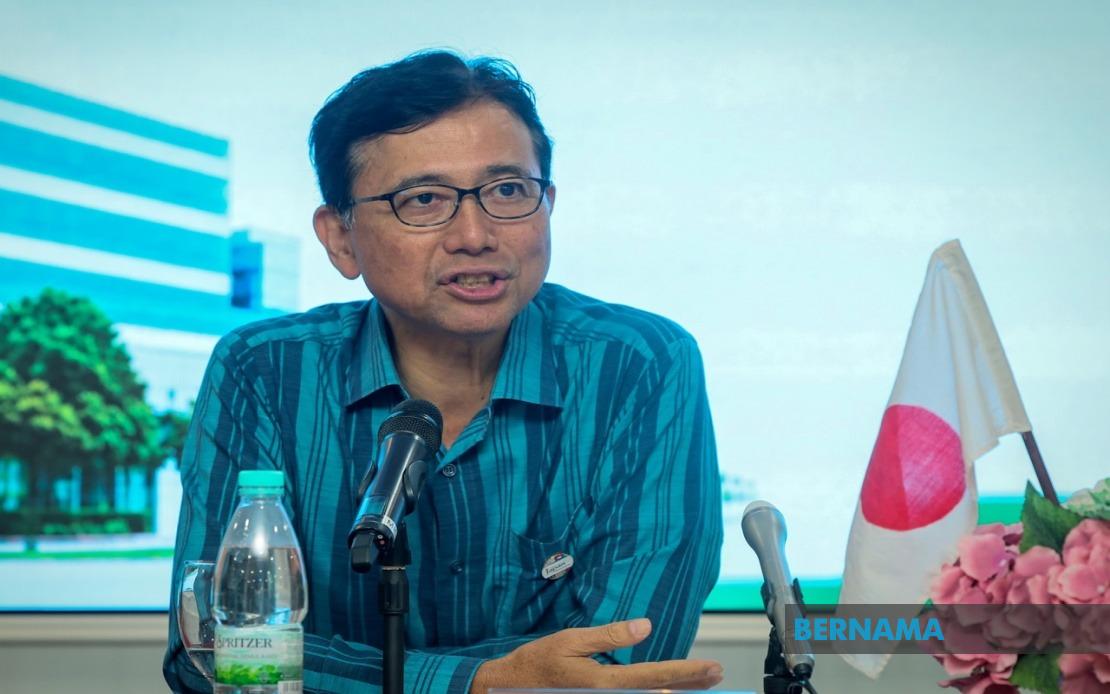
Japan's strategic blueprint for the Indo-Pacific region has been repositioned to directly support Malaysia's ambitions as a premier digital and technology centre, according to Japanese Ambassador to Malaysia Noriyuki Shikata. The updated Free and Open Indo-Pacific (FOIP) framework, unveiled by Prime Minister Sanae Takaichi in May, represents a significant recalibration of Japan's approach to regional engagement, moving beyond traditional economic partnerships to encompass cutting-edge sectors including artificial intelligence, secure data infrastructure, undersea telecommunications cables and satellite communications networks.
The FOIP concept itself traces back to 2016, when former Prime Minister Shinzo Abe introduced the vision as a mechanism for Japan to exercise strategic leadership in maintaining peace, stability and economic prosperity across the Indo-Pacific region. However, the updated iteration marks a departure from earlier iterations by prioritising tangible capacity-building initiatives and concrete cooperation frameworks that address immediate regional needs. Shikata characterised this evolution as pragmatic and substantive, reflecting Japan's recognition that sustainable regional prosperity requires investment in human capital, technological infrastructure and industrial resilience rather than exclusively focusing on traditional trade relationships.
At the heart of this repositioning lies a deliberate pivot toward economic security and industrial self-sufficiency. The updated framework explicitly targets cooperation with nations across the Global South, a category encompassing most ASEAN members. This approach finds strong alignment with the ASEAN Outlook on the Indo-Pacific (AOIP), the regional bloc's own geopolitical framework, suggesting that Japan has carefully calibrated its strategy to complement rather than compete with existing multilateral mechanisms. This coordinated approach enhances the credibility and acceptability of Japan's regional engagement among Southeast Asian capitals.
Financial backing provides concrete substance to Japan's rhetorical commitment. The US$10 billion POWERR Asia initiative—formally titled the Partnership on Wide Energy and Resource Resilience Asia—establishes a dedicated funding mechanism through which ASEAN nations can secure reliable fuel supplies, accumulate strategic energy reserves and fortify supply chains for critical materials essential to modern manufacturing and technology sectors. For Malaysia specifically, this financial commitment offers pathways to strengthen energy security and develop domestic capabilities in resource management, areas of persistent strategic concern in the region.
For the Japanese business community operating within Malaysia, the updated framework creates tangible operational benefits. By establishing clearer security protocols and predictable governance environments, Japanese enterprises gain confidence to deepen their regional commitments. More significantly, the framework actively encourages Japanese companies to transition their Malaysian operations beyond labour-intensive, low-margin manufacturing toward high-value technology development and partnership models. This reorientation addresses long-standing concerns about Malaysia's economic diversification and the need to move up global value chains away from commodity-dependent activities.
Malaysia's established position as a regional semiconductor hub occupies particular prominence in Japan's recalibrated strategy. Japanese corporations possess substantial expertise and capital in semiconductor manufacturing, particularly in advanced packaging technologies that represent critical competitive advantages in global electronics markets. Shikata specifically identified semiconductor packaging, artificial intelligence infrastructure development and cloud computing services as priority areas where Japanese investment could meaningfully expand, signalling that Tokyo views Malaysia as a credible partner for next-generation manufacturing rather than merely a low-cost assembly location.
The bilateral relationship between Japan and Malaysia has formally transitioned into a new institutional framework with the establishment of the Comprehensive Strategic Partnership (CSP) in December 2023. This arrangement supersedes previous arrangements including the historic Look East Policy, which guided Malaysia's engagement with Japan during the formative decades of its industrialisation. The CSP explicitly positions the partnership around shared innovation, technological capability development and strategic coordination, departing significantly from earlier frameworks that emphasised technology transfer and industrial apprenticeship. This evolution reflects Malaysia's maturation as an economic actor and Japan's confidence in treating Malaysia as a sophisticated technological partner rather than a recipient of one-directional expertise.
Recent high-level diplomatic engagement has reinforced the practical trajectory of this partnership. Prime Minister Datuk Seri Anwar Ibrahim's recent visit to Japan included substantive meetings with major corporate actors including Mitsubishi Corporation, ENEOS, DENSO, IBM and Marubeni. These companies collectively represent Japan's most advanced technological capabilities, spanning sectors from energy and automotive systems to information technology infrastructure. The deliberate inclusion of these particular companies in high-level engagement demonstrates that Malaysia is actively courting participation from Japan's technological elite, not merely its established manufacturing concerns.
The anticipated collaboration frameworks emerging from these exchanges focus on two distinct but complementary objectives. First, joint development initiatives in emerging technologies such as artificial intelligence and quantum computing would position Malaysia as a venue for cutting-edge research and development rather than purely as a manufacturing location. Quantum computing represents a particularly significant frontier, as early leadership in this domain could provide substantial competitive advantages in financial services, cryptography and advanced materials science. Second, collaborative efforts to protect critical infrastructure and secure supply chains acknowledge the geopolitical uncertainties that now characterise global commerce, with both nations recognising that economic resilience increasingly depends on strategic coordination rather than exclusively on market mechanisms.
The broader implications of this strategic alignment extend across Southeast Asia and merit close attention from regional observers. Japan's deliberate coordination of its Indo-Pacific framework with ASEAN's own regional vision suggests a shift toward more genuinely multilateral approaches to regional governance. Rather than imposing Japanese preferences through bilateral arrangements, Tokyo appears to be working within and through existing regional institutions. This approach potentially addresses longstanding sensitivities regarding great power competition and spheres of influence that have historically complicated regional dynamics.
For Malaysia's broader technological ambitions, Japanese partnership offers both immediate practical advantages and longer-term strategic positioning. The availability of Japanese capital, technological expertise and access to sophisticated supply chains can materially accelerate Malaysia's transition toward higher-value manufacturing and technology services. Simultaneously, close association with Japan positions Malaysia favourably within regional competitions for investment and technological leadership, as Japanese companies often bring downstream networks and customer relationships that Malaysian firms can leverage for market access.
Shikata's concluding assertion that Japan remains committed to being Malaysia's "most reliable and forward-looking partner" reflects recognition that strategic partnerships in the technology and innovation sectors require consistency and predictability. Given rapid technological change and the inherent uncertainties of emerging fields like quantum computing and advanced AI applications, bilateral relationships that weather political fluctuations and maintain institutional continuity offer distinct advantages to corporate participants and national economies alike. The updated FOIP framework, positioned as a long-term strategic commitment rather than a temporary initiative, attempts to provide precisely such stability.