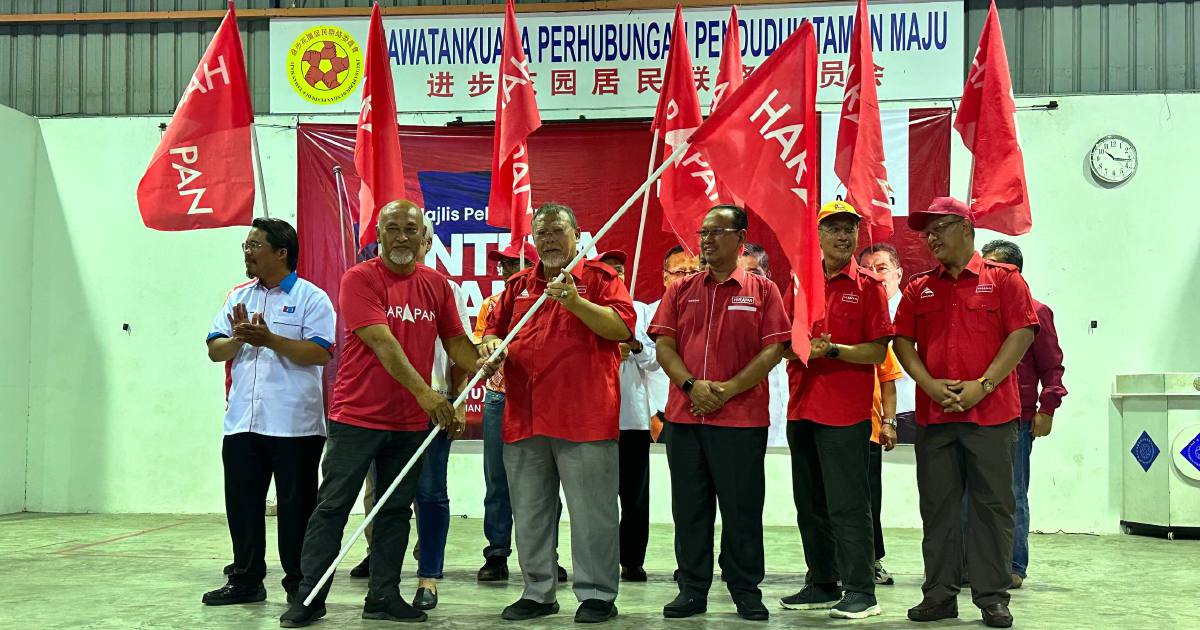
Johor Amanah has set its sights on capturing at least six of the ten state seats it is fielding candidates for in the northern zone ahead of the July 11 state election, reflecting the party's confidence in its electoral prospects in the region. The announcement, made in Batu Pahat, underscores the party's strategic focus on this geographically important area as a battleground where it believes it can make significant inroads.
The target represents an ambitious goal that would effectively give Amanah control of roughly 60 percent of the northern zone seats it contests, suggesting the party believes it has cultivated sufficient ground support and organisational capacity to achieve this outcome. This confidence appears rooted in recent organisational strengthening and grassroots engagement initiatives that the party has undertaken across Johor's northern constituencies.
For Malaysian political observers, Amanah's optimism in Johor carries broader implications for the state's political trajectory. As part of the Pakatan Harapan coalition, the party's performance will directly influence whether the opposition maintains its presence in Johor's legislature, a state where political competition has intensified considerably since the 2022 federal election. The northern zone has historically been a mixed battleground, with different constituencies leaning towards varying political camps depending on local issues and demographic composition.
The party's decision to contest ten seats in this zone demonstrates a calculated expansion strategy. Rather than concentrating resources in a handful of strongholds, Amanah appears intent on building a broader presence that could establish it as a genuine contender across the region. This approach suggests the party has identified multiple constituencies where demographic shifts, local grievances, or organisational advantages might swing seats in its favour.
Johor's political landscape has undergone substantial realignment since 2020, with voters displaying greater willingness to shift allegiances based on performance and local sentiment rather than traditional party loyalties. Amanah's targeting of the northern zone reflects this reality, as the party seeks to exploit perceived vulnerabilities in incumbent representatives and capitalise on issues that resonate with local voters such as infrastructure development, economic opportunities, and effective governance.
The six-seat target, if achieved, would significantly strengthen Amanah's state caucus and provide it with greater leverage within potential coalition negotiations that might follow the July 11 election. Such an outcome would also validate the party's strategy of positioning itself as a serious contender rather than a minor coalition partner relegated to token representation.
Yet achieving this ambition will require the party to navigate several challenges. Johor's dominant political forces remain entrenched, with substantial financial and organisational resources. Additionally, voter fatigue from frequent electoral campaigns at federal and state levels could dampen turnout, potentially affecting parties that rely on mobilising specific voter segments. Internal coalition dynamics within Pakatan Harapan could also influence the campaign's effectiveness, as voters might punish perceived disunity or inter-coalition rivalry.
The northern zone's specific characteristics present both opportunities and obstacles for Amanah. Some constituencies feature substantial young, urban populations potentially sympathetic to Amanah's reformist positioning, while others comprise more traditional rural communities where the party has historically struggled. Successfully translating confidence into votes will require sophisticated targeting, effective messaging that addresses both common and localised concerns, and sustained campaign momentum through to polling day.
Geographically, the northern zone encompasses constituencies ranging from smaller rural areas to mid-sized towns, creating a diverse electoral landscape. Amanah's success will likely depend on its ability to craft localised campaign narratives while maintaining broader coherence around state-level policy platforms. This balancing act demands considerable political sophistication and resource allocation discipline.
The July 11 election represents a crucial inflection point for Johor politics, with several parties seeking to reset the state's political configuration. Amanah's performance will provide a significant indicator of whether the opposition coalition can genuinely challenge entrenched incumbent forces or whether the state remains firmly within the grip of longer-established political structures. The party's willingness to articulate concrete numerical targets rather than vague aspirational language suggests internal confidence based on what party strategists believe are realistic assessments of ground conditions.
Beyond Johor's borders, Amanah's electoral performance in this state election will carry implications for how political analysts assess the opposition's viability elsewhere in Malaysia. A strong showing would reinforce narratives about opposition consolidation and voter receptiveness to alternatives, while a disappointing outcome might prompt questions about coalition cohesion and the party's broader strategic positioning.
The weeks leading to the July 11 poll will prove crucial for determining whether Amanah's optimism translates into tangible electoral success. The party's stated six-seat objective provides a measurable benchmark against which its campaign effectiveness can be evaluated, making this target more than mere rhetoric but rather a commitment to specific electoral performance that will shape assessments of its political trajectory in Malaysia's competitive landscape.

%22%2F%3E%3C%2Fpattern%3E%3C%2Fdefs%3E%3Crect%20width%3D%22100%25%22%20height%3D%22100%25%22%20fill%3D%22url(%23ph123pmg)%22%2F%3E%3Crect%20width%3D%22100%25%22%20height%3D%22100%25%22%20fill%3D%22url(%23ph123pmp)%22%2F%3E%3Ctext%20x%3D%2250%25%22%20y%3D%2250%25%22%20text-anchor%3D%22middle%22%20dominant-baseline%3D%22central%22%20fill%3D%22rgba(255%2C255%2C255%2C0.95)%22%20font-family%3D%22Georgia%2C%20'Times%20New%20Roman'%2C%20serif%22%20font-weight%3D%22700%22%20font-size%3D%22170%22%20letter-spacing%3D%22-0.02em%22%3EMalaysia%3C%2Ftext%3E%3C%2Fsvg%3E)