%22%2F%3E%3C%2Fpattern%3E%3C%2Fdefs%3E%3Crect%20width%3D%22100%25%22%20height%3D%22100%25%22%20fill%3D%22url(%23ph4tn5og)%22%2F%3E%3Crect%20width%3D%22100%25%22%20height%3D%22100%25%22%20fill%3D%22url(%23ph4tn5op)%22%2F%3E%3Ctext%20x%3D%2250%25%22%20y%3D%2250%25%22%20text-anchor%3D%22middle%22%20dominant-baseline%3D%22central%22%20fill%3D%22rgba(255%2C255%2C255%2C0.95)%22%20font-family%3D%22Georgia%2C%20'Times%20New%20Roman'%2C%20serif%22%20font-weight%3D%22700%22%20font-size%3D%22272%22%20letter-spacing%3D%22-0.02em%22%3EJohor%3C%2Ftext%3E%3C%2Fsvg%3E)
Johor's workforce development infrastructure achieved significant scale last year, with 13,425 employers now enrolled in the Human Resource Development Corporation ecosystem, according to Human Resources Minister Datuk Seri R. Ramanan. This participation base directly supported training access for 479,905 workers across the state, establishing a substantial foundation for skills upgrading and career progression in the country's southern industrial hub.
The financial performance underlying this expansion proved equally substantial. The registered employer base generated levy collections reaching RM208.21 million, demonstrating both the breadth of participation and the contribution levels across different company sizes and sectors. Of this amount, RM183.96 million flowed directly back into employer-led training initiatives, creating a cyclical investment mechanism where contributions fund the very workforce development programmes that participating companies require.
Beyond levy redistribution, HRD Corp channelled an additional RM191.5 million in targeted financial assistance, benefiting 232,072 individuals throughout Johor. This dual-track funding approach—combining employer levy recycling with direct assistance disbursements—reflects a policy framework designed to reach workers across different employment arrangements and organisational contexts. The assistance allocation signals recognition that traditional full-time employees represent only one segment of Johor's labour market, with growing emphasis on supporting non-traditional and contingent workers.
Minister Ramanan emphasised that quantifying success through expenditure alone misses the substantive outcomes that matter most to workers and their families. He stressed that the ministry's evaluation framework prioritises tangible, enduring benefits rather than nominal financial flows, directing attention toward employment stability, wage progression, and career resilience among Johor's workforce. This framing challenges common assumptions about training programme effectiveness, positioning long-term individual advancement rather than programme cost as the primary success metric.
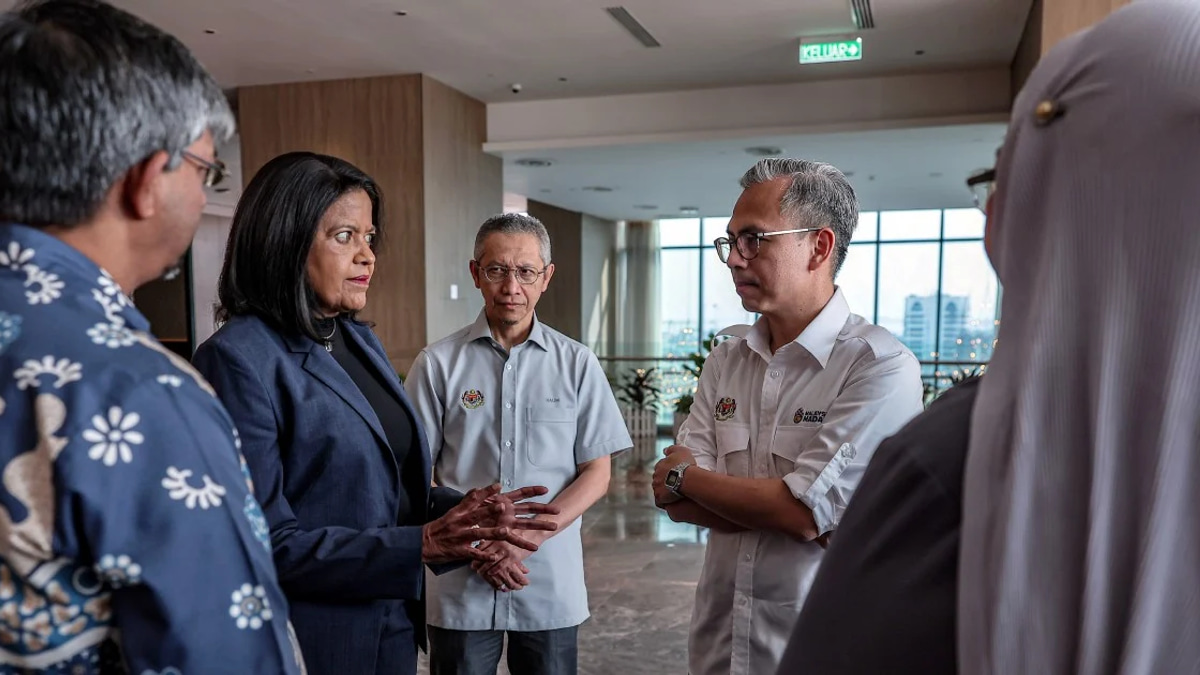
The minister's remarks were delivered at the Johor edition of HRD Corp's 'Pocket Talk' roadshow, held at Starhill Golf & Country Club in Kempas. This venue choice reflects a deliberate strategy to bring government training information and upskilling resources to communities at accessible locations, moving beyond conventional institutional settings. The 'From Policy to the People' theme underscores efforts to bridge the communication gap between policymaking circles and grassroots stakeholders who benefit from these programmes, ensuring information about available funding and development opportunities reaches workers directly.
Johor's development trajectory increasingly depends on securing highly skilled personnel capable of supporting sophisticated manufacturing and service sectors. The state's positioning as a critical component of the Johor-Singapore Special Economic Zone amplifies this demand considerably. The JS-SEZ framework creates competitive pressure to develop local talent pools capable of meeting regional benchmarks, as businesses establishing operations within the economic zone require workers equipped with advanced technical capabilities and cross-border operational competencies. Without sustained workforce development, the state risks inability to fully capture investment and employment opportunities the JS-SEZ creates.
HRD Corp's expanded ecosystem in Johor directly addresses this skills gap challenge. By concentrating resources on employer-sponsored training within priority sectors and occupational categories, the initiative enables companies to design development programmes aligned with emerging operational demands. The levy-funded mechanism creates incentives for employers to invest in their workforce rather than defaulting to external recruitment, building institutional knowledge and reducing turnover costs that destabilise operations.
The 'Pocket Talk' roadshow represents a broader structural shift within the Human Resources Ministry toward proactive outreach and community engagement. Rather than assuming workers and small-to-medium enterprises independently navigate available funding schemes, the ministry is investing in direct contact strategies that demystify the application process and clarify eligibility criteria. This approach recognises that information asymmetries often prevent eligible individuals and organisations from accessing support, even when programmes exist to serve them.
Particularly significant is the ministry's targeted attention to gig workers and non-traditional employment arrangements. As Johor's economy increasingly incorporates flexible and platform-based work models, conventional training infrastructure sometimes fails to serve these workers adequately. The commitment to extend skills enhancement opportunities to gig economy participants reflects recognition that economic resilience depends on upskilling across the entire employment landscape, not solely permanent, formal-sector positions.
The scale of HRD Corp participation in Johor—encompassing more than 13,000 employers—demonstrates market readiness for structured workforce development within Malaysia's Southeast Asian economic integration context. The state's geographic proximity to Singapore, coupled with its manufacturing and logistics specialisations, creates natural demand for continuous skills enhancement. Companies operating across the causeway or serving regional supply chains require employees with capabilities matching international standards, making training investment commercially rational rather than purely philanthropic.
Moving forward, sustaining and expanding this ecosystem requires attention to several dimensions beyond funding volume. Ensuring training programme quality, maintaining relevance to evolving sectoral needs, and effectively supporting workers in translating skills into employment advancement will determine whether current participation levels translate into measurable economic outcomes. The minister's emphasis on long-term individual benefits rather than programme metrics suggests the ministry recognises this distinction and intends to structure evaluation frameworks accordingly.
For Malaysian policymakers observing Johor's HRD Corp success, the model offers insights into scaling workforce development within constrained fiscal environments. By leveraging employer contributions through levy mechanisms and channelling these resources directly to training execution, the approach reduces government recurrent expenditure whilst maintaining development momentum. As Malaysia navigates post-pandemic economic repositioning and regional competitive pressures intensify, replicating Johor's integrated employer-worker engagement model across other states could strengthen national competitiveness substantially.