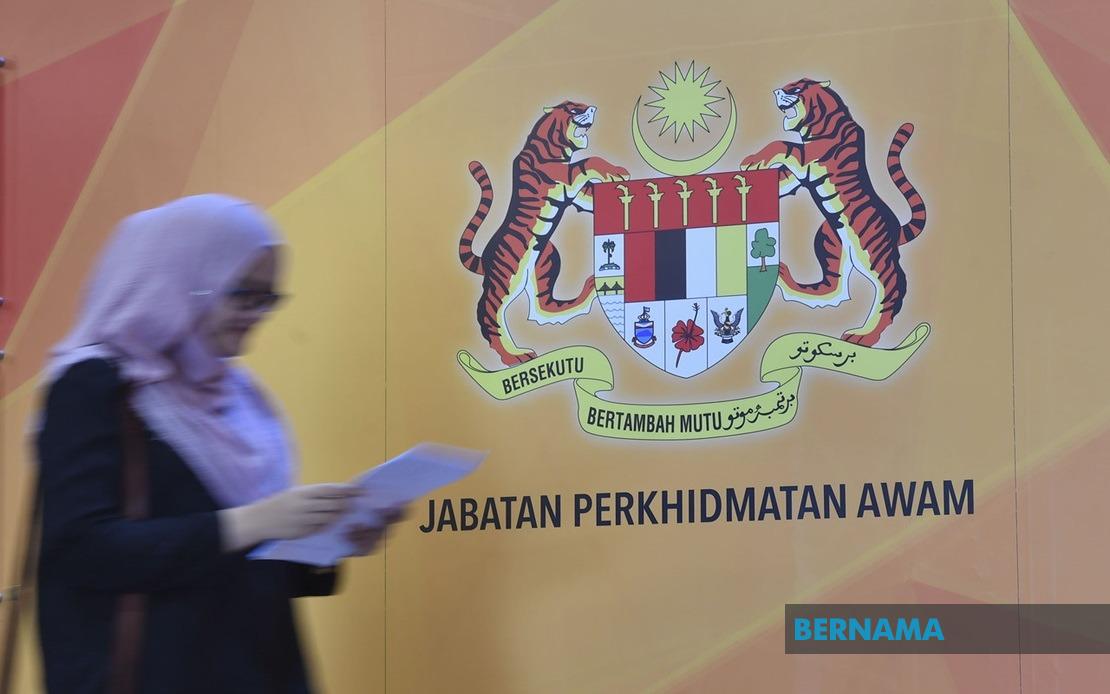
The Public Service Department (JPA) has unveiled a significant expansion in its scholarship commitment, announcing 640 sponsorship slots available to 2026 Sijil Pelajaran Malaysia (SPM) graduates. This announcement, made in Putrajaya, underscores the government's investment in nurturing the next generation of Malaysian talent and reflects the MADANI administration's broader vision of developing a highly skilled workforce positioned to strengthen the nation's competitive standing on the international stage.
The sponsorship initiative operates through four distinct pathways, each catering to different student profiles and aspirations. The National Sponsorship Programme makes available 30 slots, while the Special Programme targeting Japan, Korea, France and Germany provides 140 opportunities. A domestic-focused stream, the Special Programme for Domestic SPM Graduates, offers 200 slots to students choosing to pursue tertiary education within Malaysia. The JPA-MARA Special Programme (PKJM) represents the largest component, distributing 270 slots among successful applicants.
Geographic diversity remains central to JPA's strategy for talent development. Successful scholars may pursue their studies at premier institutions across multiple continents, including the United States, Australia, Japan, South Korea, France, Germany, the United Kingdom and New Zealand, in addition to Malaysia's own higher education network. This international exposure equips graduates with cross-cultural competencies and global perspectives increasingly valued in Malaysia's interconnected economy.
The programmes deliberately emphasise strategic and critical fields of study deemed essential for national development and economic growth. Engineering, science and technology feature prominently, reflecting Malaysia's ongoing transformation toward knowledge-intensive industries and digital innovation. However, the inclusion of social sciences demonstrates recognition that sustainable progress requires expertise across disciplines, from policy development and urban planning to economics and international relations.
For prospective scholars, the application process has moved decidedly digital, with results accessible through JPA's online portal. Candidates who submitted applications are able to verify sponsorship outcomes beginning at 10 am on the announcement date through 5 pm on June 22, streamlining what has traditionally been an anxious waiting period for ambitious students and their families. This technological infrastructure reflects modern administrative efficiency while ensuring transparent, equitable access to information.
A notable innovation in the sponsorship structure involves the Academic Merit-Based Convertible Loan (PBUA), which JPA introduced in June 2025 and will administer to all 2026 recipients. This financing mechanism departures from traditional outright grants, instead combining elements of merit recognition with conditional repayment obligations. The approach incentivises sustained academic excellence throughout a scholar's tertiary studies, as loan conversion depends on continued strong performance. Such arrangements reflect global trends in higher education financing, particularly among Southeast Asian countries managing competing fiscal priorities.
The PBUA structure merits closer examination for Malaysian readers navigating education funding complexities. By tying financial support to performance metrics rather than distributing unconditional scholarships, JPA creates accountability mechanisms that theoretically enhance programme value and discourage complacency among beneficiaries. Simultaneously, the conversion feature—transforming loans into forgivable grants contingent on academic success—offers an appealing middle ground between pure grant-based and purely loan-based systems, reducing financial burden for high-performing graduates while maintaining budgetary discipline.
For Malaysia's education ecosystem, this sponsorship initiative carries broader implications. The availability of 640 slots addresses persistent concerns about accessibility to quality tertiary education, particularly for academically talented students from middle and lower-income families. By guaranteeing pathways to domestic and international universities, JPA reduces reliance on private financing and family resources, theoretically democratising access to elite institutions. This distributes educational opportunity more widely across Malaysian society, potentially widening the talent pool available for the country's professional and leadership pipelines.
The international dimension warrants particular attention for Southeast Asian readers. Malaysia's participation in sponsoring students to study in Japan, South Korea, France and Germany reflects deliberate diplomatic and economic positioning. These nations represent centres of technological innovation, advanced manufacturing, and cultural influence. Exposure to their educational systems and professional networks creates long-term advantages for Malaysia, fostering bilateral relationships and enabling knowledge transfer that extends beyond individual scholars to institutional and sectoral levels.
The timing of this announcement also signals government priorities during a period of economic transition. As Malaysia navigates shifting global supply chains and technological disruption, investing in human capital through targeted sponsorships represents preventive policymaking—addressing skilled workforce shortages before they constrain economic competitiveness. The emphasis on engineering and technology particularly reflects recognition that manufacturing and digital sectors will drive future growth, necessitating adequate talent pipelines.
Successful applicants represent Malaysia's investment in its future. Beyond individual achievement and family advancement, these 640 scholars embody national aspirations for excellence and global engagement. Their success in international universities contributes to Malaysia's soft power and reputation for nurturing talent, while their eventual careers—whether in government service, private sector, or entrepreneurship—will shape sectoral development and innovation trajectories across the economy.
Prospective 2026 SPM graduates and their families should view these sponsorship opportunities as more than financial assistance. They represent structured pathways into professional networks, access to world-class education, and partnerships with Malaysia's public service commitment to national development. The availability of 640 slots across four distinct programmes ensures that diverse academic interests and career aspirations can find suitable matches, whether candidates envision careers in technical fields, social sciences, or specialized international sectors.
%22%2F%3E%3C%2Fpattern%3E%3C%2Fdefs%3E%3Crect%20width%3D%22100%25%22%20height%3D%22100%25%22%20fill%3D%22url(%23ph5xfrkg)%22%2F%3E%3Crect%20width%3D%22100%25%22%20height%3D%22100%25%22%20fill%3D%22url(%23ph5xfrkp)%22%2F%3E%3Ctext%20x%3D%2250%25%22%20y%3D%2250%25%22%20text-anchor%3D%22middle%22%20dominant-baseline%3D%22central%22%20fill%3D%22rgba(255%2C255%2C255%2C0.95)%22%20font-family%3D%22Georgia%2C%20'Times%20New%20Roman'%2C%20serif%22%20font-weight%3D%22700%22%20font-size%3D%22320%22%20letter-spacing%3D%22-0.02em%22%3EPM%3C%2Ftext%3E%3C%2Fsvg%3E)
%22%2F%3E%3C%2Fpattern%3E%3C%2Fdefs%3E%3Crect%20width%3D%22100%25%22%20height%3D%22100%25%22%20fill%3D%22url(%23ph2flptg)%22%2F%3E%3Crect%20width%3D%22100%25%22%20height%3D%22100%25%22%20fill%3D%22url(%23ph2flptp)%22%2F%3E%3Ctext%20x%3D%2250%25%22%20y%3D%2250%25%22%20text-anchor%3D%22middle%22%20dominant-baseline%3D%22central%22%20fill%3D%22rgba(255%2C255%2C255%2C0.95)%22%20font-family%3D%22Georgia%2C%20'Times%20New%20Roman'%2C%20serif%22%20font-weight%3D%22700%22%20font-size%3D%22320%22%20letter-spacing%3D%22-0.02em%22%3EPAS%3C%2Ftext%3E%3C%2Fsvg%3E)