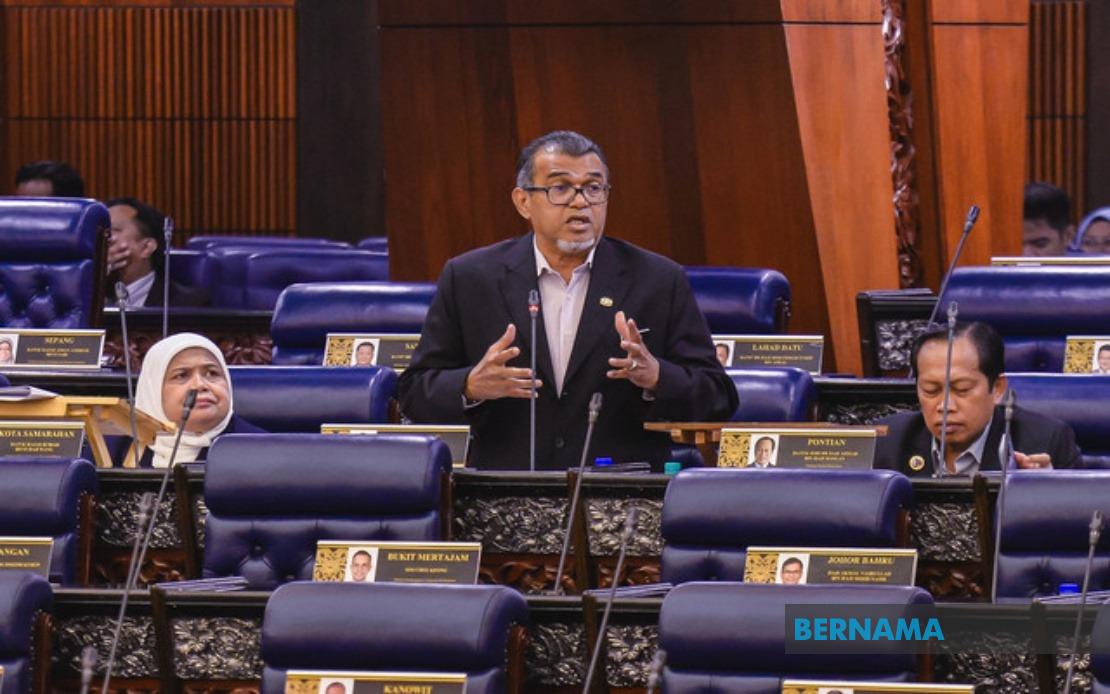
The long-delayed expansion of Kota Kinabalu International Airport faces further obstacles as Deputy Transport Minister Datuk Hasbi Habibollah revealed that critical land and site issues must be resolved with the Sabah state government before construction can commence on the nearly RM500 million project. Although the federal government has already secured funding for the expansion, unresolved disputes surrounding land acquisition, the precise location of expansion infrastructure, and areas bordering the existing runway remain stumbling blocks to launching what has been flagged as a priority infrastructure upgrade for the nation's second-busiest airport.
The project was announced as part of Prime Minister Datuk Seri Anwar Ibrahim's Budget 2026 allocation of RM2.3 billion earmarked for airport development across Penang, Kota Kinabalu, Tawau, and Miri. All four expansion projects were initially expected to reach completion by 2028, yet the Kota Kinabalu component appears significantly behind schedule. Hasbi's parliamentary response to Datuk Shahelmey Yahya during Question Time underscored that while the financial commitment exists at the federal level, bureaucratic coordination between Kuala Lumpur and Kota Kinabalu remains incomplete, illustrating the complexity of executing infrastructure megaprojects in Malaysia's federal system.
In contrast to the stalled Kota Kinabalu initiative, the companion Tawau Airport expansion project has already commenced work, creating an uncomfortable gap in delivery timelines across Sabah's aviation network. This disparity raises questions about why one project has advanced while the other languishes, particularly given that both fall under the same national budget allocation and serve the same state. The divergence suggests that site-specific complications at Kota Kinabalu—potentially including competing land claims, environmental considerations, or complex property negotiations with private landholders—are uniquely problematic compared to the Tawau scenario.
For regional stakeholders and the business community, the delay represents a missed opportunity to enhance Sabah's aviation capacity during a period when Southeast Asian tourism and commerce are rebounding. Kota Kinabalu International Airport serves as the primary gateway for visitors to Sabah's renowned diving destinations, rainforests, and business hubs. The expansion would theoretically increase terminal capacity, reduce congestion during peak travel periods, and accommodate larger aircraft, thereby improving connectivity for both tourists and corporate travelers throughout the region.
The impasse also carries implications for Malaysian aviation infrastructure planning more broadly. If a national budget allocation cannot translate smoothly into construction timelines without protracted negotiations with state authorities, the efficiency and predictability of future federal development schemes may be questioned by investors and development partners. The situation demonstrates that budgetary commitment alone does not guarantee project execution when land governance and state-federal coordination gaps persist.
Separately, Deputy Minister Hasbi addressed questions regarding Pangkor Airport, responding to inquiries from parliamentarian Nordin Ahmad Ismail about the viability of restoring commercial air services to the island. While the government remains theoretically open to proposals from airlines wishing to operate from Pangkor, Hasbi stressed that commercial decisions rest upon airline business assessments rather than government initiative. Any operator would need to demonstrate viable demand and profitability—thresholds that have evidently not been met since charter services ceased in May 2022.
The history of Pangkor Airport illustrates the challenges of sustaining commercial aviation on smaller Malaysian islands. Berjaya Air previously operated Dash 7 charter flights from the airport, as did SKS Airways from Subang's Sultan Abdul Aziz Shah Airport, but both services proved unsustainable. Hasbi noted that the government recognises air connectivity as essential to tourism development and pledged that Transport Ministry officials and Malaysia Airports Holdings Bhd would evaluate future proposals transparently. However, without demonstrable commercial interest or subsidy mechanisms, Pangkor's runway appears destined to remain underutilised.
Crucially, Hasbi clarified that Pangkor, Redang Island, and Tioman Island airports have not been abandoned as "white elephants" despite their lack of scheduled commercial services. All three continue to serve private aviation, military operations, helicopter services, emergency landings, and flying doctor missions. Malaysia Airports Holdings Bhd maintains personnel and infrastructure at each facility, preserving operational readiness should circumstances change. This designation as essential emergency and specialised aviation hubs protects their infrastructure investment and ensures that if commercial viability returns, activation would be feasible.
The distinction is important for understanding the government's approach to regional airport networks. Rather than viewing underutilised airports as failures, the ministry frames them as components of a broader emergency response and connectivity safety net. This philosophy reflects Malaysia's geographic reality: scattered island communities and remote areas benefit from maintained airport infrastructure even if commercial viability remains elusive in the short to medium term.
For Malaysian planners and investors monitoring the KKIA expansion trajectory, the lesson is clear: budget allocation is necessary but insufficient without seamless coordination between federal and state authorities over land acquisition and site specifics. Until these foundational matters are resolved with Sabah's government, the project will remain in limbo despite federal enthusiasm and available funding. The situation underscores that infrastructure development timelines in federal systems depend not only on financial resources but on administrative alignment across multiple levels of government.

