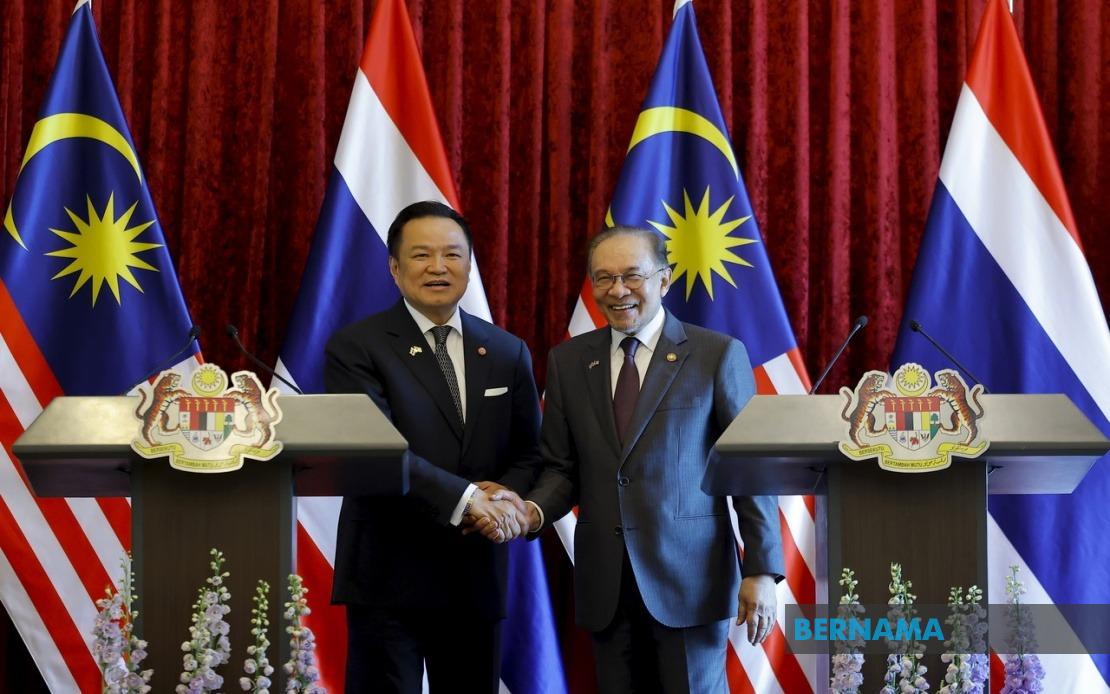
Malaysia and Thailand are moving decisively to deepen economic integration and strengthen cross-border ties through a comprehensive package of infrastructure and trade facilitation measures. At a bilateral meeting in Putrajaya on July 9, Prime Minister Datuk Seri Anwar Ibrahim and Thailand's Prime Minister Anutin Charnvirakul unveiled plans to accelerate several connectivity projects along their shared frontier while establishing special economic zones designed to harness the region's growth potential. The two nations have set an ambitious target to raise bilateral trade to US$30 billion by 2027, up from current levels, signalling renewed momentum in a relationship that spans centuries of cultural and commercial exchange.
The agreement encompasses far more than symbolic gestures or general commitments. Both governments have committed to tangible measures including the streamlining of immigration and customs procedures at border crossings, a critical step given the complexities that often impede smooth movement of goods and people. The establishment of dedicated border economic zones represents a strategic shift towards creating purpose-built commercial hubs where businesses can operate under simplified regulatory frameworks. Such zones have proven effective throughout Southeast Asia as catalysts for regional trade growth, attracting investment from companies seeking access to dual markets while minimizing bureaucratic friction.
During the joint press conference, Anwar emphasised the historical depth and potential of the Malaysia-Thailand relationship, noting that substantial opportunities remain untapped across economic, cultural, and investment dimensions. His remarks reflected an understanding that while the two nations share extensive ties rooted in geography, heritage, and commerce, their bilateral engagement requires constant renewal and expansion to remain competitive in an increasingly integrated regional economy. Thailand serves as a crucial gateway to mainland Southeast Asia, while Malaysia's position on the Strait of Malacca and its role as a financial hub make the partnership mutually beneficial for both economies.
The pair announced they would jointly visit Bukit Kayu Hitam in Kedah and Sadao in Songkhla on July 10, an itinerary choice that underscores the practical focus of their discussions. By travelling beyond Putrajaya to border communities, both leaders demonstrated commitment to understanding the ground-level realities facing businesses and residents in these frontier regions. Such visits often yield valuable insights into infrastructure gaps, logistical bottlenecks, and community concerns that shape the effectiveness of cross-border policies. The personal engagement of both prime ministers signals that border development is no longer a secondary priority but rather central to each nation's economic strategy.
Achieving the US$30 billion trade target by 2027 represents a significant but attainable goal, contingent upon successful implementation of the agreed measures. Current bilateral trade levels have fluctuated based on commodity prices and global economic conditions, but the target implies roughly 15-20 percent annualized growth over the coming years. This pace is feasible if both governments follow through on reducing transaction costs and facilitating business-to-business engagement. The special economic zones, in particular, could catalyze investment in manufacturing, logistics, and tourism sectors where Malaysia and Thailand possess complementary strengths.
The timing of this initiative reflects broader geopolitical and economic currents in Southeast Asia. With regional competition intensifying for foreign direct investment and trade partnerships, Malaysia and Thailand recognize the necessity of deepening intra-ASEAN integration. The commitment to border projects also signals confidence in long-term stability along the frontier, historically a sensitive issue for both nations. Enhanced cooperation demonstrates to investors that the two governments are serious about creating secure, predictable environments for commerce and capital deployment.
Improved customs and immigration procedures stand to benefit not only large corporations but also small and medium-sized enterprises that often lack resources to navigate complex bureaucratic processes. Simplified procedures reduce costs associated with border crossings, making cross-border supply chains more competitive globally. Malaysian manufacturers seeking to source inputs from Thailand, or Thai exporters looking to leverage Malaysian distribution networks, will find new opportunities as friction diminishes. Workers crossing the border for employment will also experience less arduous procedures, potentially boosting labour mobility and productivity in border regions.
The establishment of special border economic zones follows a proven model utilised in other regional contexts. These zones typically offer incentives such as reduced tariffs, streamlined land acquisition processes, and simplified company registration to encourage investment. If designed effectively, such zones can transform border areas from peripheries into dynamic economic hubs. The success of similar initiatives in Vietnam, Cambodia, and Laos demonstrates the potential, though local infrastructure quality and institutional capacity remain critical variables determining outcomes.
For Malaysian readers, this development carries particular significance given the substantial economic activity already occurring in border states such as Kedah, Perlis, and Kelantan. Enhanced connectivity could unlock dormant potential in tourism, agro-processing, and manufacturing. Thai investment in these regions could complement local enterprises and create employment opportunities, particularly in areas where economic growth has lagged peninsular averages. Conversely, Malaysian services and financial expertise could benefit Thai border communities, fostering genuine mutual development rather than one-directional flows.
The broader regional implications extend to ASEAN's vision of seamless intra-regional connectivity. As the bloc pursues various frameworks for economic integration, bilateral successes between major members like Malaysia and Thailand provide proof of concept and momentum. Successful implementation of these border initiatives could serve as a template for other Southeast Asian countries seeking to deepen cross-border cooperation. The focus on practical measures rather than rhetorical commitments distinguishes this initiative and increases likelihood of meaningful progress.
Implementation will prove critical in determining whether these agreements translate into measurable economic gains. Both governments must ensure adequate funding for infrastructure projects, establish clear timelines for customs modernization, and create institutional mechanisms for ongoing coordination. The private sector will play an equally important role, as businesses must be willing to invest in supply chains and facilities within the border economic zones. Regular bilateral reviews will help identify obstacles and enable course corrections as circumstances evolve.
Moving forward, success hinges on sustained political commitment from both governments and active participation from business communities on either side of the border. The joint visit to frontier areas signals determination, but translating this into brick, mortar, and policy implementation requires consistent follow-through over years. If Malaysia and Thailand can maintain momentum and deliver on these commitments, they will not only strengthen their bilateral relationship but also demonstrate that meaningful regional integration remains achievable despite global headwinds and competing priorities.

