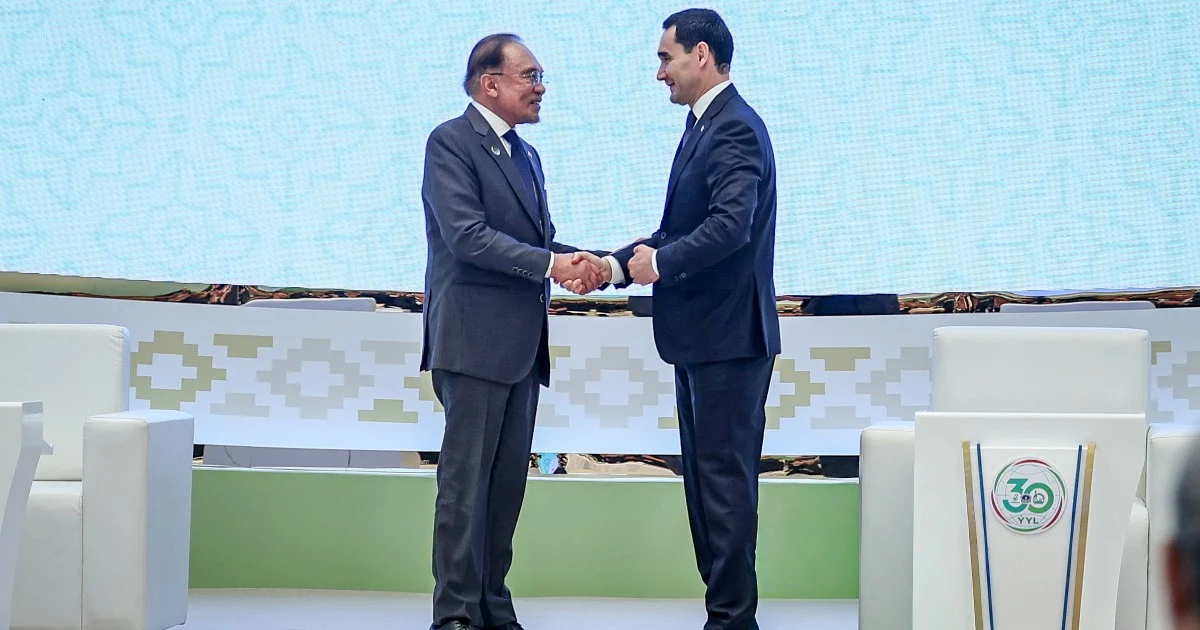
Prime Minister Datuk Seri Anwar Ibrahim's recent official visit to Turkmenistan has yielded a significant agreement between the two nations to pursue deeper collaboration in energy and broaden their economic footprint across several strategic sectors. The bilateral discussions have resulted in concrete commitments spanning energy development, bilateral trade mechanisms, foreign investment frameworks, transportation corridors, educational exchanges, and technological advancement—signalling a renewed momentum in Malaysia-Turkmenistan relations at a time when Southeast Asian nations are actively seeking diversified energy partnerships.
The energy sector has emerged as the centrepiece of the expanded cooperation framework. Turkmenistan, as one of Central Asia's principal hydrocarbon producers and a nation with considerable natural gas reserves, represents a potentially significant partner for Malaysia's evolving energy security requirements. The agreement to deepen energy cooperation reflects mutual recognition of complementary strengths—Turkmenistan's resource endowment and Malaysia's expertise in energy infrastructure development, refining capabilities, and downstream technologies. This partnership could take multiple forms, from joint ventures in extraction and processing to collaborative research in renewable energy transition and liquefied natural gas technologies.
Beyond the energy landscape, both governments have committed to revitalising their broader economic relationship through enhanced trade mechanisms and investment protocols. The expansion into these wider commercial domains acknowledges that sustainable bilateral ties require multi-sectoral engagement rather than dependence on a single commodity. By formalising frameworks for trade and investment, Malaysia and Turkmenistan are creating clearer pathways for private sector participation, reducing transaction costs, and building investor confidence in both markets. For Malaysian enterprises, this opening presents opportunities in infrastructure development, manufacturing, and services provision within the Central Asian market.
Transportation infrastructure has also featured prominently in the cooperation agenda. Enhanced transportation links and logistics coordination between Malaysia and Turkmenistan would facilitate more efficient trade flows and reduce shipping times for goods moving between Southeast Asia and Central Asia. This connectivity dimension assumes particular relevance given Malaysia's strategic location along major maritime trade routes and Turkmenistan's position as a gateway between Central and South Asian markets. Improved transportation networks could position Malaysia as a preferred logistics hub for Central Asian exports entering Southeast Asian markets and vice versa.
The educational dimension of the partnership underscores a longer-term vision of people-to-people connectivity and capacity building. By expanding educational exchanges, scholarship programmes, and collaborative research initiatives, both nations are investing in human capital development and fostering generational ties that transcend immediate commercial transactions. Malaysian universities and technical institutions could benefit from exposure to Turkmenistan's specific sectoral expertise, whilst Turkmenistan's students and professionals gain access to Malaysian educational quality and Southeast Asian perspectives.
Technological collaboration represents another pillar with significant potential. Malaysia's position as a technology adopter and developer in Southeast Asia, combined with Turkmenistan's requirements for modern industrial technologies and digital infrastructure modernisation, creates natural synergies. Cooperation in areas such as telecommunications, digital economy development, and industrial automation could yield mutual benefits whilst positioning Malaysian technology companies for expansion into Central Asian markets.
The timing of this expanded partnership aligns with broader geopolitical and economic currents reshaping Asia's energy landscape. Southeast Asian nations, including Malaysia, are increasingly aware of the necessity to diversify energy sources and supplier relationships given global energy transitions and supply chain vulnerabilities. Turkmenistan offers a stable, reliable source of natural resources with established export infrastructure and a government committed to maintaining strategic partnerships. For Turkmenistan, deepening ties with Malaysia and by extension Southeast Asia provides valuable market access and reduces strategic dependence on traditional corridors through Russia and China.
Prime Minister Anwar Ibrahim's official visit carries symbolic weight beyond the immediate agreements. His personal engagement signals the Malaysian government's serious commitment to geographic diversification in foreign policy and economic partnerships. The visit demonstrates Malaysia's willingness to look beyond traditional trading partners and explore opportunities in regions that may have received less political attention from Kuala Lumpur in recent years, whilst consolidating Southeast Asia's broader engagement with Central Asia.
The practical implementation of these agreements will prove crucial in determining whether they evolve into substantive, long-lasting partnerships or remain aspirational frameworks. Both governments will need to establish clear institutional mechanisms, appoint dedicated implementation bodies, and set measurable benchmarks for progress. For Malaysian stakeholders—whether energy companies, exporters, or educational institutions—clarity on specific implementation timelines and investment incentives will be essential for committing resources to these new opportunities.
The Malaysia-Turkmenistan partnership framework also carries implications for regional dynamics in Central Asia and Southeast Asia. As Malaysia strengthens ties with Turkmenistan, it contributes to a broader pattern of Southeast Asian states cultivating deeper relationships across the Eurasian continent. This geographical expansion of Malaysia's foreign economic policy reflects changing perceptions of where growth, resources, and market opportunities lie in the coming decades, potentially reshaping traditional bilateral and multilateral relationships across both regions.
%22%2F%3E%3C%2Fpattern%3E%3C%2Fdefs%3E%3Crect%20width%3D%22100%25%22%20height%3D%22100%25%22%20fill%3D%22url(%23ph4adttg)%22%2F%3E%3Crect%20width%3D%22100%25%22%20height%3D%22100%25%22%20fill%3D%22url(%23ph4adttp)%22%2F%3E%3Ctext%20x%3D%2250%25%22%20y%3D%2250%25%22%20text-anchor%3D%22middle%22%20dominant-baseline%3D%22central%22%20fill%3D%22rgba(255%2C255%2C255%2C0.95)%22%20font-family%3D%22Georgia%2C%20'Times%20New%20Roman'%2C%20serif%22%20font-weight%3D%22700%22%20font-size%3D%22151%22%20letter-spacing%3D%22-0.02em%22%3ESingapore%3C%2Ftext%3E%3C%2Fsvg%3E)