Malaysia's Cabinet has given the green light to establish a National Tahfiz Council, a significant development aimed at bringing coherence and professional standards to the country's Quranic memorisation education sector. Deputy Prime Minister Datuk Seri Dr Ahmad Zahid Hamidi announced the approval during remarks at the Pahang State Huffaz Gathering 2026, held at Yayasan Pahang, where he disclosed that Prime Minister Datuk Seri Anwar Ibrahim has tasked him with chairing the new council. The initiative represents a watershed moment for tahfiz education in Malaysia, moving from a fragmented landscape toward an integrated system with clear benchmarks and progression routes.
The underlying vision behind the council's formation reflects a broader strategic shift in how Malaysia approaches Islamic education. Rather than treating tahfiz institutions as separate from the mainstream education ecosystem, the government intends to embed Quranic memorisation within the formal education framework, allowing students who master the Quran to transition seamlessly into conventional schooling and tertiary institutions. This integration addresses a long-standing challenge faced by tahfiz alumni, who have traditionally struggled to gain recognition for their qualifications in the broader job market. By establishing standardised recognition and certification mechanisms, the council seeks to unlock professional opportunities for hafiz and hafizah across diverse sectors of the economy.
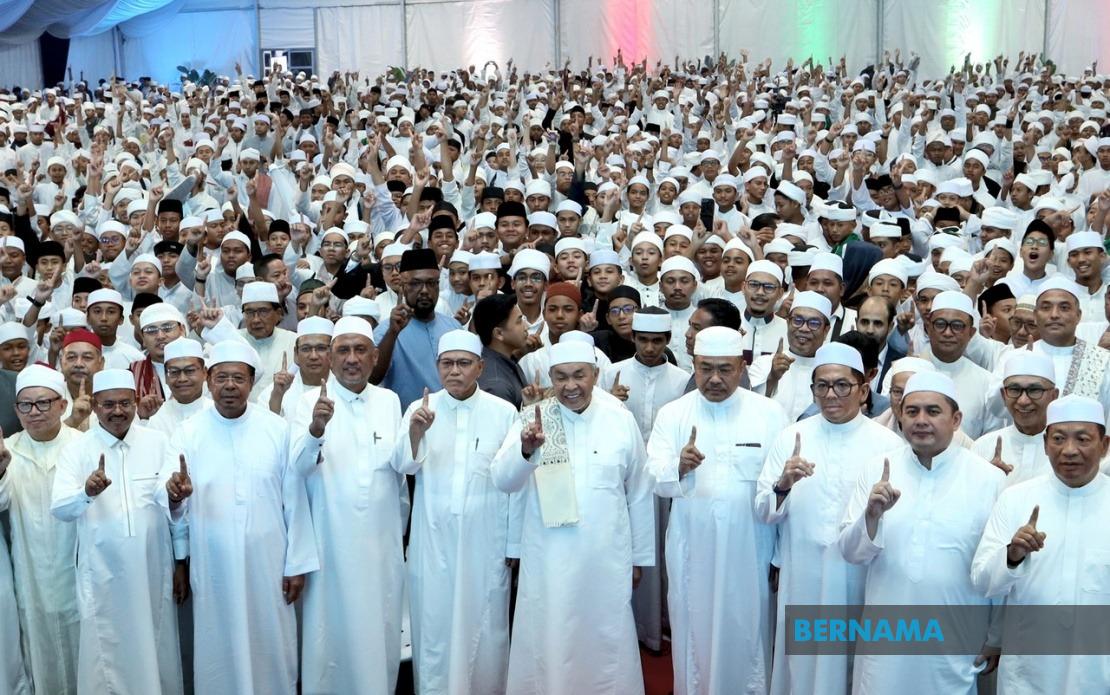
During his address at the gathering, which drew over 5,000 huffaz from across Pahang, Ahmad Zahid articulated an ambitious educational pathway for tahfiz students. He envisioned a continuum stretching from early childhood Quranic instruction through structured schooling to university admission and eventually to meaningful employment, ensuring that mastery of the Quran becomes a recognised credential rather than an educational endpoint. This philosophy represents a departure from viewing tahfiz education as purely religious instruction, instead positioning it as a legitimate and valuable knowledge discipline with clear career applications. The framing is particularly significant for Malaysia's diverse student population, as it opens avenues for families who prioritise Islamic education without sacrificing their children's access to broader educational and economic opportunities.
Pahang state has emerged as a model for how tahfiz education can be developed comprehensively and progressively. The state's initiatives, inspired by Sultan Al-Sultan Abdullah Ri'ayatuddin Al-Mustafa Billah Shah, include establishing Tadika Tahfiz Negeri Pahang to cultivate a love for the Quran from early childhood. This foundation supports a structured progression that extends to international-level tahfiz studies, demonstrating that systematic investment in this sector yields tangible results. The Pahang example is instructive for other Malaysian states seeking to strengthen their own tahfiz ecosystems and highlights the role that state-level leadership can play in institutionalising religious education excellence.
The government is simultaneously advancing the National Tahfiz Policy 2.0, with implementation improvements commencing this year. Central to this framework is a suite of initiatives designed to enhance credentialing, skills training, and financial support for tahfiz students. The Malaysian Tahfiz Certificate 2.0 and Graded Hafazan Certification establish standardised measures of achievement, while the Huffaz Financing Scheme addresses the financial barriers that many families encounter when pursuing Quranic memorisation. Additionally, TVET Tahfiz initiatives integrate vocational and technical education with tahfiz training, recognising that many students will benefit from practical skills that complement their religious studies.
Strategic partnerships with higher learning institutions and skills development bodies are integral to realising the council's objectives. These collaborations create concrete pathways for tahfiz graduates to enter universities and polytechnics, ensuring that their background is not merely tolerated but actively valued within academia. By aligning tahfiz education with Malaysia's broader skills development agenda, the government positions Quranic memorisation as compatible with the nation's human capital needs, whether in education, social services, religious affairs, or other professional domains requiring graduates with strong ethical foundations and specialised knowledge.
The Malaysian Tahfiz Recognition Standard represents another critical component, as it creates a consistent framework for evaluating tahfiz competency across institutions nationwide. This standardisation addresses quality concerns that have periodically arisen in the sector and ensures that employers and educational institutions can rely on credentials issued by tahfiz schools. Equally important, it protects students by guaranteeing that their educational investments yield widely recognised qualifications, reducing the risk that their achievements will be dismissed or undervalued by institutions unfamiliar with tahfiz standards.
The memorandum of understanding signed between Yayasan Pahang, the Community Development Department (KEMAS), and Majlis Amanah Rakyat (MARA) demonstrates practical commitment to expanding opportunities for tahfiz students. KEMAS's involvement brings community-level development expertise to tahfiz education, while MARA's participation ensures that financing, business training, and entrepreneurial pathways remain accessible to this demographic. These partnerships suggest that the government views tahfiz education as integral to broader inclusive development rather than as a niche concern, with implications for rural and disadvantaged communities that have historically supported tahfiz institutions.
For Malaysia's education sector, the National Tahfiz Council represents a significant recognition that religious education can be systematised and professionalised without compromising its spiritual dimensions. The approach aligns with global trends in Islamic education, where countries from Egypt to Turkey have integrated traditional Quranic study with contemporary pedagogical methods and professional development. This move should also resonate in Southeast Asia, where Malaysia's approach may influence how neighbouring countries with substantial Muslim populations develop their own tahfiz sectors, potentially establishing new regional standards and facilitating cross-border recognition of qualifications.
The implications extend to Malaysia's workforce development strategy. As the nation pursues upgrades in manufacturing, services, and knowledge-based industries, it requires a diverse talent pool equipped with varied educational backgrounds. Tahfiz graduates, trained in discipline, memorisation, concentration, and religious ethics, bring distinctive qualities to the labour market. By creating clear pathways from tahfiz institutions into vocational training, higher education, and professional employment, the council ensures that this talent is neither lost nor underutilised, addressing both economic and social objectives simultaneously.
Looking forward, the success of the National Tahfiz Council will depend on coordinated implementation across federal and state governments, buy-in from tahfiz institutions themselves, and genuine commitment from employers to recognise and value tahfiz qualifications. The appointments and governance structure of the council will be pivotal, as will the adequacy of funding to support the new initiatives and certifications outlined under Policy 2.0. For Malaysian families and students, the council's establishment signals that pursuing Quranic memorisation need not entail sacrificing modern educational credentials or professional prospects—a message with profound implications for enrolment trends and social mobility within Malaysia's Muslim communities.