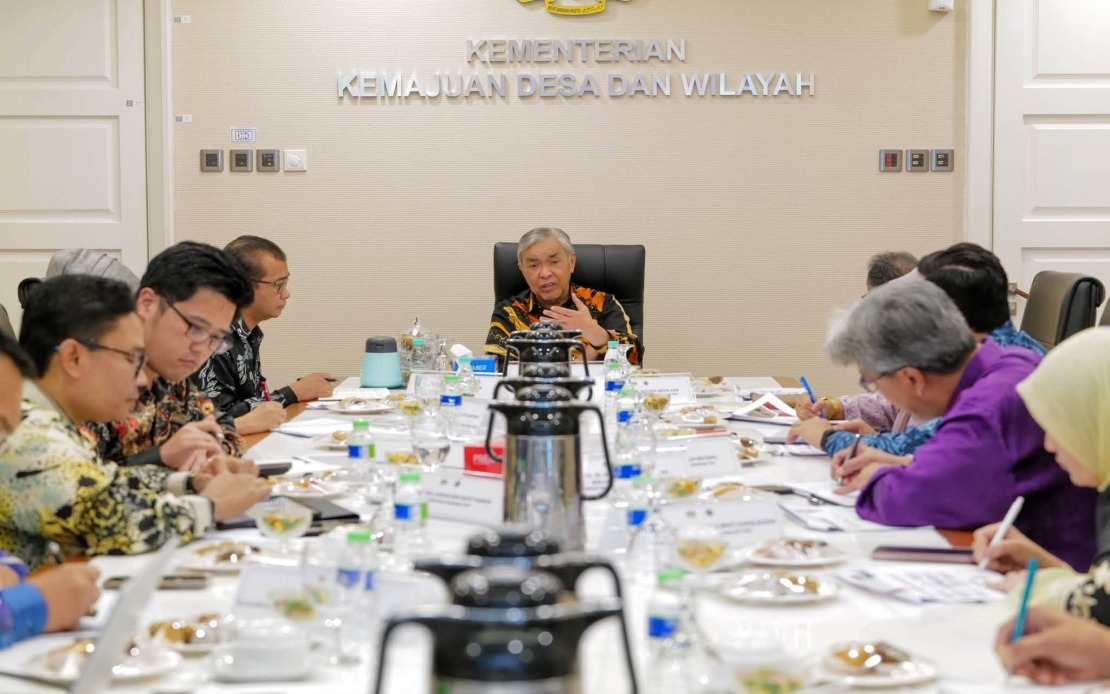
Malaysia is embarking on an ambitious overhaul of its technical and vocational education system through the creation of the Strategic TVET 2.0 Task Force covering 2026 to 2035, with Deputy Prime Minister Datuk Seri Dr Ahmad Zahid Hamidi announcing the move in Putrajaya on Wednesday. The initiative, underpinned by a network of 10 specialized strategic committees, signals the government's determination to rebuild vocational training as a cornerstone of economic competitiveness and workforce development in an era of rapid technological and industrial change.
Ahmad Zahid, who chairs the National TVET Council alongside his portfolio as Minister of Rural and Regional Development, emphasized that the new administrative framework will enable more coordinated and measurable implementation of vocational programs. The task force and committees represent a structural evolution from previous approaches, moving toward what officials describe as a more organized, integrated and results-focused ecosystem. This shift reflects growing recognition among policymakers that Malaysia's vocational sector requires not just incremental improvements but fundamental realignment with the needs of employers and the trajectory of future economic sectors.
The Strategic TVET 2.0 Task Force will be chaired by Emeritus Professor Datuk Dr Siti Hamisah Tapsir, president and vice-chancellor of UCSI University, bringing academic expertise to leadership of the initiative. The choice of academic leadership signals an intention to ground the transformation in research and evidence-based practice rather than purely administrative mandates. The 10 committees beneath the task force span critical domains including governance reform, industry engagement, financial sustainability, and gender equity in technical fields—a comprehensive architecture suggesting planners view the challenge as multidimensional.
Among the committees are the TVET Governance and Institutional Reform Committee headed by Datuk Dr Asyraf Wajdi Dusuki, tasked with reshaping how vocational institutions operate and are regulated. The TVET Industry and Employers Committee, chaired by Datuk Khairul Azwan Harun, will serve as a crucial bridge between educational institutions and the businesses that ultimately hire graduates. This direct employer involvement addresses a persistent gap in Malaysian vocational education, where curriculum and training priorities have historically lagged behind what companies actually require. The TVET Financing and Sustainability Committee under Ramelle Ashram Ramli will grapple with the fiscal architecture underpinning the sector, a particularly sensitive issue given Malaysia's budgetary constraints and competing priorities.
The inclusion of a Women Empowerment in TVET Committee, led by Datuk Dr Masilla Kamalrudin, acknowledges the gendered nature of vocational participation in Malaysia. Historically, women have been underrepresented in technical fields, constraining both individual opportunity and the nation's ability to maximize its human capital pool. This dedicated committee suggests the government recognizes that simply opening doors to women in TVET will not suffice without deliberate support structures, mentorship, and cultural change within industries that remain male-dominated.
The timing of this initiative carries particular significance for Malaysia's regional position. As neighbouring countries including Singapore, Thailand, and Vietnam strengthen their vocational ecosystems, Malaysia risks falling behind in producing the skilled workers increasingly demanded by advanced manufacturing, digital industries, and green economy sectors. The 10-year horizon of the TVET 2.0 framework aligns roughly with broader national development cycles, giving the government sufficient time to embed systemic change while remaining within the planning horizon of major investors evaluating Malaysia as a manufacturing and services hub.
Ahmad Zahid framed the task force and committees as instrumental to developing an ecosystem more sensitive to industry dynamics and equipped to anticipate economic disruptions. This language represents a departure from treating TVET as a secondary educational pathway for students unable to enter universities. Instead, the government is positioning vocational training as a strategic national asset requiring coordination across multiple agencies and stakeholders. The emphasis on responsiveness to industry needs suggests policymakers have internalized criticisms that Malaysian vocational programs often train students for jobs that no longer exist or fail to equip them for roles employers desperately need filled.
The government's commitment to TVET as articulated by Ahmad Zahid directly connects to the broader MADANI development framework, which emphasizes equitable growth and inclusive prosperity. A skilled, competitive workforce represents the human dimension of that ambition—workers capable of commanding higher wages, businesses able to move into higher-value production, and reduced reliance on low-cost migrant labour that has characterized much of Malaysia's industrial strategy. From this perspective, strengthening TVET is not merely educational policy but economic restructuring.
Implementing such an ambitious transformation will test institutional capacity and political will. Previous vocational training initiatives have struggled with inconsistent funding, weak industry partnerships, and limited prestige relative to academic pathways. The task force structure suggests designers recognize these obstacles and seek to overcome them through dedicated oversight and multi-stakeholder coordination. Whether this proves sufficient will become evident as the committees begin substantive work over coming months.
For Malaysian employers, particularly those in manufacturing, construction, and emerging green industries, the TVET 2.0 initiative represents both opportunity and responsibility. The Industry and Employers Committee will likely seek their detailed input on skills needs, apprenticeship models, and investment in training facilities. Companies that engage seriously with these mechanisms could help shape a workforce pipeline better aligned with their needs. Those that remain aloof risk seeing vocational programs continue on their present trajectory, training workers for yesterday's economy rather than tomorrow's opportunities.
Regionally, Malaysia's TVET transformation will be watched by other Southeast Asian nations wrestling with similar challenges. The success or failure of this initiative could influence how neighbouring governments approach their own vocational systems. Should Malaysia succeed in creating a responsive, well-financed vocational ecosystem, it could enhance the country's attractiveness to investors seeking reliable supplies of skilled workers. Conversely, failure to translate the task force's intentions into concrete improvements would reinforce perceptions that Malaysia struggles to execute complex institutional reform.

