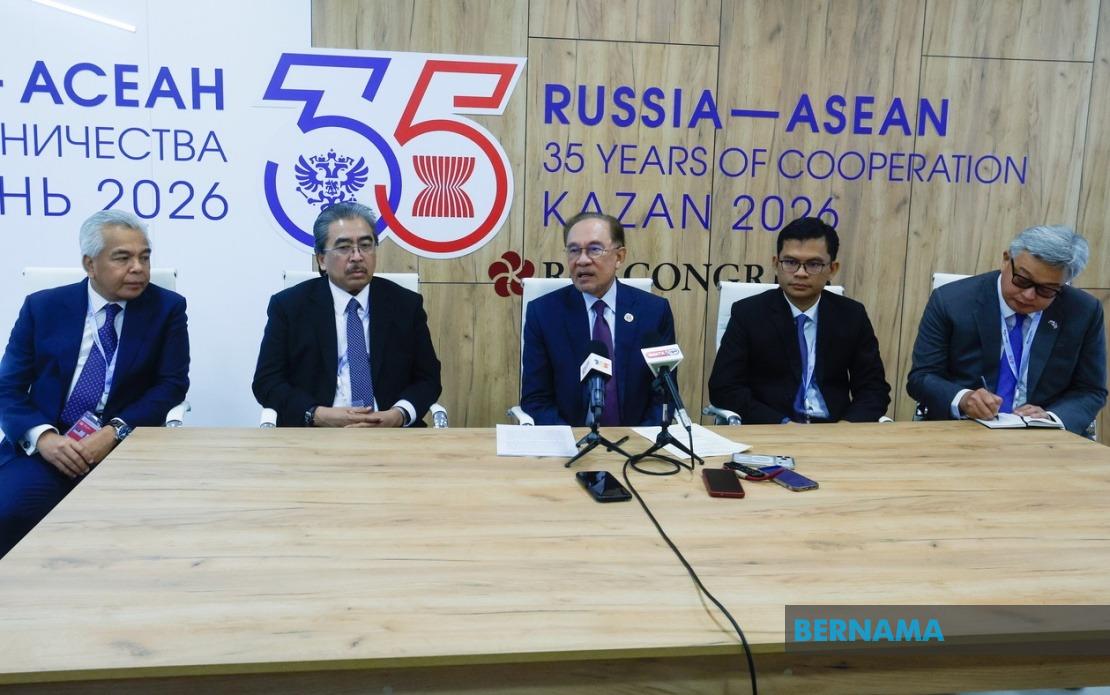
Prime Minister Datuk Seri Anwar Ibrahim has called for the acceleration of visa-free travel arrangements and direct aviation links with Russia, arguing that Malaysia is losing out to regional competitors in attracting Russian tourists. Speaking after Malaysia's two-day participation in the ASEAN-Russia Commemorative Summit in Kazan on June 18, Anwar highlighted the significant disparity between Russian visitor numbers arriving in Malaysia compared with neighbouring countries that have cultivated stronger diplomatic relationships with Moscow.
The numbers tell a striking story. Russia sends approximately five million tourists annually to Turkey and around two million to Thailand, yet Malaysia received only 100,000 Russian visitors in the corresponding period. This gap represents not merely a missed economic opportunity but also a reflection of the practical barriers that deter potential travellers from choosing Malaysia as a destination. Anwar's frustration appeared to centre on bureaucratic obstacles and outdated administrative procedures that continue to hinder the growth of tourism flows between the two countries.
The Prime Minister identified several interconnected challenges that require immediate attention from Malaysian authorities. Foremost among these is the absence of direct flight connectivity, which forces Russian visitors to undertake lengthy journeys with multiple transfers. Coupled with this infrastructure gap are payment mechanism difficulties that create friction at the transaction level. Anwar suggested that Malaysia remains bound by archaic procedural frameworks that fail to reflect modern travel patterns and digital commerce realities. These obstacles exist not in isolation but compound to produce a cumulative deterrent effect on prospective visitors.
Anwar's remarks revealed a willingness to challenge conventional diplomatic caution on visa policy. He suggested that Malaysia has been overly constrained by concerns about potential negative reactions from third countries regarding closer engagement with Russia, particularly in the context of current geopolitical tensions. This observation carries significant implications for Malaysian foreign policy autonomy, suggesting that the government believes it has operated under self-imposed restrictions that lack genuine external pressure. By explicitly questioning whether such caution remains justified, Anwar signalled openness to reassessing relationships based on Malaysia's own national interests rather than perceived expectations from other powers.
The Prime Minister drew a parallel with Iran, suggesting that visa and connectivity impediments similarly affect bilateral relationships with other nations facing international scrutiny. His point appears to be that Malaysia should not allow concerns about international reactions to determine its own policy framework, particularly when such hesitation costs the country genuine economic benefits. The tourism sector, traditionally a significant contributor to Malaysia's foreign exchange earnings and employment, stands to gain from expanded Russian visitor traffic. Regional competitors like Thailand and Turkey have demonstrated the commercial potential of catering to the Russian market, and Malaysia's underperformance in this arena represents a competitive disadvantage that warrants strategic correction.
The timing of these remarks at an ASEAN-Russia summit underscores Malaysia's broader diplomatic positioning within Southeast Asia. As the region seeks to maintain balanced relationships across major powers, Malaysia has positioned itself as a bridge builder. However, this diplomatic balancing act appears increasingly hampered by practical measures that fail to operationalise stated commitments to stronger bilateral ties. Direct flights represent a tangible commitment to relationship development that extends beyond ceremonial summits and joint communiques. Similarly, visa-free travel demonstrates confidence in the visiting population and removes friction from the travel decision-making process.
The infrastructure dimension merits particular attention in the Malaysian context. The absence of direct Russia-Malaysia routes reflects broader patterns of aviation connectivity in Southeast Asia, where major carriers have concentrated capacity on high-volume markets. Establishing direct flights requires coordination between government bodies, flag carriers, and regulatory authorities across two countries. For Malaysia, where air connectivity represents a strategic development goal, expanding routes to emerging source markets like Russia aligns with long-term tourism diversification objectives. Thailand's success in capturing Russian visitors correlates directly with its superior flight connectivity and liberal visa policies, providing a proven template for expansion.
Payment system modernisation represents another dimension requiring urgent attention. Anwar's reference to payment difficulties suggests that Malaysian tourism infrastructure, from hotels to retailers to financial institutions, may lack seamless integration with Russian payment methods and digital wallets. As international travel increasingly depends on frictionless digital transactions, Malaysian service providers must ensure compatibility with systems prevalent among Russian consumers. This requires coordination between the central bank, financial institutions, and individual tourism businesses to update point-of-sale infrastructure and payment gateway integration.
The Prime Minister's remarks also hint at a broader strategic calculation regarding Malaysia's positioning in the Eurasian economic landscape. As regional trade patterns evolve and new partnerships develop, maintaining strong people-to-people connections through tourism becomes a foundation for broader economic engagement. Russian visitors spending in Malaysia create business opportunities, generate employment, and establish cultural familiarity that can translate into commercial relationships. The underperformance relative to regional competitors potentially reflects a missed opportunity to deepen ties during a period when Malaysia seeks to expand its international partnerships.
For Malaysian stakeholders in the tourism industry, Anwar's public commitment to expediting these changes carries practical implications. Hotels, tour operators, and attractions can anticipate increased Russian visitor flows if the government follows through on accelerating visa-free arrangements and flight connectivity. However, this also demands that the industry prepare to serve this demographic effectively, which may require developing Russian-language services and understanding Russian tourist preferences. The opportunity window requires coordinated action across multiple government departments and the private sector.
Moving forward, the success of these initiatives will depend on concrete timelines and institutional accountability. Anwar's statements provide political cover for bureaucratic reform, but implementation will require sustained follow-up. The ASEAN-Russia Commemorative Summit context suggests that Moscow shares interest in strengthened engagement with Southeast Asia, potentially creating favourable conditions for rapid progress on visa arrangements. Whether Malaysia can convert this diplomatic momentum into tangible policy changes within a reasonable timeframe will determine whether Russian visitor numbers begin their inevitable climb toward the levels achieved by regional competitors.