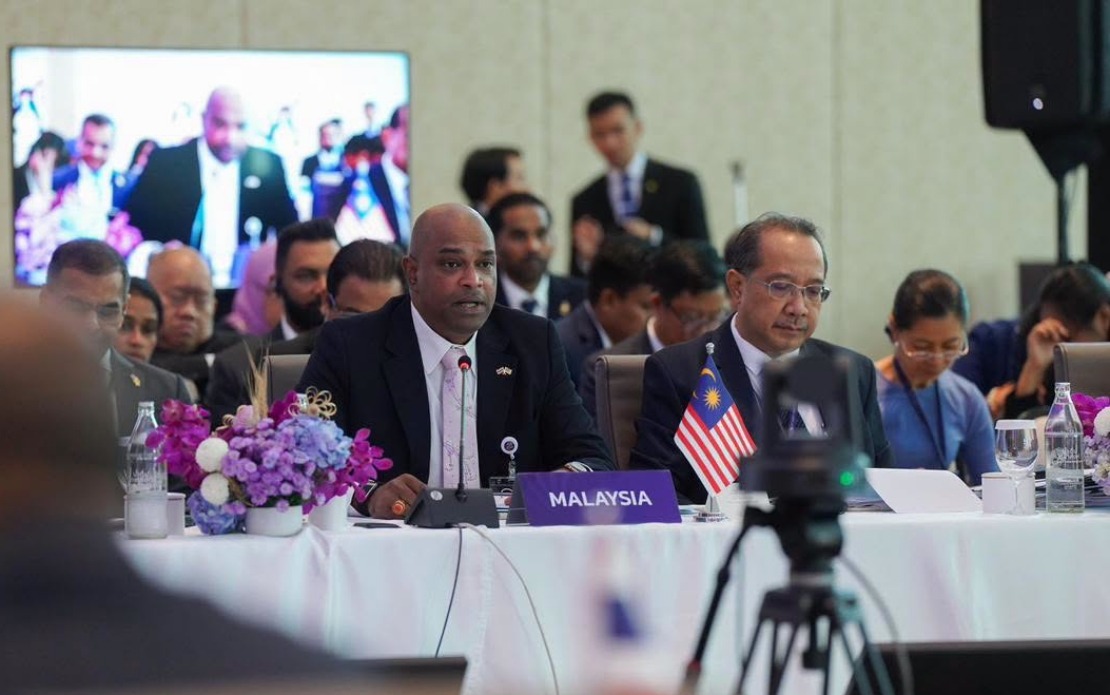
Malaysia has pressed ASEAN countries to establish stronger mechanisms for recognising workforce skills and professional qualifications, positioning the regional bloc's talent pool as a competitive force in global markets. The appeal came during high-level discussions focused on elevating the region's human capital and ensuring that workers trained across ASEAN possess credentials valued by employers worldwide.
Human Resources Minister Datuk Seri R. Ramanan outlined Malaysia's strategic priorities at the 14th ASEAN Plus Three Labour Ministers' Meeting held in Bangkok, Thailand, bringing together the ten ASEAN nations alongside China, Japan and South Korea. The forum provided a platform for Malaysia to advance its vision of a more integrated and capable regional workforce equipped to navigate rapid technological change and evolving employment landscapes.
Central to Malaysia's agenda was the harmonisation of Technical and Vocational Education and Training qualifications across member states. Currently, vocational credentials earned in one ASEAN nation may not carry equivalent weight in another, creating friction for workers seeking employment beyond their home countries. By establishing joint certification standards, ASEAN could unlock greater labour mobility while ensuring that graduates possess genuinely transferable and internationally benchmarked competencies.
Beyond certification reform, Malaysia emphasized the importance of technology transfer initiatives and systematic teacher development programmes. The region's vocational institutions require upgraded expertise and resources to deliver instruction that meets contemporary industry specifications. Investing in educator upskilling would create a multiplier effect, enabling trainers to cultivate workforces proficient in current technologies and methodologies rather than outdated practices.
Looking ahead, Malaysia advocated for the creation of world-class training programmes targeting high-growth sectors including artificial intelligence, next-generation vehicles and robotics. These emerging fields represent the economic frontier for ASEAN, and developing homegrown expertise rather than relying on imported talent would strengthen regional self-sufficiency and technological sovereignty. Early investment in AI and advanced manufacturing education would position ASEAN workers advantageously as global demand for these competencies intensifies.
Ramanan stressed that the initiative transcends mere bureaucratic credential recognition. Instead, it reflects a fundamental commitment to ensuring that ASEAN talent becomes genuinely competitive and desirable in international labour markets. Workers trained under harmonised standards would carry credentials that employers worldwide could trust and value, expanding employment opportunities far beyond the region and elevating earning potential for individuals throughout ASEAN.
The collaboration with China, Japan and South Korea was presented as essential to accelerating progress. These regional economic powers possess advanced expertise, proven training methodologies and technological capabilities that could be shared with ASEAN institutions, significantly reducing the time and resources required to build world-class vocational systems. Such knowledge exchange would benefit participating nations while strengthening broader regional economic cooperation.
For Malaysia specifically, enhanced skills recognition carries strategic importance. As a middle-income nation competing for foreign investment and high-value industries, Malaysia requires a reliable supply of technically skilled workers. Simultaneously, many Malaysian workers seek employment opportunities throughout ASEAN and beyond, making credential portability directly relevant to their career prospects. Harmonised qualification standards would enhance Malaysia's competitive positioning while opening pathways for its workforce.
The broader implication for Southeast Asia extends to regional integration and competitiveness. ASEAN's collective advantage lies partly in its substantial population and labour force, yet this asset remains underutilised without mechanisms to standardise and upgrade skills. A genuinely integrated regional labour market, enabled by mutual recognition of qualifications, would facilitate the most efficient deployment of talent toward productive sectors and allow businesses to access needed expertise more readily.
Malaysia's emphasis on future-oriented sectors reflects awareness that ASEAN cannot simply replicate historical development models. Globalised competition, automation and artificial intelligence are reshaping employment fundamentally. Nations that proactively build expertise in emerging technologies will capture higher-value opportunities, whilst those that delay risk workforce obsolescence. By championing AI and robotics training now, Malaysia and its ASEAN partners could position the region as a source of cutting-edge talent rather than a repository of routine manual labour.
The initiative also carries implications for regional attractiveness to multinational investors. Corporations seeking to establish operations in Southeast Asia frequently cite workforce capability as a critical factor. A region offering harmonised, internationally recognised qualifications and access to workers proficient in advanced technologies becomes significantly more appealing than competitors. This could translate into increased foreign direct investment, job creation and technology transfer benefits flowing to ASEAN economies.
Moving forward, implementation will prove as crucial as aspiration. Translating ministerial commitments into concrete policy changes, standardised curricula and functioning mutual recognition agreements requires sustained political will, institutional coordination and substantial resource allocation. The continued engagement of China, Japan and South Korea could provide technical support and funding mechanisms to facilitate this transition, though ASEAN itself must drive the process to ensure standards reflect regional needs and priorities.

