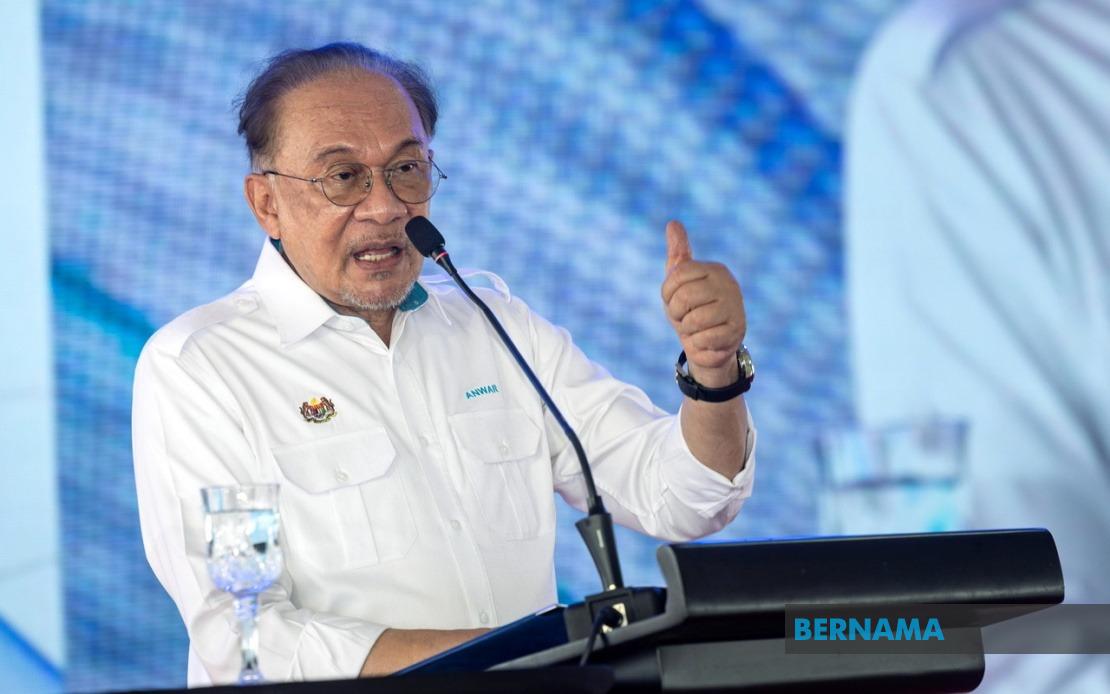
Prime Minister Datuk Seri Anwar Ibrahim has unveiled a significant strategic pivot in Malaysia's energy policy, announcing bilateral partnerships with Russia and Turkmenistan designed to underpin the nation's energy security for the next two decades. Speaking at the groundbreaking ceremony for Setia Fontaines Industrial Park in Kepala Batas, Anwar detailed the outcomes of recent diplomatic missions that position Malaysia to secure reliable hydrocarbon supplies amid global energy market volatility.
During his recent visit to Russia, Anwar engaged directly with President Vladimir Putin to negotiate a long-term energy framework. The Russian President reportedly committed to supplying Malaysia with oil, gas, and diesel for a minimum of 20 years, reflecting what Anwar characterised as deepening bilateral ties between Kuala Lumpur and Moscow. This arrangement represents a departure from Malaysia's historical reliance on spot market purchases and shorter-term contracts, introducing predictability into the nation's energy procurement strategy during a period of geopolitical uncertainty affecting global energy flows.
The agreement with Turkmenistan emerged from even more extensive negotiations and represents what Anwar described as a breakthrough development. During his official visit to the Central Asian nation, the Turkmen government approved expanded Malaysian access to its hydrocarbon sector, significantly widening the scope of cooperation beyond previous frameworks. This approval carries particular strategic weight given Turkmenistan's position as custodian of one of the world's largest proven natural gas reserves, a geopolitical asset that has historically drawn competition from multiple international energy consumers.
Anwar emphasised the transformative nature of the Turkmenistan agreement, stating that Malaysia has secured access to gas reserves of exceptional scale. This development effectively guarantees Malaysia's domestic energy requirements across multiple decades, addressing longstanding vulnerabilities in the nation's energy supply chain. The arrangement also creates a platform for Malaysia to transition from energy importer to potential energy exporter, positioning the country to serve as a regional hub for energy distribution to major Asian consumers.
The geopolitical foundation for these agreements reflects the trajectory of Malaysia-Turkmenistan relations since December 2024, when Turkmenistan President Serdar Berdimuhamedov visited Malaysia. That visit catalysed substantive negotiations resulting in the current breakthrough, demonstrating how high-level diplomatic engagement can translate into tangible economic benefits. The timing of these agreements underscores Malaysia's proactive approach to diversifying energy partnerships beyond traditional suppliers and building resilience into critical infrastructure dependencies.
Anwar articulated an explicit commercial dimension to these energy agreements, identifying China, Japan, and South Korea as major potential customers for Malaysian-sourced energy exports. These three economies represent some of the world's largest and most consistent energy consumers, operating within markets characterised by intense competitive dynamics and significant price volatility. By securing access to Turkmen gas reserves, Malaysia positions itself to capture energy arbitrage opportunities and generate substantial export revenues, transforming hydrocarbon availability from a domestic security concern into an economic growth engine.
The strategic calculus underlying these partnerships reflects Malaysia's broader approach to leveraging international relations for tangible national advantage. Anwar's remarks explicitly connected energy security to employment generation, economic development, and wealth creation for Malaysian citizens. This framing situates energy infrastructure not merely as technical infrastructure but as foundational to the nation's developmental aspirations and capacity to deliver prosperity across social strata.
For Malaysian businesses and consumers, the implications extend across multiple dimensions. Energy-intensive industries including petrochemicals, steel production, and manufacturing will benefit from enhanced supply certainty and potentially moderating price pressures. Domestic electricity consumers will theoretically experience greater price stability as utilities gain access to longer-term, fixed-price fuel contracts. The downstream effects ripple through the economy, affecting competitiveness of Malaysian exports in price-sensitive global markets and influencing investment decisions by multinational corporations evaluating regional production hubs.
The agreements also carry implications for Malaysia's positioning within broader regional energy architecture. Southeast Asia remains heavily dependent on energy imports, with vulnerable supply chains exposed to chokepoint disruptions and price shocks. Malaysia's ability to access Turkmen reserves and Russian supplies creates opportunities for intra-regional energy cooperation, potentially allowing Malaysia to assume a distribution role for smaller neighbours and reinforcing its economic centrality within ASEAN. This positioning aligns with historical patterns of Malaysian economic diplomacy, which has consistently sought to leverage geographic advantages and political relationships into tangible commercial benefits.
From a geopolitical perspective, these energy agreements represent Malaysia's pragmatic engagement with major power politics. Despite international sanctions and diplomatic isolation affecting Russia, Malaysia has maintained diversified diplomatic relationships while avoiding formal alignment with competing blocs. The energy partnerships demonstrate Malaysia's capacity to pursue national interests through bilateral relationships unburdened by ideological considerations, a foreign policy approach that has characterised Malaysian practice throughout the post-independence era.
The 20-year timeframe embedded in these agreements signals confidence in sustained bilateral relationships despite potential shifts in international circumstances. Energy infrastructure investments typically operate across multi-decade horizons, requiring confidence in contract stability and counterparty reliability. The fact that both Russia and Turkmenistan have committed to such extended frameworks suggests serious intent to develop economic relationships transcending short-term political fluctuations.
Looking forward, the practical implementation of these agreements will determine their actual impact on Malaysia's energy security. Logistics infrastructure, including pipelines, storage facilities, and port terminals, must be developed to physically accommodate hydrocarbon flows from Central Asia and Russia. These capital-intensive projects will require substantial investment and years of construction, meaning Malaysia's energy security benefits will accrue progressively rather than immediately. Nevertheless, the diplomatic groundwork has been laid for transforming Malaysia's energy profile across the coming decades.