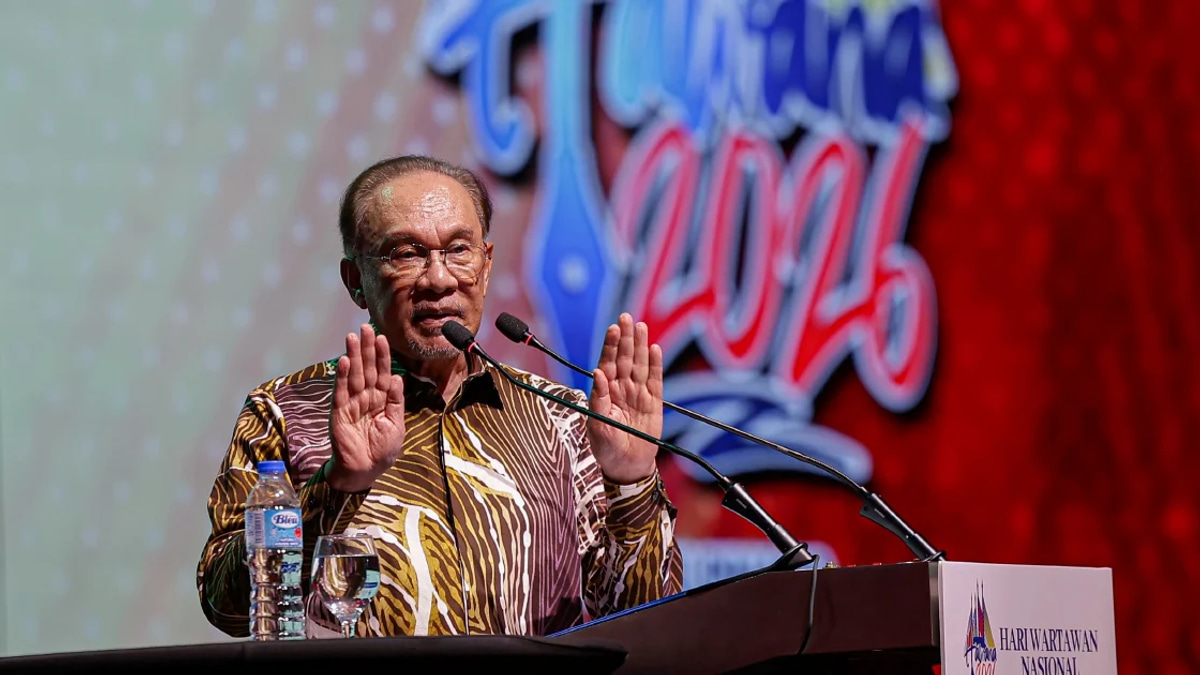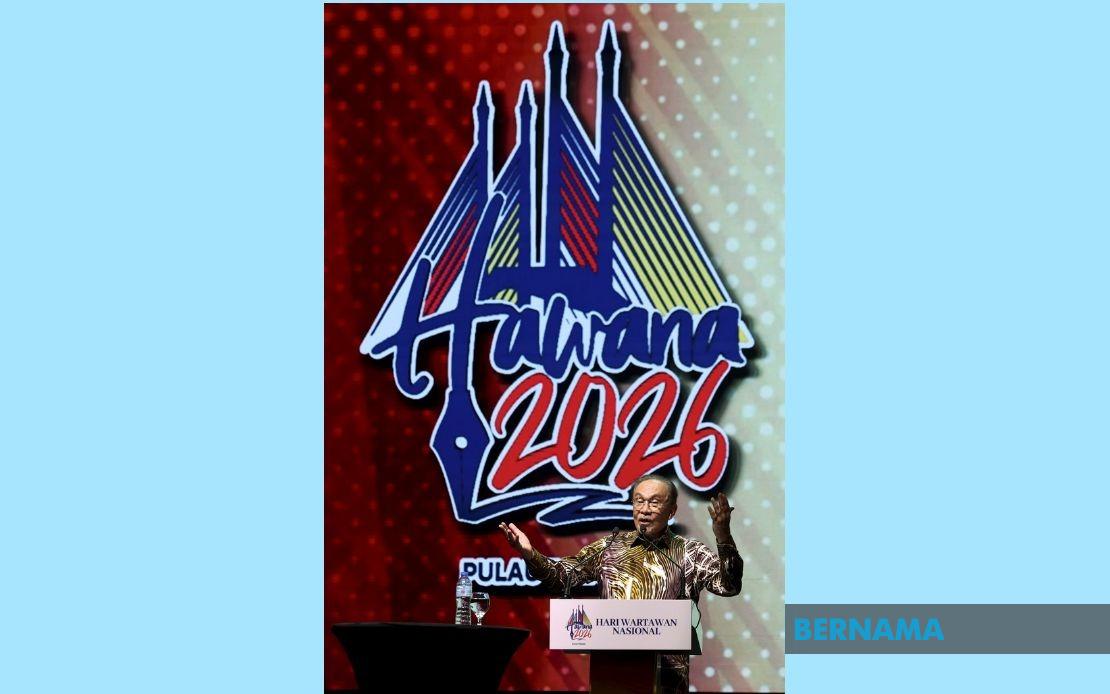
Prime Minister Datuk Seri Anwar Ibrahim announced an additional RM1 million allocation for the Tabung Kasih@HAWANA on June 20, reinforcing the government's commitment to supporting the welfare of journalists and media professionals across the country. Speaking at the National Journalists' Day (HAWANA) 2026 main event in Butterworth, Anwar highlighted the growing impact of the fund while emphasising the administration's broader agenda of strengthening the media sector as a pillar of democratic governance.
Since its launch in 2023, the welfare initiative has extended financial assistance to 773 media practitioners nationwide, distributing a cumulative RM2.26 million across various support categories. The fresh allocation brings total committed resources for the programme to RM3.26 million, demonstrating sustained government backing for a fund designed to address both immediate hardship and long-term welfare concerns within the journalism profession. This progression reflects acknowledgment of the sector's vulnerabilities and the need for institutional safety nets as the media landscape undergoes rapid transformation.
The Tabung Kasih@HAWANA framework addresses multiple dimensions of need among journalists and former media workers. Beyond emergency financial relief, the fund covers medical expenses and family welfare assistance, recognising that practitioners often face precarious income conditions and limited access to comprehensive social protection. The breadth of support categories indicates a nuanced understanding of the challenges media professionals encounter, from illness-related hardship to family crises that can destabilise livelihoods dependent on freelance or contract work.
Anwar, who simultaneously holds the Finance Ministry portfolio, positioned the funding announcement within a broader philosophy of compassion and institutional care. His dual role underscores the government's intention to integrate media welfare into national fiscal priorities rather than treating it as a peripheral concern. This elevates the symbolic significance of the allocation beyond its monetary value, signalling that supporting those who report on governance and public affairs constitutes a legitimate expenditure within strategic government spending.
The HAWANA 2026 gathering itself reflected the sector's regional significance and interconnectedness. Held under the theme "Media Integrity Strengthens Credibility," the event attracted over 1,000 journalists from Malaysia and abroad, with delegates participating from Timor-Leste, Cambodia, and Laos. This cross-border attendance underscores how media sustainability challenges transcend national boundaries in Southeast Asia, and how initiatives like the welfare fund resonate beyond Malaysia's borders as models of institutional support.
Penang Chief Minister Chow Kon Yeow and Communications Minister Datuk Fahmi Fadzil's presence at the Butterworth ceremony highlighted alignment across different tiers of government on media support priorities. Their attendance alongside senior communications ministry officials and representatives from Malaysia's National News Agency (Bernama) created a demonstration of unified commitment to the sector. Such visible coalition-building within government often precedes or accompanies broader policy shifts, suggesting possible expansion of media-focused initiatives beyond welfare programmes.
The Tabung Kasih@HAWANA represents one of the more concrete mechanisms through which governments can demonstrate responsiveness to sector-specific needs without undertaking structural interventions that might attract controversy. By framing support as welfare rather than subsidy or editorial control, the government maintains political distance while still enhancing journalists' material security. This distinction holds particular importance in Southeast Asia, where questions of media independence and government influence generate ongoing sensitivity among practitioners and civil society observers.
The fund's operation through Bernama, Malaysia's national news agency, provides institutional infrastructure and legitimacy for disbursements. Bernama's chairman Datuk Seri Wong Chun Wai and chief executive officer Datin Paduka Nur-ul Afida Kamaludin's involvement ensures that distribution decisions operate through established bureaucratic channels subject to standard accountability frameworks. This arrangement reduces risks of perception that funds are being deployed as informal patronage mechanisms while maintaining programme accessibility to eligible beneficiaries.
For Malaysian media professionals, particularly those in smaller publications, freelance capacities, or regional outlets with limited benefits structures, such welfare provision addresses genuine gaps in economic security. The RM2.26 million already distributed represents meaningful intervention in practitioners' lives during periods of acute need. However, the fund's effectiveness ultimately depends on awareness and accessibility among target populations, requiring sustained outreach beyond ceremonies and official announcements to ensure those most in need can navigate application processes.
The emphasis on media integrity within the HAWANA 2026 theme reflects broader regional concerns about journalism's sustainability amid digital disruption and declining advertising revenues. When governments explicitly link welfare support to integrity messaging, they advance a narrative positioning welfare not as charity but as investment in public goods. This framing resonates particularly in Southeast Asia, where democratic institutions and press freedom remain contested terrain politically and where independent journalism's financial model continues deteriorating across multiple national contexts.
The RM1 million increment announced in 2026 suggests the fund may become recurring rather than episodic, potentially establishing expectations for annual contributions that could guide future budgetary planning. If sustained and expanded, such allocations could establish a model for other Southeast Asian governments considering how to support their media sectors through targeted welfare mechanisms that avoid direct editorial influence while acknowledging sector-specific vulnerabilities inherent to journalism practice.
%22%2F%3E%3C%2Fpattern%3E%3C%2Fdefs%3E%3Crect%20width%3D%22100%25%22%20height%3D%22100%25%22%20fill%3D%22url(%23ph5rdvtg)%22%2F%3E%3Crect%20width%3D%22100%25%22%20height%3D%22100%25%22%20fill%3D%22url(%23ph5rdvtp)%22%2F%3E%3Ctext%20x%3D%2250%25%22%20y%3D%2250%25%22%20text-anchor%3D%22middle%22%20dominant-baseline%3D%22central%22%20fill%3D%22rgba(255%2C255%2C255%2C0.95)%22%20font-family%3D%22Georgia%2C%20'Times%20New%20Roman'%2C%20serif%22%20font-weight%3D%22700%22%20font-size%3D%22226%22%20letter-spacing%3D%22-0.02em%22%3EHAWANA%3C%2Ftext%3E%3C%2Fsvg%3E)