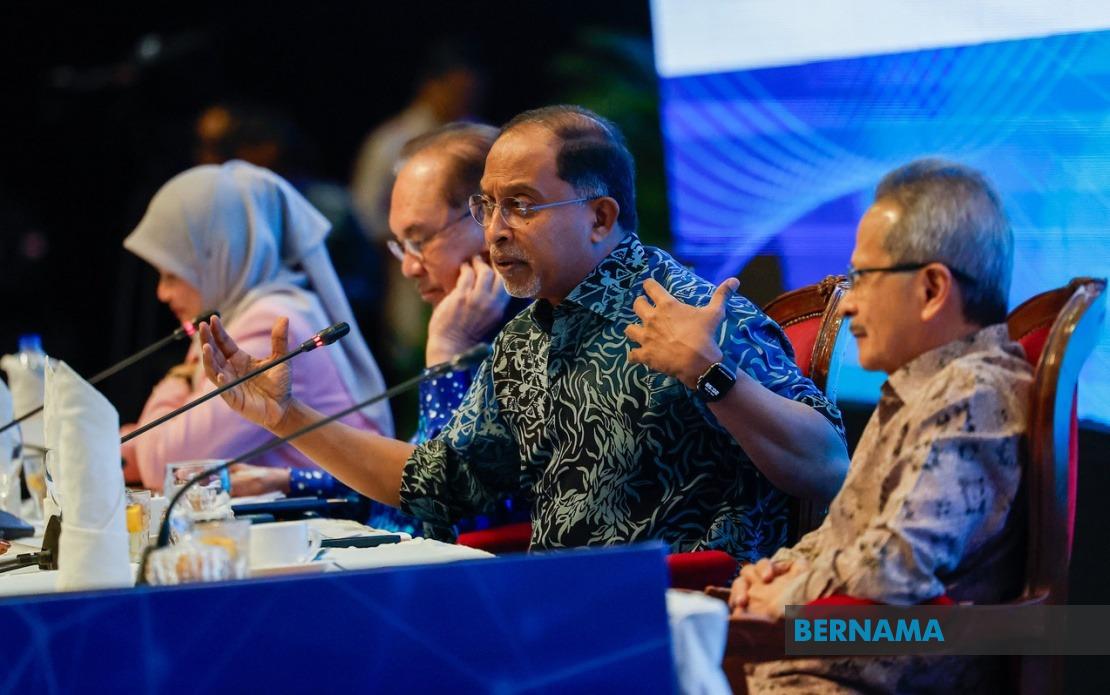
The governance framework underpinning Malaysia's higher education sector urgently requires modernisation to address systemic constraints that have accumulated over decades, according to Higher Education Minister Datuk Seri Dr Zambry Abd Kadir. Speaking at the MADANI Malaysian Scholars Forum Series 13 held at Dewan Tunku Chancellor, University of Malaya, Zambry articulated the ministry's position that existing legislation, particularly the Universities and University Colleges Act 1971 (AUKU), no longer adequately serves the needs of contemporary academia or student populations.
The AUKU, which has governed Malaysia's university sector since the early 1970s, was enacted during a fundamentally different era of higher learning. Since its establishment over five decades ago, the global university landscape has transformed dramatically, with increased emphasis on research innovation, international collaboration, and student autonomy. Zambry acknowledged that inherited regulatory constraints from this older framework have created institutional bottlenecks that prevent universities from operating with the agility required in the twenty-first century knowledge economy. The minister's remarks signal recognition within the government that piecemeal amendments will prove insufficient to address the systemic challenges facing Malaysian academia.
Central to the proposed reforms are expansions in academic freedom and student empowerment—dimensions that the current AUKU framework historically circumscribed rather heavily. Malaysian universities have long been subject to restrictions on political expression and campus activism that differ markedly from international norms at peer institutions. Zambry indicated that the forthcoming legislative review would specifically target these constraints, acknowledging that guaranteeing authentic academic freedom and enabling legitimate avenues for student expression are essential components of a modern higher education ecosystem. This represents a notable policy shift, suggesting the government recognises that creative restriction of campus discourse may ultimately undermine rather than protect institutional stability.
To operationalise this ambitious agenda, the Ministry of Higher Education (KPT) is contemplating the drafting of an entirely new consolidated legislative instrument, tentatively referred to as a One Higher Education Act. Rather than continuing to navigate the complex web of overlapping and sometimes contradictory statutes governing universities, a unified legal framework would theoretically streamline governance structures and eliminate ambiguities arising from multiple legislative instruments. This approach mirrors reform efforts undertaken by other regional governments attempting to modernise their higher education regulatory environments. The consolidation strategy suggests that officials recognise the cumulative inefficiencies generated by incremental legislative additions over time.
Underpinning this reform initiative is an Independent Committee established specifically to solicit and evaluate memorandums and viewpoints from academics, student representatives, and other stakeholders across the higher education ecosystem. This consultative apparatus acknowledges that sustainable legislative reform requires buy-in from institutions and communities most directly affected by regulatory change. The committee's role in aggregating diverse perspectives from university leaders, faculty members, and student bodies signals an attempt to ground future legislation in empirical understanding of operational realities within Malaysian institutions, rather than imposing top-down mandates disconnected from ground-level experience.
The forum, which convened under Prime Minister Datuk Seri Anwar Ibrahim's moderation, reflected broader government initiatives addressing educational policy frameworks at multiple levels. Anwar's personal participation underscores the administration's prioritisation of education transformation as a central policy pillar. Beyond higher education concerns, Education Minister Datuk Seri Fadhlina Sidek articulated complementary government commitments regarding educational accessibility and pedagogical philosophy at the primary and secondary levels. Fadhlina emphasised the ministry's orientation toward what she termed a humane education approach—a philosophical reorientation from purely examination-focused curricula toward holistic human development prioritising emotional intelligence, moral formation, and the cultivation of diverse talents.
This human-centred educational philosophy directly intersects with proposed higher education reforms, creating conceptual coherence across Malaysia's education system. Fadhlina highlighted institutional innovations designed to extend educational access to historically marginalised populations, including the Schools in Hospital programme serving chronically ill children, educational facilities within rehabilitation centres, and specialised K9 and K11 school models tailored to Orang Asli learners. Simultaneously, the government has expanded pre-school access on a cost-free basis, recognising that foundational learning inequities established in early childhood persist throughout educational trajectories. These initiatives reflect recognition that genuine educational equity requires differentiated provision addressing the specific circumstances and needs of diverse student populations.
The expansion of free pre-school access carries particular significance for Malaysian families with limited financial resources. By removing cost barriers to early childhood education, the government reduces the correlation between household income and educational preparation at critical developmental stages. For lower-income families, eliminating pre-school fees constitutes meaningful fiscal relief, while simultaneously ensuring that disadvantaged children enter formal schooling better prepared to benefit from classroom instruction. This preventative approach to educational equity potentially generates long-term public benefits by reducing downstream educational deficits and associated social costs.
Fadhlina's articulation of educational philosophy challenges the instrumental framing of schools as primarily mechanisms for generating workforce-ready human capital. Her contention that students possess intrinsic worth as developing persons rather than reducible to examination scores or labour market metrics represents a significant normative reorientation. Recognition that children arrive at school with varied emotional needs, anxieties, and non-academic dimensions requiring institutional attention signals movement toward more holistic institutional missions. This philosophical framework potentially necessitates corresponding reforms in teacher preparation, pedagogical assessment methodologies, and school resource allocation to prioritise student wellbeing alongside academic achievement.
The integration of these primary and secondary education reforms with proposed higher education legislative overhaul suggests government recognition that educational transformation requires systemic coherence. Students progressing from early education through tertiary institutions encounter cumulative institutional cultures and policy environments. If primary schools emphasise holistic development while universities remain circumscribed by restrictive regulatory frameworks from the 1970s, institutional inconsistencies create dissonance in student experiences. Conversely, aligning governance philosophies and regulatory frameworks across educational levels potentially creates reinforcing institutional environments supporting consistent pedagogical values throughout the educational journey.
For Malaysian universities and academic communities, the forthcoming AUKU review represents a pivotal moment with substantial institutional implications. The specific contours of academic freedom protections, student expression guarantees, and research autonomy provisions incorporated into revised legislation will substantially shape the institutional environment within which Malaysian academia operates. Whether reforms prove genuinely transformative or constitute modest incremental adjustments will likely determine whether Malaysian universities can effectively compete for international academic talent and research partnerships in an increasingly competitive global higher education marketplace. The international reputation of Malaysian institutions increasingly depends on demonstrating institutional cultures that attract accomplished scholars and facilitate innovative research, capabilities constrained by overly restrictive regulatory frameworks.
The Asia-Pacific region increasingly recognises that higher education competitiveness depends partly on institutional autonomy and academic freedom protections. Singapore, South Korea, and Australia maintain substantially different regulatory frameworks that generally afford universities greater operational independence than current Malaysian legislation provides. As Malaysian universities seek enhanced international research collaborations and aspire to elevated positions in global university rankings, alignment with international regulatory norms regarding academic freedom and institutional autonomy becomes strategically significant. The proposed legislative reforms potentially position Malaysian universities more competitively within the regional higher education landscape by moderating regulatory constraints that differentiate them negatively from regional peer institutions.

