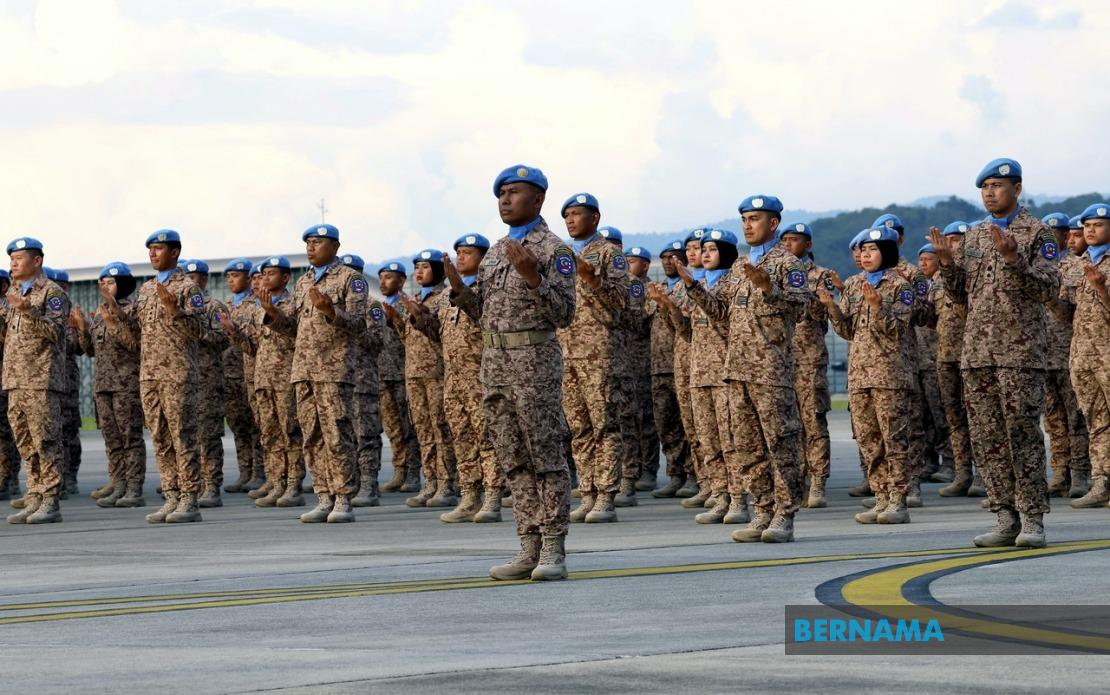
Malaysia's military presence in Lebanon operates from a strategically positioned base that shields Malaysian peacekeepers from the immediate dangers of ground conflict along one of the Middle East's most volatile borders. Defence Minister Datuk Seri Mohamed Khaled Nordin outlined how the Malaysian Battalion (MALBATT) 850-13, engaged in a UN peacekeeping mission, benefits from its central deployment rather than forward positioning near the Lebanon-Israel frontier. The tactical placement reduces the likelihood of Malaysian forces becoming embroiled in the recurring skirmishes that periodically erupt between Israeli and Lebanese forces in the border region.
Mohamed Khaled explained that the security perimeter assignment given to Malaysian troops positions them away from the flashpoint zones where tensions routinely escalate. Instead, other contributing nations to the UN Interim Force in Lebanon (UNIFIL) shoulder the more exposed responsibilities of border-adjacent deployment. French and Indonesian contingents, among others, maintain positions in areas closer to the demarcation line, creating a buffer zone that enhances the safety profile for Malaysian personnel. This geographical distribution reflects the deliberate structuring of international peacekeeping operations, where force contributions are strategically allocated based on capability, experience, and acceptable risk parameters. The arrangement allows the Malaysian battalion to fulfil its mandate while operating from relatively secure premises.
However, the Defence Minister cautioned against complacency regarding the evolving nature of military threats in the region. While ground-based combat poses diminished risk due to MALBATT's central positioning, aerial threats present a qualitatively different challenge that transcends traditional border geography. Drone operations and fighter jet strikes can reach far beyond the immediate border vicinity, creating exposure that positional advantage cannot entirely mitigate. This shift in threat assessment reflects the broader transformation of regional security dynamics, where airpower and unmanned systems have become increasingly consequential in Middle Eastern conflicts.
The acknowledgment of aerial vulnerability represents a candid assessment of the security environment facing Malaysian troops. Since Israel's operations expanded following the October 2023 conflicts, the intensity of airborne military activity across Lebanon has intensified substantially. Israeli military operations have struck targets throughout Lebanese territory, and the proliferation of drone technology among non-state actors has further complicated the threat landscape. For Malaysian peacekeepers operating in Lebanon, these developments mean that remaining vigilant transcends traditional peacekeeping concerns and requires awareness of threats emanating from multiple altitudes and vectors.
To address this expanded threat matrix, Malaysian military personnel deployed to Lebanon operate under comprehensive emergency protocols designed to minimise casualties during aerial incidents. Standard operating procedures mandate that all MALBATT members maintain heightened alertness and promptly move to reinforced shelter positions, such as bunkers, when indicators suggest imminent aerial activity. These defensive measures represent the practical expression of Malaysia's commitment to personnel safety while maintaining the country's contribution to international peacekeeping efforts. The bunker infrastructure and evacuation procedures have been established based on operational experience and coordination with other UNIFIL contingents.
Malaysia's involvement in Lebanon peacekeeping extends back decades and represents a significant component of the country's engagement with international security cooperation. The deployment underscores Malaysia's role as a responsible contributor to UN-mandated operations and reflects the country's commitment to multilateral approaches to conflict management. However, the challenges presented by the current instability in the region test the assumptions underlying traditional peacekeeping models. When contributing nations face aerial threats that conventional positioning cannot adequately address, the operational environment transitions from the relatively controlled parameters of classic peacekeeping to something more volatile and unpredictable.
The Defence Minister's public comments serve to reassure both the Malaysian public and the families of deployed personnel that their safety remains a central consideration in operational planning. By emphasising the strategic advantages of the current positioning while frankly addressing the aerial threat dimension, Mohamed Khaled demonstrates a balanced approach to communicating about deployed forces. This transparency helps manage public expectations and reinforces confidence in the military's assessment of acceptable risk levels. Malaysian media and public discourse around military deployments typically focuses on casualty prevention and force protection, making the Defence Minister's statements particularly significant for domestic political considerations.
The positioning of MALBATT 850-13 also reflects broader strategic calculations about how Malaysia maintains its international profile. Participation in UN peacekeeping operations provides diplomatic standing and contributes to Malaysia's credentials as a stakeholder in regional stability. Yet this engagement comes with genuine risks that fluctuate according to the intensity of surrounding conflicts. The current volatility in Lebanon creates a tension between Malaysia's commitment to international peacekeeping and the imperative to protect national personnel from escalating regional violence.
From a regional Southeast Asian perspective, Malaysia's management of its Lebanon deployment carries implications for broader security cooperation frameworks. Other regional nations maintain similar peacekeeping commitments in various conflict zones, and their approaches to force protection and threat assessment influence collective security thinking. Indonesia's parallel deployment of forces near the Lebanon-Israel border, as mentioned by the Defence Minister, illustrates how regional powers distribute their peacekeeping responsibilities. The comparative safety of different peacekeeping positions creates diplomatic considerations about fairness in risk allocation among contributing nations.
Looking forward, the Defence Minister's assessment suggests that Malaysia will maintain its Lebanon commitment while continually reassessing force protection measures in response to evolving aerial threats. The explicit acknowledgment of aerial vulnerability indicates that future deployments may require enhanced air defence capabilities or expanded shelter infrastructure. These operational adjustments would have budgetary and logistical implications for Malaysia's defence establishment and may influence the country's willingness to maintain or expand peacekeeping participation in similarly volatile regions.
The strategic positioning of Malaysian peacekeepers in Lebanon thus represents a calculated balancing act. The central deployment provides genuine advantages regarding ground combat exposure, addressing historical risks in border-adjacent peacekeeping. Yet the emergence of aerial threats as the dominant risk vector creates a new reality that transcends traditional peacekeeping security paradigms. Malaysia's response demonstrates how modern peacekeeping operations must constantly adapt to changing threat environments while maintaining force commitment and personnel safety—a challenge that will likely shape international peacekeeping operations throughout the coming decade.