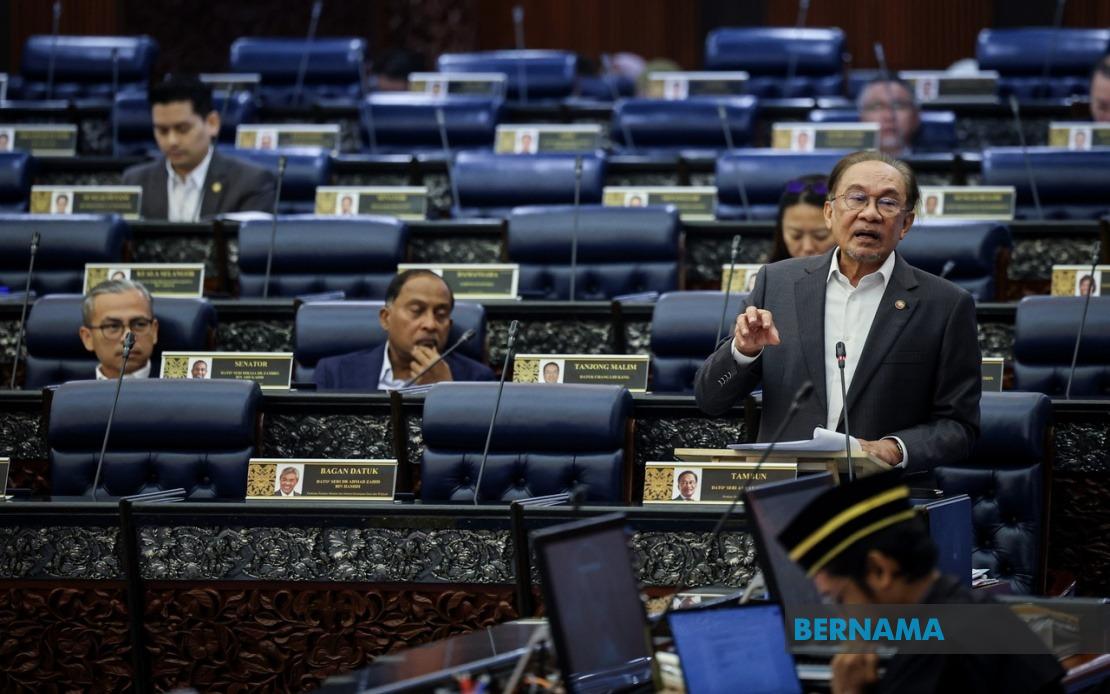
Malaysia's slip down the World Press Freedom Index rankings this year reflects a complex interplay between international assessment criteria and the government's enforcement of content guidelines around sensitive national issues, according to Prime Minister Datuk Seri Anwar Ibrahim. Speaking in Parliament on July 7, Anwar acknowledged that the country's fall from 88th position last year to 95th in the 2026 index was influenced by several enforcement actions taken against media organisations, yet maintained these measures were not designed to suppress editorial independence or silence political opposition.
The Prime Minister identified two specific cases that drew international scrutiny and contributed to Malaysia's lower ranking. Sin Chew Daily faced action following publication of an inaccurate illustration of the Jalur Gemilang, while Sinar Harian encountered enforcement over a biography of the Inspector-General of Police. Anwar noted that the Sin Chew Daily matter was particularly viewed by international media observers as a severe press freedom violation, though he emphasised that Malaysia takes flag-related issues with considerable gravity, even if other countries do not accord the same level of importance to such matters.
Central to Anwar's explanation was the distinction the government makes between permissible and prohibited editorial content. He stressed that enforcement action was specifically directed at material involving the three Rs—religion, race, and royal institution—alongside content deemed to threaten national security. This framework, he argued, does not extend to factual inaccuracies or political criticism standing alone. Rather, the government has shifted toward transparency and public dialogue, including parliamentary explanations, as the preferred mechanism for addressing disputed claims or opposing viewpoints.
The government's commitment to this approach has been reinforced through legislative reform. Anwar highlighted amendments to Section 233 of the Communications and Multimedia Act 1998, which represent a significant softening of restrictions on satirical expression. Under the revised provisions, satirical remarks directed at the Prime Minister or other government leaders are no longer classified as criminal offences, a move intended to create space for legitimate political discourse and humour without legal jeopardy. This legislative shift signals governmental recognition that press freedom frameworks must accommodate forms of expression beyond straightforward factual reporting.
A critical constraint on Malaysia's ranking, Anwar explained, stems from the multifaceted assessment methodology employed by Reporters Without Borders, the organisation behind the World Press Freedom Index. The ranking considers not merely direct government censorship but a broader spectrum of factors including the political environment, legal framework, economic conditions, socio-cultural context, and security situation. This comprehensive approach means that Malaysia's score reflects conditions beyond direct state action, encompassing systemic pressures and contextual constraints on media operations.
The Prime Minister also drew attention to the role of social media platforms themselves in content removal, arguing this represents an often-overlooked dimension of the press freedom discussion. Content is frequently deleted from platforms based on user complaints rather than government directives, yet such removals contribute to the international perception of a restrictive media environment. Anwar cited his own experience with posts related to Hamas, which social media platforms removed despite government disagreement with the deletion decisions. This dynamic illustrates how Malaysia's press freedom ranking reflects not only domestic regulatory action but also the policies of global technology companies operating within the country.
Furthermore, Anwar clarified that requests issued by the Malaysian Communications and Multimedia Commission, while significant domestically, do not automatically result in content removal by social media operators. The final determination rests with platform owners themselves, creating a decentralised system of content governance that extends beyond Malaysian regulatory authority. This reality complicates the international assessment of press freedom in Malaysia, as external observers may attribute platform-driven removals to government censorship when the causal chain is more intricate.
The government's position is underpinned by a commitment made by the Conference of Rulers, Malaysia's highest constitutional authority regarding the monarchy. This agreement obligates the government to maintain vigilance against content insulting the royal institution and material inciting racial or religious discord. Anwar presented this institutional constraint as a foundational principle guiding enforcement decisions, suggesting that Malaysia's approach to press regulation reflects not simply executive preference but constitutional obligation and the broader constitutional settlement upon which the country's system rests.
For Malaysian journalists and media organisations, Anwar's parliamentary remarks provide some clarification regarding the boundaries of permissible reporting. The distinction between protected political criticism and prohibited religious, racial, or anti-monarchical content remains the operative framework. The legislative reform of satirical protections offers a modest expansion of editorial discretion. However, the explanation also underscores the persistent tension between international press freedom norms and Malaysia's particular constitutional requirements and social sensitivities around communal harmony and respect for national institutions.
The implications for Malaysia's media landscape are multifaceted. International press freedom observers will likely remain concerned about the breadth of discretion available under the 3R framework, particularly given the subjective nature of determining what constitutes insulting content or incitement to communal discord. Domestically, media organisations must navigate between the government's stated preference for dialogue over enforcement and the uncertainty inherent in assessing whether particular content will trigger regulatory action. The role of technology platforms adds another layer of complexity, as Malaysian editors cannot fully control how their content is treated once published digitally.
Anwar's remarks ultimately reflect an attempt to reconcile Malaysia's commitment to media freedom with its constitutional obligations and social fabric. The government frames its enforcement as targeted and principled rather than blanket censorship, yet the impact on international rankings demonstrates that international assessment frameworks may weigh such distinctions differently. As Malaysia continues to develop its media governance approach, the tension between protecting communal harmony and upholding press freedom will remain a defining challenge for both policymakers and media practitioners.

