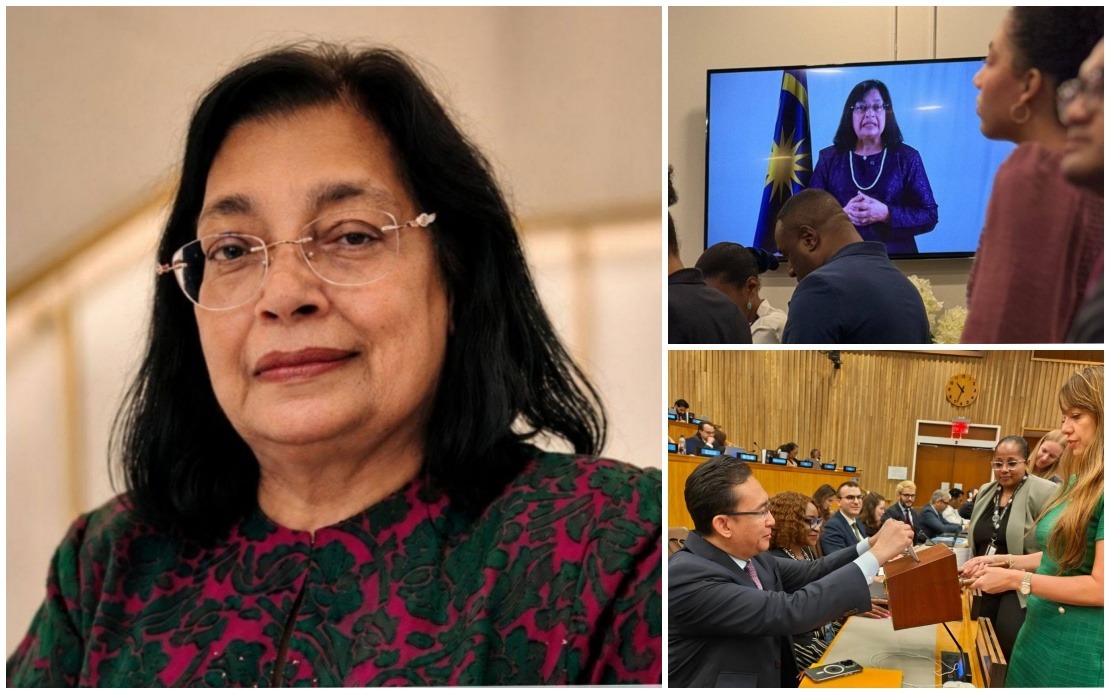
Datuk Yasmeen Muhamad Shariff has secured a seat on the United Nations Committee on the Rights of the Child for the 2027–2031 term following her election at the organisation's New York headquarters on Tuesday. The vote saw her win 136 votes among 189 States Parties present at the 21st Meeting of States Parties to the Convention on the Rights of the Child, placing her at the top of the field. The Foreign Ministry disclosed the result on Wednesday, underscoring what it characterises as international confidence in her qualifications and commitment to child welfare initiatives.
This represents the second occasion on which Yasmeen has attained membership of the committee, having previously held a position during the 2013–2017 period. Her re-election after a decade suggests sustained recognition of her contributions to the international child rights framework and reinforces Malaysia's standing among UN member states on this agenda. The decisive margin of her victory, with over 72 per cent of eligible voters supporting her candidacy, reflects the breadth of backing she enjoys across diverse geographical and political constituencies within the international community.
As a committee member, Yasmeen will operate independently as an expert rather than representing Malaysian government interests directly. Her responsibilities will encompass monitoring how signatory nations implement the Convention on the Rights of the Child, participating in structured dialogue with member states about their compliance, and advocating for rights-based approaches to global challenges confronting young people. The committee's monitoring function carries significant weight, as it essentially serves as an international accountability mechanism, reviewing national reports and issuing recommendations to governments on strengthening child protection systems.
The election outcome carries particular significance for Malaysia's international profile on social policy matters. By securing the highest vote tally, the country demonstrates diplomatic credibility and substantive expertise that extends beyond traditional trade or security domains. The Foreign Ministry framed the result as validation of Malaysia's broader child welfare architecture, which encompasses legislative amendments, institutional reforms, and targeted programmes intended to guarantee that disadvantaged youth access opportunities for personal development and realisation of potential.
Yasmeen's appointment underscores Malaysia's alignment with the Convention on the Rights of the Child framework, a foundational instrument that has been ratified by virtually all UN member states. Malaysia's commitment encompasses domestic implementation through the Ministry of Women, Family and Community Development and related agencies responsible for child welfare, education, and protection. The Foreign Ministry's acknowledgment of this ministry's instrumental role in facilitating the successful nomination highlights the interconnected nature of international diplomacy and domestic policy execution.
The broader context of this election reflects evolving international attention to child rights amid accelerating global complexity. Conflict zones, forced displacement, digital exploitation, climate change impacts, and pandemic-related educational disruption have intensified scrutiny of how effectively states protect vulnerable populations. The committee's work has assumed heightened importance as it synthesises evidence-based recommendations and peer pressure mechanisms to drive improvements in national legislation and institutional capacity. Yasmeen's expertise will contribute to these deliberations during a period when children's welfare faces mounting pressures across multiple domains.
For Malaysia specifically, this development reinforces positioning as a responsible stakeholder in UN-centred multilateralism and child protection governance. Southeast Asian nations have historically maintained varying levels of engagement with international human rights mechanisms, and Malaysia's sustained participation through nominated experts demonstrates institutional continuity and confidence in engaging with global normative frameworks. The region itself encompasses diverse approaches to child welfare, and Malaysian representation provides a platform for incorporating Southeast Asian perspectives into international policy discussions.
The committee's role encompasses reviewing implementation reports, engaging with civil society organisations, and issuing general comments that interpret convention provisions and guide member states. These general comments carry substantial influence in shaping national policies across signatory countries. Through her participation, Yasmeen will help shape international guidance on contemporary child rights issues including digital safety, education access, environmental protection, and mental health—matters with direct relevance to Malaysian communities and broader regional development priorities.
The Foreign Ministry's characterisation of the election as reflecting international recognition of Malaysia's child protection efforts suggests the government views this outcome as validation of domestic initiatives. This framing carries implications for domestic policy advocacy, potentially strengthening the position of advocates pushing for enhanced investment in child welfare infrastructure, child protection services, and youth opportunity programmes. When international recognition aligns with domestic priorities, elected officials often find additional political space to advance related initiatives.
Moving forward, Yasmeen's service will require balancing technical expertise with diplomatic sensitivity, as the committee operates in an environment where states defend their sovereign approaches to child welfare while also responding to international scrutiny. Her previous experience during the 2013–2017 term provides institutional memory and credibility as she engages with fellow committee members and state delegations. This continuity may enhance Malaysia's influence in committee deliberations and help shape the trajectory of international child rights discourse during a consequential four-year period.
Malaysia's sustained commitment to child rights governance also reflects internal demographic shifts and policy priorities. As Southeast Asian nations increasingly grapple with urbanisation, economic transformation, and changing family structures, international frameworks provide comparative reference points and best practice models. The committee's work generates evidence and recommendations that resonate within domestic policy communities, potentially influencing legislative agendas and resource allocation decisions. Yasmeen's presence on this international body thus connects global deliberation with Malaysian governance challenges in meaningful ways.