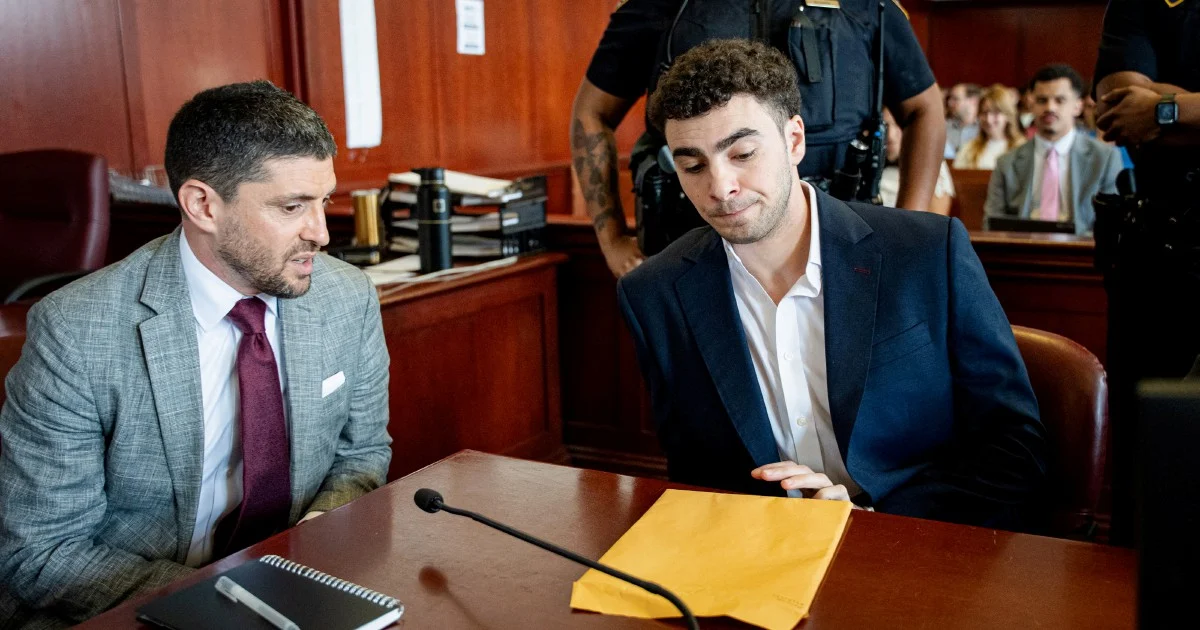
Luigi Mangione, the defendant charged with the fatal shooting of health insurance executive Brian Thompson on a busy Manhattan street, has decided to shelve his strategy of presenting psychological evidence at trial that would have documented an acute mental health emergency around the time of the alleged killing. The decision emerged through a court filing submitted on Friday and signals a significant tactical shift in how his legal team intends to mount a defence against the first-degree murder accusation.
The withdrawal of mental health evidence, while temporary, represents a calculated decision by Mangione's legal counsel to recalibrate their courtroom approach. Such tactical pivots are not uncommon in high-profile criminal cases, particularly when defence teams determine that introducing psychological testimony might inadvertently strengthen the prosecution's narrative or complicate their primary defence strategy. The precise reasoning behind the timing and nature of this withdrawal remains sealed within legal strategy discussions.
Mangione faces charges relating to the December shooting of Brian Thompson, the chief executive of UnitedHealthcare, one of America's largest health insurance providers. The killing occurred in Midtown Manhattan and generated significant media attention, intersecting with broader public debate surrounding health insurance practices and corporate accountability in the United States. Thompson's death sparked conversations about frustration with the healthcare system, though law enforcement has focused on the specific criminal investigation.
The decision to withdraw mental health defence plans for now does not preclude their reintroduction at a later stage of proceedings. Defence teams frequently preserve the option to revisit strategic choices as trial approaches and new developments emerge. This flexibility allows attorneys to respond to discovery materials, witness testimonies, and evolving circumstances without committing irrevocably to a particular narrative framework.
For Malaysian observers monitoring this case, the broader implications touch on how American courts handle high-profile cases involving corporate figures and how mental health considerations intersect with criminal accountability. The structure of the United States legal system, including the capacity to introduce expert psychological testimony, differs substantially from Malaysian criminal procedure, where such evidence operates within different evidential frameworks and court interpretive standards.
Mental health defences in American homicide cases typically require defendants to establish diminished capacity or insanity at the time of the alleged offence. Prosecution and defence experts frequently engage in contentious testimony about whether a defendant's psychological state prevented them from forming the requisite criminal intent. These contests between competing expert witnesses often prove pivotal in jury deliberations, particularly when mental illness is documented through medical records, psychiatric assessments, or testimony from treating professionals.
The decision to withdraw this evidence temporarily may also reflect ongoing negotiations, potential plea discussions, or developments in how the prosecution intends to present its case. Court filings in complex criminal cases often respond to strategic considerations that extend beyond what appears in public documents. The full reasoning behind Mangione's legal team's shift may not become apparent until trial proceedings commence or subsequent motions are filed.
UnitedHealthcare's prominence in the American healthcare landscape means this case carries dimensions beyond criminal law. The company manages coverage for millions of individuals and has faced criticism regarding insurance denial practices. Public reaction to Thompson's death revealed underlying tensions regarding healthcare access, insurance bureaucracy, and corporate decision-making in the medical industry. These contextual elements, while distinct from the criminal prosecution's focus, shape the broader public understanding of events.
The Manhattan legal proceedings will unfold against a backdrop of heightened scrutiny on health insurance industry practices. Congressional hearings and regulatory bodies have increasingly examined denial rates and appeals processes across major insurers. Whether such systemic questions influence jury perceptions in this specific criminal case remains uncertain, though defence and prosecution teams will navigate jury selection with these considerations in mind.
For Southeast Asian jurisdictions including Malaysia, observing how American courts manage high-profile cases involving corporate defendants and mental health considerations offers instructive contrasts. Malaysian criminal law, grounded in the Penal Code, approaches criminal responsibility through different evidentiary standards and burden-of-proof frameworks. The voluntariness of confessions, reliability of expert psychological testimony, and standards for admitting mental health evidence operate under distinct legal principles.
As the case progresses toward trial, additional tactical decisions from both the defence and prosecution will clarify the strategic direction. Mangione's withdrawal of mental health evidence, while temporary, demonstrates the dynamic nature of criminal case preparation and how defence teams continuously reassess their approach based on evolving circumstances and strategic calculations.
The forthcoming trial will ultimately determine how courts weigh the evidence against Mangione and whether additional factors, including his psychological state at the time of the alleged shooting, will influence the judicial outcome. The case exemplifies how American criminal trials involve complex procedural strategies, expert testimony battles, and the intersection of individual culpability with broader social questions about institutional accountability.