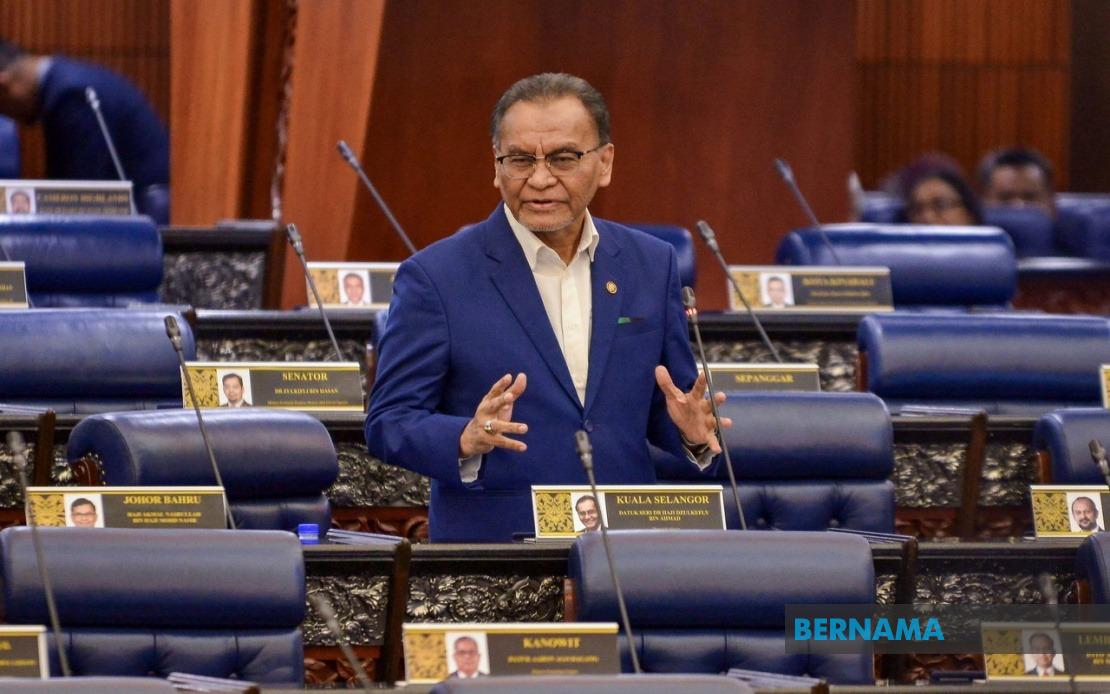
The Malaysian government is rolling out a comprehensive suite of healthcare initiatives aimed at shielding lower and middle-income households from mounting private medical bills, with Health Minister Datuk Seri Dr Dzulkefly Ahmad confirming the imminent launch of MediAsas as a centerpiece of this expansion effort. Addressing parliament on the government's strategy to combat rising private healthcare costs, the minister outlined how MediAsas operates alongside existing programmes targeting the B40 group, including the Healthcare Scheme for the B40 Group (PeKa B40), the MADANI Healthcare Scheme, and MySalam, together forming a layered protection architecture for vulnerable and middle-income Malaysians.
MediAsas represents a targeted intervention under the RESET framework, which the government has developed to address affordability barriers preventing middle-income earners from accessing private healthcare. The plan functions as a medical insurance and takaful product featuring premiums calibrated to be substantially lower than conventional private insurance offerings, making private hospital care financially accessible to the M40 demographic who fall outside subsidised public healthcare but struggle with unsubsidised private costs. By introducing this middle ground between public and premium private sectors, the government seeks to relieve pressure on already strained public facilities while preventing middle-income families from depleting savings through catastrophic health expenditures.
A distinctive feature of MediAsas involves the gradual integration of Diagnosis Related Group (DRG)-based payment mechanisms at participating private hospitals. This standardised billing approach, which groups medical procedures into defined cost categories rather than allowing unlimited itemised billing, represents a structural reform intended to make private hospital pricing more transparent and predictable. By anchoring private hospital charges to a DRG framework, the scheme effectively caps what insurers and patients will pay for specific diagnoses and treatments, reducing the unchecked cost escalation that has characterised Malaysia's private healthcare sector. This mechanism addresses a longstanding grievance among middle-income households regarding unexpected and inflated private hospital bills.
Crucially, Dr Dzulkefly emphasised that MediAsas functions as a complement rather than replacement to Malaysia's public healthcare system, which continues to provide universal coverage funded through general taxation and remains the government's cornerstone health commitment. This clarification responds to concerns that the introduction of private insurance schemes might signal withdrawal from public healthcare provision or suggest that public facilities are inadequate. The minister's positioning affirms that MediAsas expands choice and options for those preferring or requiring private care, without undermining the principle that all Malaysians retain entitlement to comprehensive public healthcare regardless of ability to pay.
The rollout strategy involves a measured pilot phase beginning at the end of July in the Klang Valley region, engaging six insurance and takaful operators to test operational mechanics, claims processing, hospital integration, and customer uptake before the nationwide expansion commences in January 2027. This phased approach allows regulators and industry stakeholders to identify and resolve implementation challenges at manageable scale, refine premium structures based on real claims data, and adjust hospital partnerships as needed. The Klang Valley, encompassing Kuala Lumpur, Selangor, and surrounding areas with high population density and concentration of private hospitals, provides an ideal pilot environment offering diverse patient demographics and extensive private facility networks.
Beyond MediAsas itself, the RESET framework encompasses broader private healthcare market reforms addressing structural inefficiencies that drive costs upward. Interoperability standards for electronic medical records represent a significant component, eliminating the current fragmentation where different hospitals operate isolated systems that prevent easy data sharing. When patients cannot access previous medical tests and imaging across institutions, redundant diagnostics occur, multiplying costs unnecessarily. Standardised, interoperable digital records enable seamless information transfer, reducing duplicated scans and tests while improving clinical continuity. Additionally, the framework encompasses deliberate restructuring of private hospital billing practices, moving away from opaque, itemised invoicing toward more standardised and transparent charging aligned with DRG principles.
For the B40 group, existing protection remains substantially unchanged and comprehensive. Malaysia's public healthcare infrastructure comprises 154 public hospitals and over three thousand public clinics and health facilities offering free or heavily subsidised care, providing genuine universal coverage regardless of income. Supplementing this foundation, targeted programmes including PeKa B40, MADANI Healthcare, and MySalam provide additional financial protection against catastrophic health expenditures. These layered arrangements ensure low-income households face minimal financial barriers to healthcare access, with government bearing costs through general revenues.
MediAsas specifically targets the M40 segment, a demographic historically squeezed between modest incomes insufficient to comfortably afford private healthcare yet exceeding thresholds for targeted government assistance programmes. This group frequently confronts difficult choices: utilise already-overburdened public facilities or risk financial hardship accessing better-resourced private care. MediAsas attempts to resolve this dilemma by offering manageable-premium insurance that unlocks private hospital access without catastrophic cost implications. The scheme explicitly addresses pre-existing conditions, non-communicable diseases including diabetes, hypertension, and cardiovascular ailments, and mental health challenges—conditions often excluded or heavily restricted under conventional private insurance, yet prevalent and costly among middle-aged, middle-income populations.
From a regional Southeast Asian perspective, Malaysia's MediAsas initiative reflects broader patterns where government policy increasingly acknowledges that universal public healthcare and voluntary private insurance represent complementary rather than competing systems. Many neighbouring countries have adopted similar hybrid models, recognising that purely public systems struggle under resource constraints whilst purely private systems exclude low-income populations. MediAsas positions Malaysia within this convergent regional trend, though its explicit structuring around DRG-based payment and standardised takaful products reflects distinctive features of Malaysia's Islamic finance ecosystem and healthcare administration.
The economic implications extend beyond individual families to healthcare system sustainability. By creating viable private insurance pathways for middle-income populations, MediAsas potentially reduces demand surges at already-stretched public facilities, improving service quality and access for those relying exclusively on public care. Simultaneously, bringing more private patients within standardised payment frameworks through DRG mechanisms increases competitive pressure on hospitals to improve efficiency and cost management rather than simply increasing service volumes and prices. For insurance companies and takaful operators, MediAsas opens a substantial market segment previously underserved by conventional products, offering growth opportunities if premiums can be maintained at genuinely affordable levels.
Implementation challenges remain substantial. Success depends on maintaining genuinely affordable premiums while ensuring sufficient claims volumes to sustain insurer viability—if premiums prove too high, uptake among target M40 households will disappoint; if too low, insurers may withdraw. Hospital participation requires coordinating with private sector institutions accustomed to price freedom, incentivising them to adopt DRG-based billing while accepting lower margins. Consumer awareness and education must effectively communicate how MediAsas functions, what it covers, and why it differs from both public and conventional private insurance. Technology infrastructure supporting electronic records interoperability requires substantial investment and coordination across fragmented private institutions.
Looking forward, MediAsas represents a critical test of whether government can successfully catalyse private healthcare market reforms whilst expanding coverage for underserved populations. If the pilot succeeds in delivering affordable insurance without compromising insurer sustainability or hospital participation, the nationwide rollout from January 2027 could substantially reshape Malaysia's healthcare landscape. Conversely, implementation difficulties might necessitate substantial design modifications. For Malaysian families in the M40 bracket, success offers genuine financial relief and improved access to private healthcare without depleting savings. For public healthcare facilities, reduced demand from those now insured privately could improve resource availability for lowest-income populations. For private hospitals and insurers, the scheme opens substantial markets but imposes new operational constraints through standardised billing requirements.

