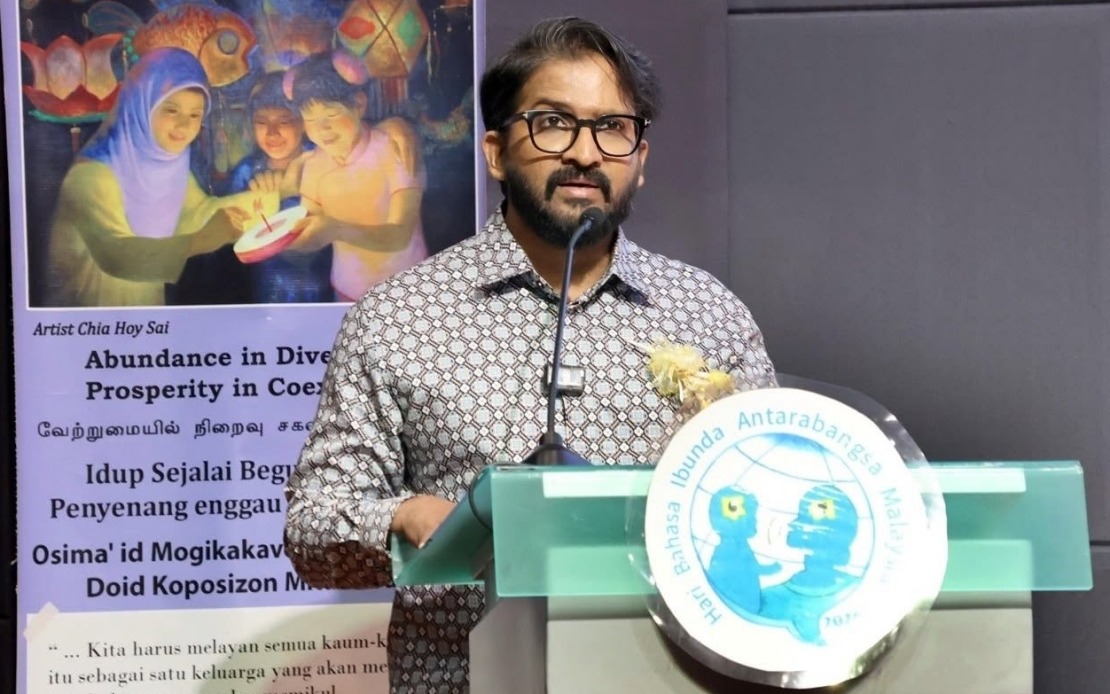
Deputy National Unity Minister R. Yuneswaran has made a compelling case for prioritising mother tongue education as a means of addressing the persistent social divisions plaguing Malaysia's digital discourse. Speaking on the growing prevalence of race, religion and royalty (3R) controversies that dominate social media platforms, Yuneswaran contends that these flashpoints stem fundamentally from incomplete understanding of one another's historical narratives, linguistic traditions, and cultural frameworks. His intervention touches on a longstanding tension in Malaysian society about how to balance national cohesion with cultural pluralism.
At the heart of Yuneswaran's argument lies a straightforward observation: language carries far more weight than mere communication utility. When individuals speak and think in their mother tongue, they access not simply words but an entire repository of cultural meaning, ancestral memory, and communal values. This linguistic inheritance shapes identity formation and worldview in ways that superficial exposure to other languages cannot replicate. By neglecting mother tongue cultivation, Yuneswaran suggests, young Malaysians become disconnected from the intellectual and emotional foundations that make their own cultures comprehensible, and consequently struggle to extend similar comprehension to others.
The minister's acknowledgment of Malaysia's linguistic landscape provides essential context for his position. The existence of approximately 130 languages across the nation represents one of the most remarkable concentrations of linguistic diversity in the world. Rather than treat this multiplicity as a liability or source of potential conflict—a common framing in assimilationist discourse—Yuneswaran reframes linguistic plurality as a national asset that, if properly cultivated and respected, strengthens rather than weakens the social fabric. This perspective directly challenges the zero-sum thinking that often dominates education policy debates, where investment in minority languages is portrayed as competing with national language priorities.
Crucially, Yuneswaran clarifies that advocacy for mother tongue proficiency does not entail abandonment of Bahasa Malaysia or other languages. Drawing on his own multicultural background—encompassing Chinese and national school education streams alongside his Indian Malaysian heritage—he models the possibility of multilingual competence without cultural compromise. This personal testimony carries particular weight in Malaysian context, where many citizens navigate multiple linguistic and cultural identities simultaneously. His lived experience suggests that deeper engagement with one's own linguistic heritage actually facilitates rather than obstructs acquisition and appreciation of other languages, as individuals develop stronger foundational language skills and greater cultural confidence.
The link between linguistic understanding and social cohesion warrants deeper examination. When social media conflicts erupt around 3R issues, they often involve considerable misrepresentation or deliberate distortion of others' cultural and religious practices. Individuals without grounded understanding of their own traditions lack benchmarks for recognizing similar misrepresentations affecting others' communities. Conversely, those with robust mother tongue literacy and cultural knowledge develop more sophisticated discernment about how language shapes representation and meaning, making them less susceptible to inflammatory rhetoric and more capable of distinguishing between legitimate cultural expression and offensive stereotyping.
Yuneswaran's framing aligns with the National Unity Ministry's mandate under the 13th Malaysia Plan, which positions nation-building around pillars of mutual understanding, respect, and reciprocal learning. This represents a significant philosophical shift from older integration models that emphasized cultural subordination or assimilation toward a majority framework. Instead, the newer approach acknowledges that sustainable unity requires each community to develop stronger internal cultural coherence, which then becomes the basis for meaningful engagement across difference. Without this foundation, intergroup dialogue becomes superficial and vulnerable to polarization.
The practical implications for Malaysian education policy are substantial. Schools currently operate within constraints that limit mother tongue instruction for many communities, particularly in urban areas where national school attendance predominates. Yet systematic strengthening of linguistic proficiency for all language groups need not require parallel separate school systems. Rather, it could manifest through enhanced mother tongue curriculum enrichment, community-based language programs, or digital platforms that make minority language literacy accessible to diaspora communities. Such initiatives would signal governmental commitment to pluralism while maintaining the integrative function of national language education.
Social media's role in amplifying 3R controversies deserves particular attention within this framework. Platforms facilitate rapid dissemination of content by individuals who may lack contextual knowledge or linguistic precision necessary to discuss sensitive topics responsibly. Strengthening mother tongue literacy could contribute to more nuanced and responsible digital communication, as individuals grounded in their own cultural-linguistic traditions develop greater sensitivity to how language affects others. Additionally, mother tongue proficiency enables community members to counter misinformation about their own traditions within their language networks, creating circuit breakers against viral distortions.
Yuneswaran's intervention also responds to generational patterns whereby younger Malaysians increasingly communicate primarily in English or simplified Bahasa Malaysia, losing facility with their heritage languages. This linguistic attrition coincides with declining knowledge of cultural particularities, creating populations vulnerable to stereotyping and prone to misunderstanding others. Reversing this trend requires sustained commitment from families, educational institutions, and cultural organizations working in concert. The government's role extends beyond curriculum development to providing infrastructure, resources, and social validation for mother tongue learning across all communities.
The minister's emphasis on language as a unifying force rather than divisive marker reflects optimism about Malaysia's multicultural project. Rather than viewing the coexistence of 130 languages as a challenge to overcome through homogenization, this perspective treats linguistic diversity as cultural capital that, properly managed and respected, enhances national resilience. This reframing has implications extending beyond education into media policy, civil service practice, and public discourse norms. If mother tongue strengthening becomes recognized as contributing to national unity rather than threatening it, institutional support could follow.
Moving forward, the success of any mother tongue initiative depends on political commitment and resource allocation. Creating space for linguistic and cultural expression requires deliberate policy choices and sustained funding. It also requires resistance to assimilationist pressures that frame minority language preservation as backward-looking or divisive. Yuneswaran's statement provides intellectual and ministerial backing for such efforts, though translating his advocacy into concrete programs remains the substantial challenge ahead.
%22%2F%3E%3C%2Fpattern%3E%3C%2Fdefs%3E%3Crect%20width%3D%22100%25%22%20height%3D%22100%25%22%20fill%3D%22url(%23ph5pwjeg)%22%2F%3E%3Crect%20width%3D%22100%25%22%20height%3D%22100%25%22%20fill%3D%22url(%23ph5pwjep)%22%2F%3E%3Ctext%20x%3D%2250%25%22%20y%3D%2250%25%22%20text-anchor%3D%22middle%22%20dominant-baseline%3D%22central%22%20fill%3D%22rgba(255%2C255%2C255%2C0.95)%22%20font-family%3D%22Georgia%2C%20'Times%20New%20Roman'%2C%20serif%22%20font-weight%3D%22700%22%20font-size%3D%22226%22%20letter-spacing%3D%22-0.02em%22%3ELegacy%3C%2Ftext%3E%3C%2Fsvg%3E)