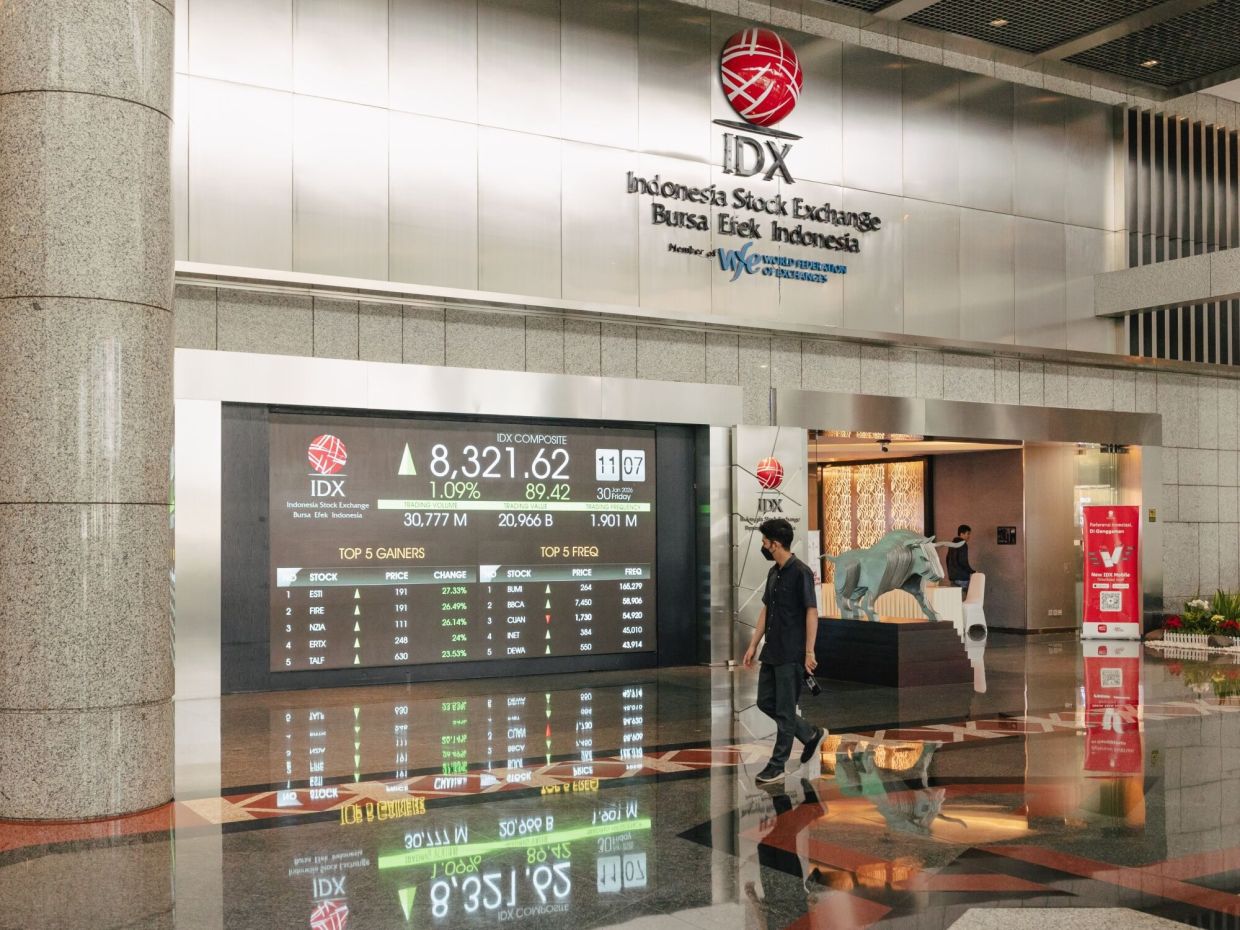
Indonesia's investment reputation took another hit this week when MSCI, the world's most influential index provider, raised fresh concerns about the country's market transparency and accessibility. The assessment comes at a critical juncture, with MSCI scheduled to announce next week whether it will demote Indonesia from emerging market to frontier status—a reclassification that analysts estimate could force out up to $13 billion in foreign capital. For Southeast Asia's largest economy, already reeling from currency weakness and capital flight, this decision represents a watershed moment for investor confidence.
MSCI's market accessibility review, released Thursday, specifically downgraded Indonesia's information flow measure to negative, highlighting persistent opacity in how shareholdings are disclosed and how trades are executed on the exchange. The index provider contends that this lack of visibility hampers proper price discovery and prevents international investors from accurately gauging the true free-float value of listed companies—a fundamental metric for determining whether stocks should be included in global investment portfolios. Such classification matters enormously because index funds tracking MSCI benchmarks manage trillions of dollars globally, and their mandates compel them to hold or divest based strictly on MSCI's technical assessments.
The timing of this warning compounds Indonesia's existing troubles. Since January, when MSCI first signalled downgrade risks, the Jakarta stock exchange has become a sell-off magnet for foreign money managers. The benchmark stock index has tumbled 29 percent since the start of this year, making it the worst performer among major emerging markets. Through the first three quarters of 2026, foreign institutional investors have liquidated approximately $3.65 billion of Indonesian equities, a staggering reversal for a market that once attracted sustained regional inflows.
Yet some market watchers argue that MSCI's latest review, while cautionary, does not necessarily spell immediate doom. Mohit Mirpuri, fund manager at SGMC Capital in Singapore, points out that the deterioration was confined to a single accessibility measure rather than representing a wholesale breakdown in Indonesia's regulatory framework. He notes that on several key assessment criteria—including market size, liquidity, and restrictions on foreign ownership—Indonesia continues to rank competitively against major peers like South Korea, China, and India. His base case, shared by some institutional investors, remains that MSCI will preserve Indonesia's emerging market classification despite the transparency headwinds.
Indonesian regulators have not remained passive in the face of mounting pressure. Following MSCI's January warning, the government and financial authorities introduced a series of reform initiatives aimed at addressing market governance gaps. The most prominent change was doubling the minimum free-float requirement for listed companies to 15 percent, a measure designed to reduce concentrated ownership and improve stock liquidity. The urgency of these steps became evident when both the chief executive of the Indonesia Stock Exchange and the head of the Financial Services Authority resigned on the same day in January, signalling the administration's recognition of how seriously the MSCI threat was being taken at the highest levels.
MSCI's ongoing scrutiny has intensified scrutiny on Indonesia's ownership structures. In May, the index provider removed six companies from its benchmarks, most with strong ties to prominent Indonesian tycoons. These removals triggered another equity market selloff and raised questions about the broader concentration of corporate control in the Indonesian economy. The removals highlighted MSCI's concern that opaque ownership arrangements and related-party transactions create barriers to foreign investors accurately assessing company valuations and governance quality.
Beyond technical market mechanics, Indonesia faces a compound crisis of investor confidence that extends into macroeconomic territory. Since President Prabowo Subianto took office, his populist economic agenda has alarmed international capital markets. Currency weakness has become particularly acute, with the rupiah hitting record lows against the dollar, prompting Bank Indonesia to raise interest rates multiple times in recent months in an effort to defend the exchange rate. These monetary tightening moves carry collateral damage: they raise borrowing costs throughout the economy and risk slowing growth.
The broader credibility issue facing the Indonesian government has not escaped the attention of global rating agencies. Both Moody's and Fitch downgraded their outlooks on Indonesia's sovereign debt to negative earlier this year, citing erosion in policy credibility. For an economy valued at $1.4 trillion, this represents a significant deterioration from its historical status as a market darling and a preferred destination for emerging market capital seeking growth and diversification. The negative outlook signals that further credit rating downgrades could follow if fiscal and currency pressures persist.
Indonesia's capital market struggles are compounded by structural currency market limitations. MSCI noted that Indonesia lacks an efficient offshore currency derivatives market while simultaneously facing constraints on onshore trading. These restrictions make it difficult and costly for international investors to hedge currency risk, a critical consideration when allocating capital to emerging markets where exchange rate volatility can materially affect unhedged returns. Without functional hedging mechanisms, foreign funds become more reluctant to hold Indonesian assets, regardless of their fundamental attractiveness.
The extended timeline of MSCI's review process—the company extended its examination in April and made selective index changes in May—suggests the seriousness with which it is examining Indonesia's investability framework. Each incremental step has rattled markets and triggered capital outflows, creating a downward momentum that becomes self-reinforcing. Stock market weakness begets currency weakness, which triggers central bank action, which raises economic growth concerns, which justifies further selling.
For Malaysian investors and policymakers, Indonesia's experience offers sobering lessons about market governance and investor relations. As a regional power with substantial Malaysian corporate exposure and financial linkages to Indonesian markets, any downgrade would ripple through regional equity indices and potentially affect regional capital flows more broadly. The incident underscores how international index methodology, though technical on its surface, wields enormous real-world consequences for emerging markets dependent on foreign capital.
The coming week's MSCI decision will either validate or contradict the market's current pessimism about Indonesia's trajectory. If MSCI proceeds with a downgrade to frontier status, it would represent an explicit judgment that Indonesia's capital markets have deteriorated beyond acceptable standards for mainstream emerging market investment. Should MSCI hold the emerging market classification despite its noted concerns, it would suggest that recent reforms and the government's reform pledges have begun to move the needle on transparency and governance.