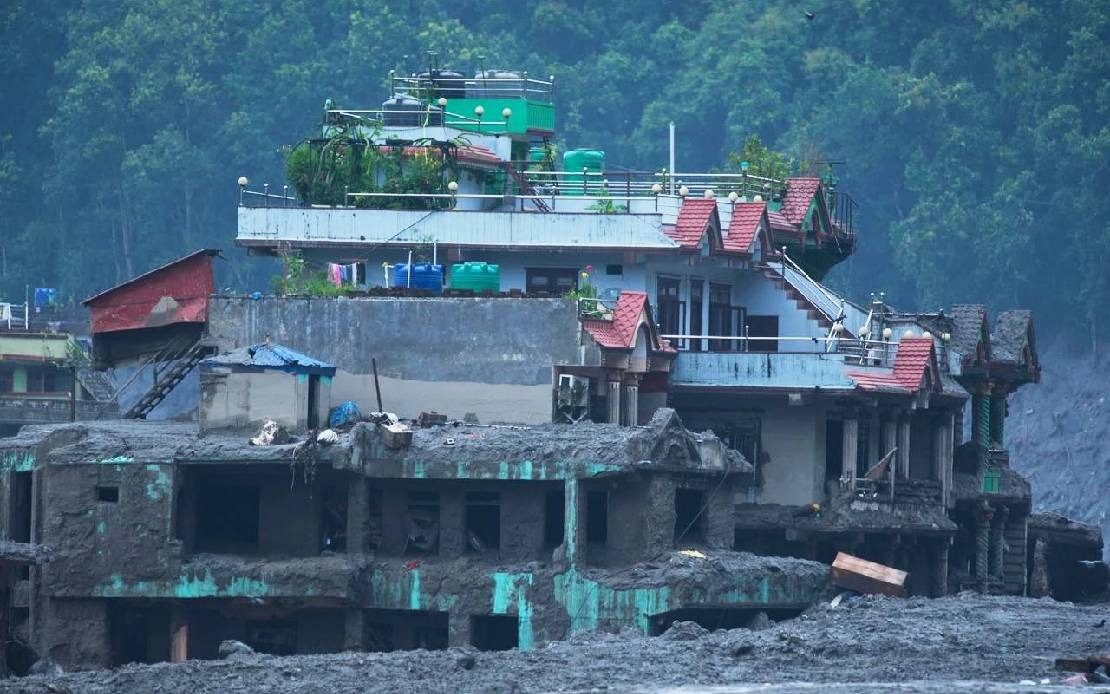
Nepal's government has launched an urgent appeal for foreign technical assistance and substantial financial aid in the wake of a catastrophic flood that swept through the Himalayan nation's border regions with Tibet. The disaster, which struck on Wednesday after a massive glacier collapse, has claimed the lives of at least 626 people in Nepal and seven in China's Tibet Autonomous Region, leaving authorities grappling with one of the country's worst natural disasters in recent memory.
The scale of destruction inflicted by the torrent of rock, ice, mud and debris—which carved through mountain river systems with devastating force—has prompted Nepal's Finance Minister Swarnim Wagle to estimate reconstruction costs at between US$4 billion and US$5 billion. Wagle cautioned that this figure remains preliminary, with damage assessments still ongoing across affected areas. For Nepal, a nation of 30 million people with limited economic resources, such expenditure represents an enormous burden that will require coordinated international support to address.
The human toll continues to mount as rescue operations confront both logistical and natural challenges. Nearly 3,000 individuals remain unaccounted for across the disaster zone—approximately 2,426 in Nepal and at least 554 in Tibet's Gyirong County. Among the missing are at least 540 foreign nationals, predominantly Hindu pilgrims from India who were visiting sacred sites in the region when the flood struck. This international dimension has elevated the disaster's profile, drawing response commitments from multiple nations concerned about their citizens caught in the affected areas.
Weather conditions have severely hampered recovery efforts, forcing authorities to suspend search and rescue operations repeatedly. Narendra Pariyar, the senior administrator for the hard-hit Rasuwa district, explained that persistent rainfall and dense fog have made it impossible to continue active rescue missions. The focus has consequently shifted toward alternative priorities, particularly coordinating land transportation to evacuate rescued pilgrims and survivors to Kathmandu, the capital, where medical facilities and identification services are concentrated.
The challenge of identifying victims has become increasingly complex as decomposition advances three days after the initial disaster. District authorities have implemented contingency protocols that prioritize public health safeguards, determining that bodies too decomposed for visual identification will be buried following requisite legal procedures. The Chitwan district administration has announced plans to collect DNA samples from deceased individuals before interment in designated open spaces, establishing a database that may later enable family identification and formal death records.
In Kathmandu, the human dimension of the tragedy has become visible at Maharajgunj Medical Campus, where recovered bodies have been transported. Desperate families have gathered at the hospital's gates and boundary walls, scanning photographs of deceased individuals in hopes of identifying missing relatives. Of 49 bodies brought to the facility, officials have managed to confirm the identities of only seven, underscoring the scale of the identification challenge ahead.
Additional complications have emerged from the flood's secondary effects. A large glacial lake formed across the Nepal-China border during the disaster initially threatened to overflow into Nepal's Lhende Khola and Trishuli rivers, prompting temporary rescue suspensions on Friday as authorities assessed flood risks. By Saturday, Chinese officials reported that the immediate overflow danger had diminished, with satellite imagery indicating the water was gradually draining through natural channels. However, Nepal has identified two upstream lakes that remain under close monitoring, with officials warning that flood hazards will persist until both reservoirs have fully discharged.
Nepal's Foreign Minister Shisir Khanal has articulated the specific technical capabilities the country requires from international partners. Rather than requesting general search and rescue support, Khanal emphasized the need for specialized expertise in tunnel rescue operations, restoration of transport and communication infrastructure in areas where bridges have been destroyed, advanced body identification techniques, DNA testing facilities, and extended cadaver storage capacity. These requests reflect realistic assessments of where Nepal's existing institutional capacity falls short of immediate requirements.
Regional partners have already mobilized substantial assistance. India, sharing significant cultural and geographic ties with Nepal, has dispatched three flights carrying approximately 60 tonnes of relief supplies, including blankets, medicines, food stocks, and water purification materials. New Delhi has additionally committed to sending dedicated tunnel rescue teams and medical personnel, alongside offering its national disaster response force and prefabricated bridge systems to restore connectivity in devastated areas. China, while calling for emergency international aid and cooperative rescue efforts, has not yet detailed its specific assistance commitments.
For Southeast Asian observers, Nepal's catastrophe underscores the vulnerability of mountainous regions to climate-related disasters and the critical importance of cross-border disaster response coordination. The event demonstrates how environmental crises can rapidly overwhelm even determined national responses, necessitating rapid international mobilization. The involvement of Indian pilgrims, many from wealthy communities, has also highlighted how natural disasters transcend socioeconomic boundaries, affecting vulnerable migrants and pilgrims alongside local populations with equal indiscrimination.
The financial reconstruction burden facing Nepal raises broader questions about how developing nations in Asia's vulnerable geographical zones can build resilience against escalating environmental hazards. The estimated US$4-5 billion cost represents a substantial claim on international development resources and bilateral aid mechanisms. This disaster will likely test the region's commitment to disaster risk reduction frameworks and the adequacy of existing funding mechanisms for climate adaptation and post-disaster recovery in the world's most seismically and climatically volatile region.

